Get Full Government Meeting Transcripts, Videos, & Alerts Forever!
Get email alerts on the Tax Policy topic
No spam. Unsubscribe anytime.
Lawmakers press DFM on tax‑conformity estimate and R&E treatment
Summary
During the JFAC budget hearing officials debated whether Idaho should adopt federal tax changes as a straight conformity or preserve the state's existing R&D tax credit; DFM and Tax Commission analysis produced a $155 million estimate assuming Jan. 1, 2026 conformity and avoidance of a federal expensing carryback.
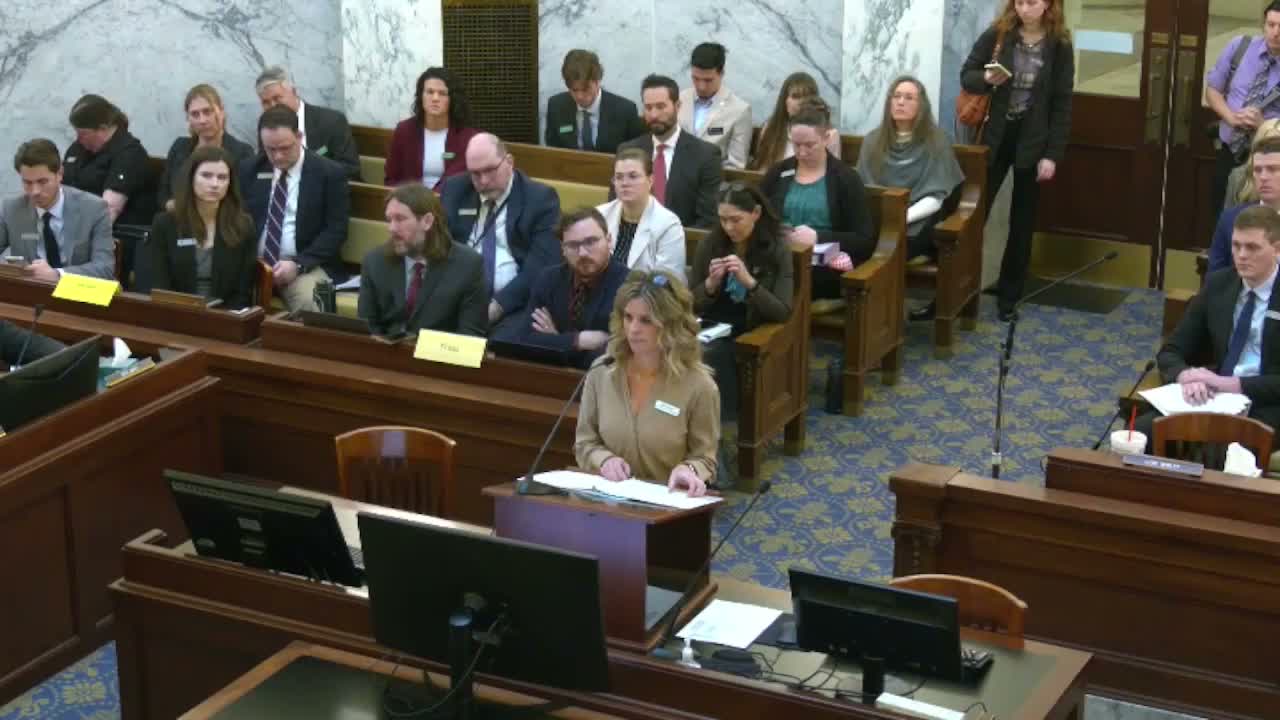
Lawmakers on the Joint Finance‑Appropriations Committee pressed Division of Financial Management officials and LSO staff about the projected cost of conforming Idaho tax law to recent federal changes and how Idaho should treat research and experimental (R&E/R&D) tax benefits.
Keith Viby (LSO) and Laurie Wolf (DFM) said the administration relied on Tax Commission analysis and selected a middle‑ground estimate of $155 million in ongoing impact, assuming conformity would begin Jan. 1, 2026. The administration’s approach, they said, avoids creating a one‑year ‘‘bubble’’ in state costs because Idaho already offers a nonrefundable R&D tax credit and the state does not plan to allow a federal‑style expensing carryback that some states initially modeled.
‘‘One of the major concerns was software and implementation timing,’’ Senator Groh said during the exchange, describing the Tax Commission’s warnings about last‑minute federal changes and practical difficulties for tax‑processing systems if conformity were applied to tax year 2025.
DFM staff and committee members outlined three basic options: adopt the federal deduction/carryback (the federal expensing), continue with Idaho’s existing nonrefundable R&D credit, or risk a ‘‘double‑dip’’ approach that provides both deduction and credit. Wolf and LSO staff said the budget numbers assume the state continues the credit rather than also granting federal‑style carrybacks.
Several members said the estimate range (reported in committee discussion as roughly $105 million to $195 million at different points) still leaves uncertainty; DFM offered to provide fuller Tax Commission documentation and analysis to the committee.
The committee did not vote on tax conformity policy; members and staff agreed the matter requires further technical work and potential revenue committee action before JFAC would finalize its budget assumptions.