Get Full Government Meeting Transcripts, Videos, & Alerts Forever!
Get email alerts on the Housing Affordability topic
No spam. Unsubscribe anytime.
Oro Valley residents split over need for affordable housing as town begins 10-year plan
Summary
At the first resident working-group meeting on Oro Valley's 10-year housing plan, residents and planners debated whether the town needs locally targeted affordable housing; staff said the plan must pair resident guidance, surveys and state requirements into draft goals, with next steps due March 20.
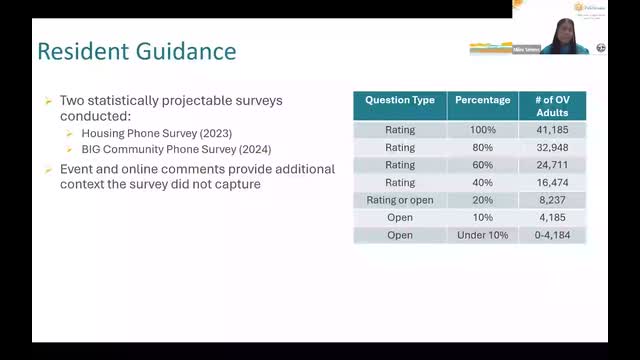
Melini Sims, principal planner for the Town of Oro Valley, opened the first resident working-group meeting on housing and told participants the town will combine public input, survey results and a state-required 10-year plan to draft goals, policies and actions. "There is a significant amount of people who are worried about housing costs," Sims said, noting that the town's statistically projectable survey found roughly 60% of adults expressed concern about housing costs.
The finding set off a sharp exchange among participants. "You can't afford to live here," said Gail, expressing skepticism that Oro Valley should "accommodate" lower-cost housing in the town. Several others echoed concerns that new multifamily construction could alter neighborhood character.
Supporters of more varied housing urged a different frame. "If they can't find a place to live here then they're gonna have to commute in which adds to traffic," said Hal, arguing a mix of townhomes, duplexes and apartments could keep teachers, first responders and retail workers in town. Jody, citing local market data, said the median sale price in Oro Valley (January 2025) is about $560,000, and described the town's current pipeline of multifamily units and large-lot single-family lots.
Sims emphasized a middle path: while Oro Valley's median household income is relatively high, the town must still meet the statutory requirement to include housing policies in the 10-year plan and can tailor affordability definitions to local incomes. "It doesn't exactly have to mean the same thing as it does in Tucson," Sims said, urging the group to consider local price points when discussing "affordable." The planner also reminded participants that staff will consolidate tonight's comments with the surveys and legal requirements and bring draft goals, policies and actions to the March 20 meeting.
The meeting featured repeated questions about what "affordable" means locally and who would pay for subsidized housing. Some residents suggested that businesses, nonprofits or collaborative land trusts could contribute; others said market factors (land and construction costs) and limited developable land constrain what the town can deliver without significant subsidies.
Sims closed by thanking participants and confirming next steps: staff will draft recommended goals, policies and actions for March 20 and continue map and land-use discussions in April.