Get Full Government Meeting Transcripts, Videos, & Alerts Forever!
Get email alerts on the State Budget topic
No spam. Unsubscribe anytime.
DFM presents governor’s FY2026–27 budget to JFAC, warns of large revenue adjustments and recommends cuts
Summary
Division of Financial Management Administrator Laurie Wolf told the Joint Finance‑Appropriations Committee the governor’s FY2026–27 budget balances ongoing reductions with limited one‑time actions after an August revenue adjustment that reduced projections by about $850 million; proposals include a 3% agency holdback, Medicaid provider reductions and changes to online school funding and IDLA.
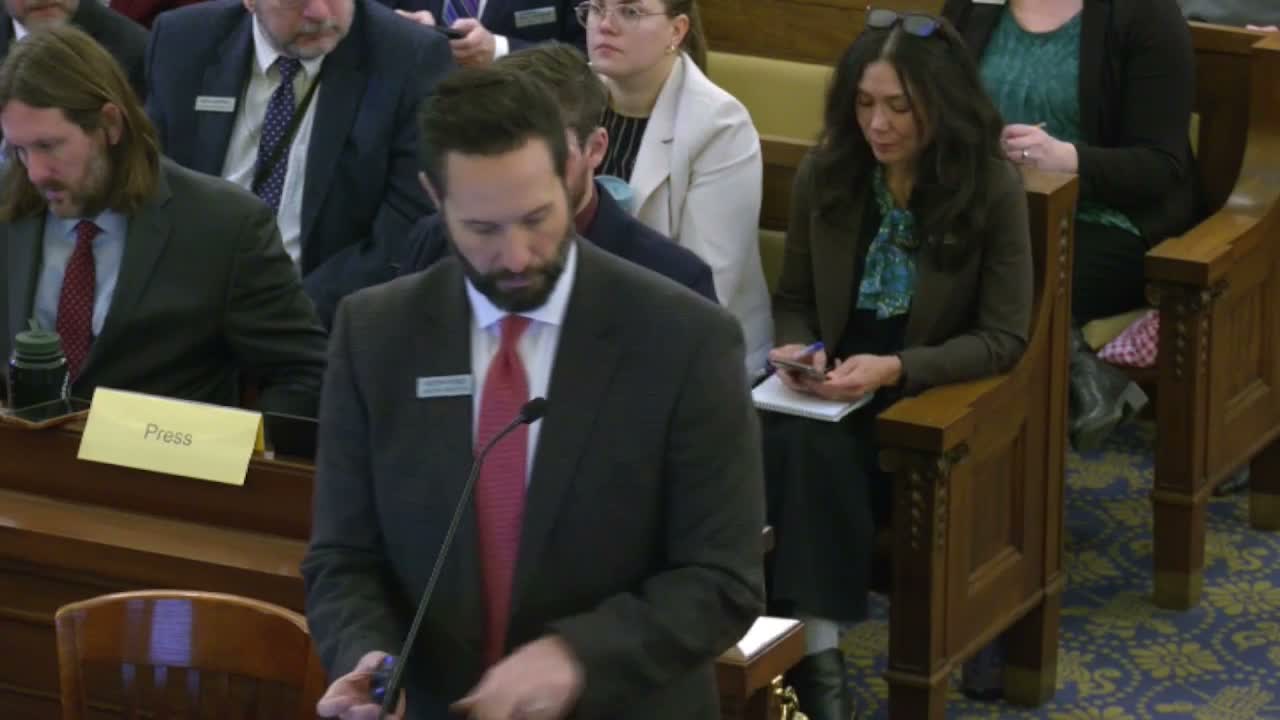
Laurie Wolf, administrator for the Division of Financial Management and the governor’s budget director, presented the governor’s FY2026–27 budget to the Joint Finance‑Appropriations Committee, saying the plan is a ‘‘balanced’’ package of ongoing reductions and limited one‑time transfers designed to preserve core services while addressing an updated revenue forecast.
‘‘Because of this revenue adjustment in August, Idaho started the fiscal year with about $850,000,000 less in projected revenue than January,’’ Wolf said, describing the early action that prompted a 3% holdback for agencies in fiscal year 2026 and targeted reversions to the general fund.
The presentation outlined several concrete actions already taken or recommended: an August executive order implementing a 3% holdback for agencies (excluding public schools) that yielded roughly $65 million in FY26 savings; reverting unused or unspent appropriations (including parts of strategic initiatives and some permanent building fund projects) to the general fund; and proposing one‑time statutory exceptions to transfer interest earnings (not principal) totaling about $97.3 million to help balance FY27.
Wolf said the governor is not recommending a general pay increase for state employees or teachers in FY27, citing a 14.5% rise in employee benefit costs that added more than $62 million in general‑fund pressure. She also described a set of ongoing reductions — roughly $120 million in ongoing savings from a 3% agency reduction and the reversion of more than 100 vacant positions yielding about $20 million in personnel savings.
Medicaid was a focal point. Wolf called Medicaid ‘‘one of the fastest growing parts of Idaho’s budget’’ and said, to meet holdbacks, Medicaid would have needed cuts of about $130 million in FY26 and $152 million in FY27. The division implemented a 4% provider‑rate reduction that produced about $17 million in FY26 savings and $23 million in FY27, and the governor’s budget proposes an additional $22 million in FY27 general‑fund changes, many of which would require statutory changes.
On education, Wolf said funding for online public schools has increased more than 300% since 2019 and currently totals about $165 million. The budget adopts some Office of Performance Evaluation recommendations and would eliminate the transportation portion of funding for online schools. It also recommends a $10 million reduction to the Idaho Digital Learning Academy (IDLA) and tighter reimbursement rules to limit payments for private and homeschool students.
The presentation includes an assumed fiscal impact of $155 million to conform state law to recent federal tax changes, with DFM and the Tax Commission assuming conformity beginning Jan. 1, 2026. Wolf said the estimate reflects a middle ground from Tax Commission analysis and the state’s decision to avoid a ‘‘double‑dip’’ — allowing existing state research and development tax credits to remain rather than also adopting a federal‑style expensing carryback that some states initially modeled.
Committee members pressed Wolf about cost‑shift risks from Medicaid reductions, how benefit‑cost increases would affect employees’ out‑of‑pocket spending, agency bookkeeping and the risk of relying on projected revenue. Senator Ward Engelking and others urged more detail on the employee cost impact; Wolf answered that employer and employee shares will rise in proportion to the benefit‑cost increase and that DFM can provide additional breakdowns.
Several members expressed concern that the budget ‘‘bets’’ on stronger revenue to produce small ending balances in FY26 and FY27 if tax‑law conformity costs come in higher than the assumed $155 million. Wolf defended the approach as deliberate, noting Idaho’s reserve balances (about 24% of general revenue) and saying the administration would act if revenues weaken.
The committee did not take formal action. Co‑chairs closed the session and adjourned until 8 a.m. the next day.
The hearing transcript shows repeated exchanges between Wolf and committee members on Medicaid, the IDLA cut, tax conformity assumptions and the administration’s revenue monitoring plan.