Lifetime Citizen Portal Access — AI Briefings, Alerts & Unlimited Follows
D.C. Council approves a slate of emergency measures, a contract and labor deal in Jan. 6 session
Loading...
Summary
The Council unanimously approved multiple emergency declarations and underlying bills—including public benefits restoration tweaks, election petition clarifications, a Solar City BID measure, and several temporary bills—alongside approvals for a UDC-SEIU contract and a janitorial services contract with TPM Group LLC.
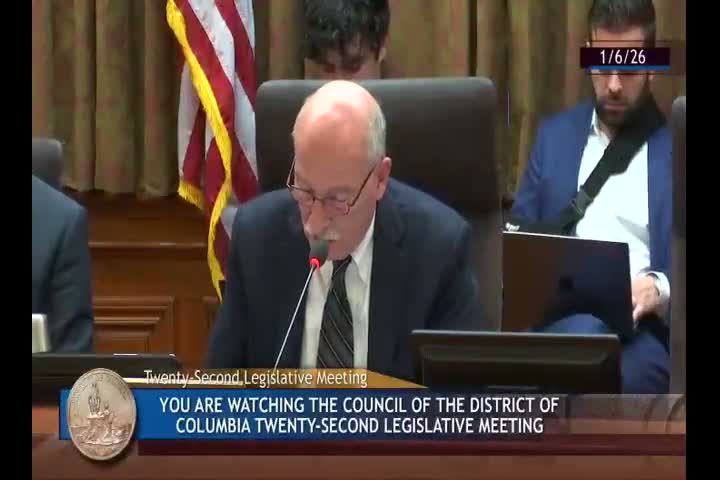
The Council of the District of Columbia on Jan. 6, 2026, approved a package of emergency declarations, temporary bills, resolutions and contracts, clearing measures lawmakers said were needed to maintain services, clarify administrative processes and implement negotiated agreements.
Among the measures the Council approved were:
- Public Benefits Security Amendment Act of 2025 (Bill 20-367): Councilmember Fruman moved an amendment that removed an overlapping 45-day theft-reporting deadline (leaving a single six-month window), clarified that the Department of Human Services is responsible only for programs it administers, and added rulemaking authority for DHS. The committee had worked with DHS and advocates; the amendment and the bill passed unanimously.
- Petition Administration Clarification Emergency (Bill 26-566): Councilmember Bonds said the emergency mirrors language from a prior measure and would ban post-signature alterations and use of correction fluid on ballot petitions, aiming to have the standard in place before the 2026 primary petition period. The emergency and the underlying bill passed unanimously.
- Solar City Business Improvement District (BID) measures: Councilmember Trahan White introduced an emergency declaration and an underlying bill to establish a BID serving commercial corridors in Ward 8. Council and chair agreed to an amendment to clarify that assessments could be collected with the February/March billing and that the BID could begin operations for the half tax year beginning April 1, 2026. Members emphasized the BID's potential for economic development and public-space improvements; the measures passed.
- Clemency Board Waiver Authority and Pretrial Detention reporting clarifications: Councilmember Pinto said the Clemency Board measure aligns local policy with federal Department of Justice waiver authority and the pretrial reporting emergency fills data gaps left by earlier temporary measures. Both declarations and their underlying bills passed unanimously.
- First Responder Retention Efforts (temporary/emergency): Councilmember Pinto said the measure is intended to help retain MPD and Fire/EMS personnel, including removing mandatory retirement ages in the emergency version while striking an expansion of the senior officer program from the temporary emergency at this time; the item passed.
- Contracts and labor agreements: The Council approved PR26-453, an approval resolution for a contract between the University of the District of Columbia and TPM Group LLC for janitorial and related services (FY2026 base period $2.9 million; total not to exceed $15.4 million). Councilmembers asked about employee counts and First Source hiring requirements. The Council also approved PR26-494, a collective bargaining agreement between UDC and SEIU Local 500 covering adjunct faculty with a fiscal impact estimate of $547,000.
- Confirmations: Four nominations to the Public Charter School Board were moved en bloc and approved.
Councilmembers repeatedly described the emergency measures as administrative fixes or clarifications needed to avoid gaps in governance, to align local rules with federal practice, or to ensure timely functioning of community initiatives. Across the measures, votes were recorded as unanimous in the hearing transcript except where members specifically noted procedural clarifications (for example, correcting section references or noting typographical errors that would be fixed by technical changes).
Why it matters: The package includes administrative, labor and contracting decisions that affect service delivery (UDC operations and janitorial services), election administration (petition standards) and neighborhood economic development (the Solar City BID). Emergency declarations were used to align timing so programs and collections could operate without interruption.
Next steps: Several measures require agency rulemaking or administrative implementation; council members signaled intentions to follow up with staff for details such as employee counts under contracts and fiscal projections for program expansions.