Get Full Government Meeting Transcripts, Videos, & Alerts Forever!
Get email alerts on the Planning topic
No spam. Unsubscribe anytime.
Consultants present Eco‑Historic plan survey results: traffic, environment and parks top resident priorities
Summary
Consultants reported roughly 1,700 survey responses for Estero’s Eco‑Historic planning study and said residents prioritized traffic/ congestion, environmental stewardship and parks/open space; the team suggested targeted reinvestment sites (village center) and connectivity improvements across US‑41.
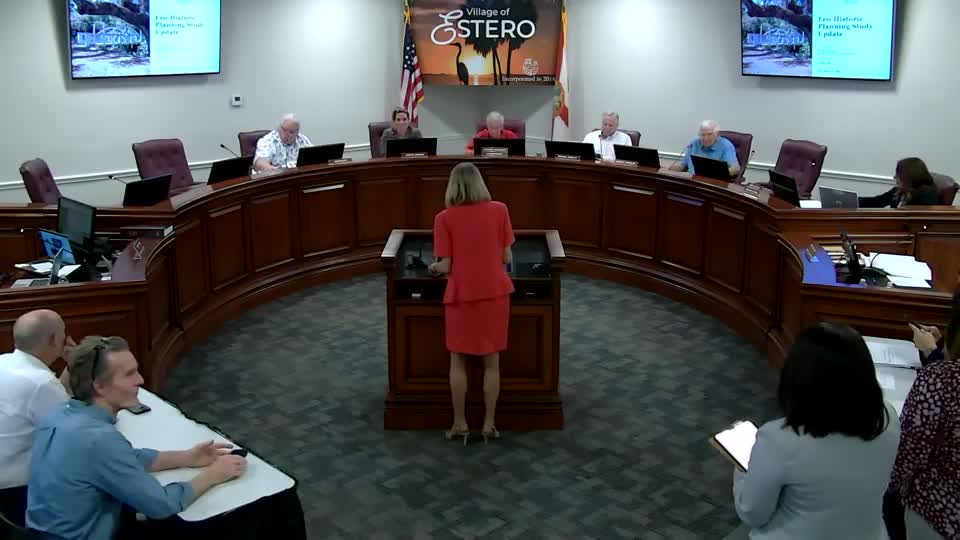
Consultants from LandDesign and Cooper Carry updated the Planning, Zoning & Design Board on the Eco‑Historic planning study and the results of an online survey that drew about 1,700 responses, which the presenters said produced statistically robust guidance for the village’s study area along US‑41.
Annie (consultant) summarized the survey demographics and results: most respondents live in Estero, the median respondent age skewed older, and the top challenges named were traffic and congestion followed by concerns that development is happening too quickly or in the wrong locations. The top priorities reported were traffic/transportation improvements, environmental protection and parks/recreation.
Consultants outlined planning principles that will guide recommendations: balance growth and preservation, celebrate culture and character, protect natural assets (especially river corridors and wetlands), and expand connectivity to allow walkable, local destinations. They identified the village‑owned riverfront parcel as a potential village‑center opportunity and said environmental recommendations would emphasize buffers, trails, and passive recreation on conserved lands while focusing redevelopment on the north side of the river.
Board members questioned survey distribution and asked how the study could address regional traffic issues that the village alone cannot resolve; consultants said the study will prioritize locally actionable measures (e.g., improved trailheads, streetscape and connectivity) while recommending coordination with county and state transportation partners for larger traffic solutions.
The consultants said they would hold an open‑house public meeting the following evening to gather additional feedback and will return with prioritized actions and draft recommendations for staff and board review.