Get Full Government Meeting Transcripts, Videos, & Alerts Forever!
Get email alerts on the Public Defense topic
No spam. Unsubscribe anytime.
State public defender says consolidation is stabilizing but warns budget cuts could raise caseloads and prompt litigation
Summary
At the Joint Finance hearing the Office of the State Public Defender described progress after consolidating county public defense into a statewide system: vacancies have fallen, but the director warned that sustained cuts would force contractor reductions, increase caseloads and could spur litigation such as the pending Tucker case.
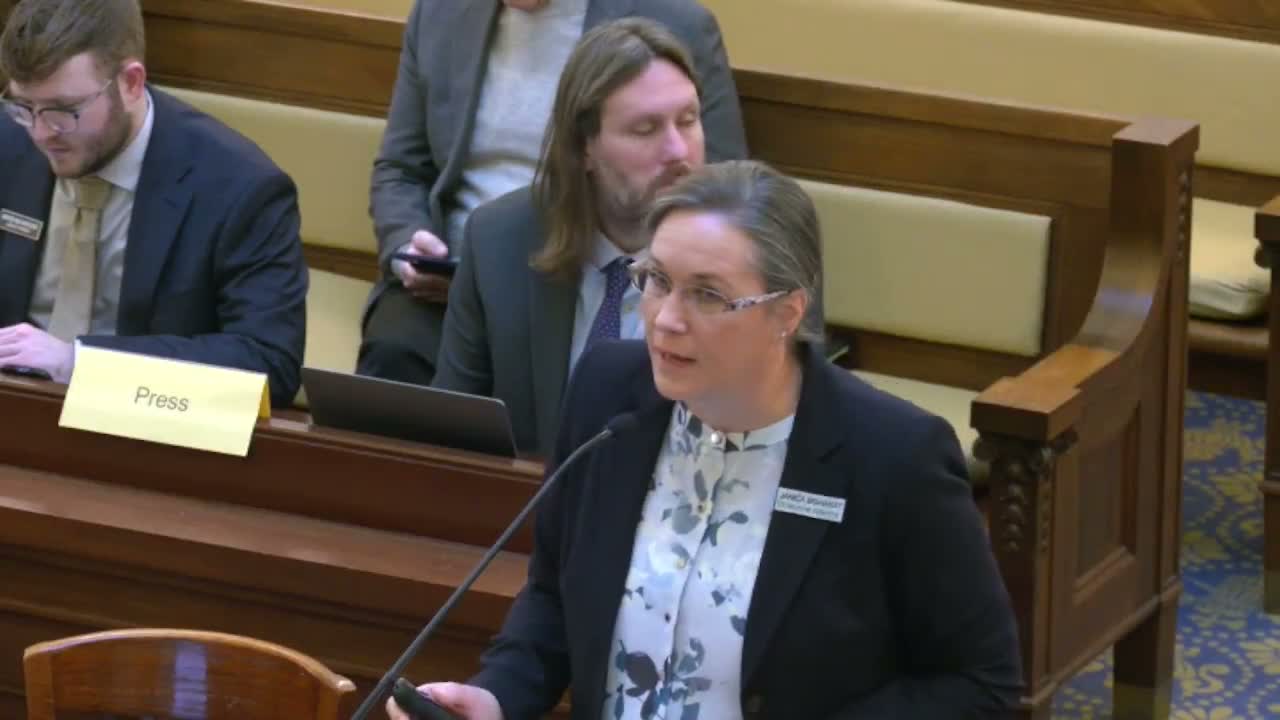
Janica Bisharat, a budget and policy analyst with the Legislative Services Office, told the Joint Finance Corporation Committee that the Office of the State Public Defender’s FY2026 appropriation is about $83.2 million and that the agency’s FTP cap is 333.96; as of the presentation the agency reported roughly 23.96 vacancies with start dates already scheduled to reduce that number.
Bisharat said the Public Defense Fund and the general fund finance the agency and the agency’s FY2027 request includes six trial attorney positions estimated to cost $849,700 and a proposed increase in the FTP cap to 339.96 to staff district offices in several counties.
Director Fredericksen (addressed in the hearing by that name) told the committee the statewide consolidation from 44 county systems had been difficult but is now stabilizing: the agency has hired 55 employees since July and reduced vacancy rates from about 20% to roughly 7%.
Legal risk and workload: the director warned lawmakers that the system’s stability matters to pending litigation. Reading cautionary language from a lower court opinion in a case called Tucker v. State of Idaho, the director said, "If the state based system works as promised, then every Idahoan wins. If not, then a new action will be filed challenging the system if there's evidence of widespread persistent structural deficiencies in the system." The director told the committee that the primary budgetary risk from sustained cuts is needing to cut contractors who provide overflow work; reducing contractors would raise workloads for staff attorneys and could lead to attrition.
Contractor and training details: Janica Bisharat and the director described recent contract attorney rate increases and a supplemental that raised operating expenditures (about $16.4 million in one earlier ongoing increase) to cover contract attorneys, investigators, transcript costs after the Idaho Supreme Court decision in State v. Blazic, litigation and training. Bisharat said the agency appropriated $2,500,000 for CPA (Child Protective Act) cases but currently estimates CPA costs nearer $3,300,000.
County MOUs and implementation: the director said most lease/MOU arrangements with counties are complete but outstanding issues remain in Twin Falls, Canyon and Ada counties, with some local parking and state approval processes delaying final signatures.
What the committee asked: members pressed about the immediate effect of rescissions and cuts and whether the agency could absorb them. The director said planned first‑year reductions could be absorbed via vacancy savings and efficiency but sustained cuts would force contractor reductions, increase caseloads and potentially undermine constitutional representation in hot‑spot counties such as Twin Falls.
Next steps: Committee members requested follow‑up information on MOU status, county-level staffing coverage and the agency’s detailed pro forma for personnel requests. The agency said it would provide supporting information and studies to the committee.