Lifetime Citizen Portal Access — AI Briefings, Alerts & Unlimited Follows
Committee hears ISDA officials seek supplemental appropriations and deficiency warrant for exotic pests and quagga mussel response
Loading...
Summary
The Joint Finance Committee reviewed Idaho Department of Agriculture requests to authorize a deficiency warrant and dedicated supplemental appropriations to cover exotic pest monitoring and recent quagga mussel treatments; the ISDA director emphasized statutory duty and described mitigation trade-offs if budget cuts reduce inspection station hours.
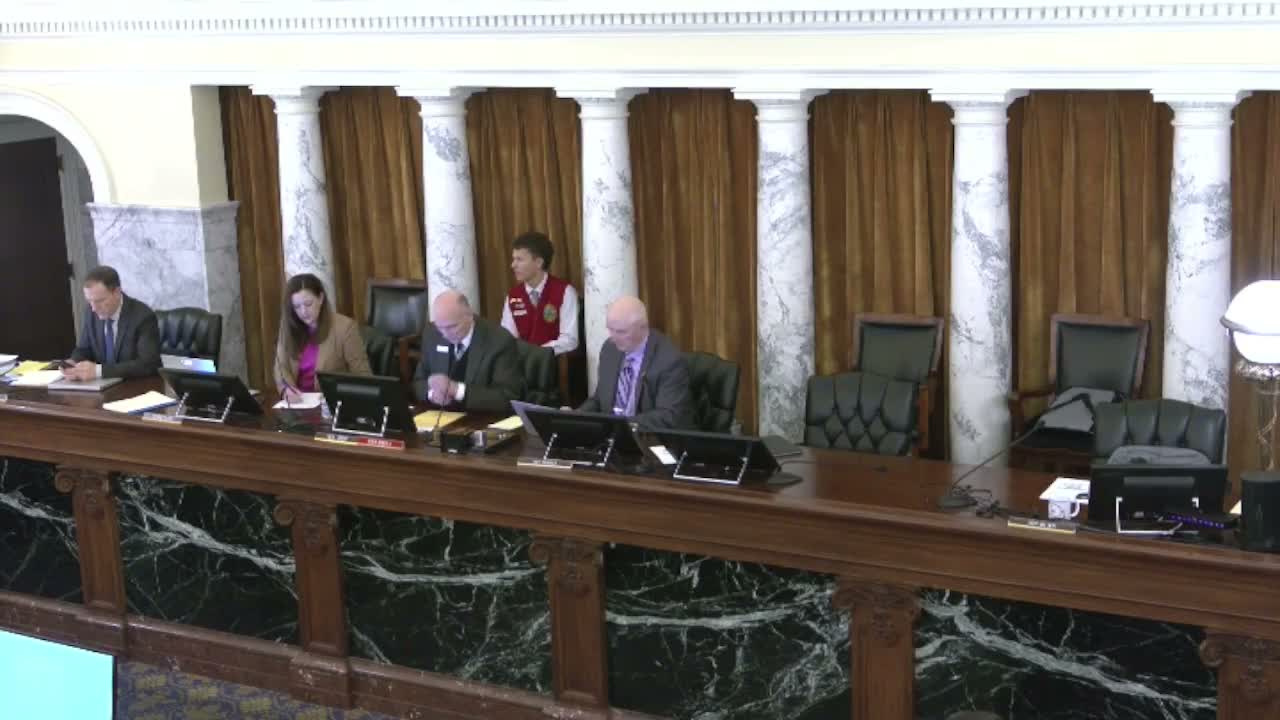
The Joint Finance Committee on Feb. 12 heard the Idaho State Department of Agriculture present its FY2026–27 budget and requests tied to invasive‑species response, including a $1,298,601 one‑time deficiency warrant for exotic pest monitoring and a $3,393,000 one‑time dedicated supplemental appropriation to cover quagga mussel treatment expenses from September–October 2025.
Why it matters: Director Michelle Tewalt framed the requests as actions compelled by Title 22, Chapter 19, which she said directs the agency to "control the species," not to treat eradication as optional. Tewalt said the department rapidly mobilized after quagga mussels were detected in the Snake River in 2023 and that, from 2024 to 2025, the agency reduced the area impacted on the Snake by about 50%.
Analyst report and fund context: Morgan Poloni, a budget and policy analyst with the Legislative Services Office (the transcript also shows the name spelled 'Paloney' in earlier speaker lines), told the committee that ISDA relies heavily on dedicated funds (about 58% of FY2026 appropriations) and that many programs are funded by fees or permits tied to specific services. She noted a FY2025 one‑time $5,000,000 general‑fund allocation for quagga‑mussel treatment and a separate approximately $1.2 million federal Resilient Food Systems grant (awarded to 27 recipients) for which the department is requesting reappropriation authority to finish outstanding contracts through FY2027.
Scope of the supplemental and deficiency requests: Poloni explained the $1.2986M deficiency warrant covers exotic pest monitoring and treatment (Mormon crickets, Japanese beetles, gypsy moths and similar threats) and that the $3.393M request is a dedicated‑fund supplemental to reimburse expenses already incurred treating quagga mussels; she emphasized the department has the cash in related funds but requires appropriation authority to legally spend it.
Operational trade‑offs under budget reductions: Director Tewalt told legislators that modest ongoing cuts would delay planned station openings and that deeper cuts could eliminate stations outright. She said the Bear Lake inspection station is non‑negotiable because of its border‑crossing location, but some other stations were identified as candidates for reduction if savings are required. Tewalt described alternative mitigation such as temporary "roving" stations, working with law enforcement, and redeploying existing ISDA staff for high‑risk events, while acknowledging those approaches have limits.
Treatment chemistry and costs: Committee members pressed the department on treatment costs. Tewalt said higher chemical spending from 2023 to 2025 primarily resulted from treating more river miles (from roughly 45–50k gallons to 70k+ gallons of chelated copper), not an across‑the‑board price spike; she reviewed alternative chemistries (lampricide, eclosomide, copper sulfide) and federal restrictions or cost trade‑offs associated with them.
Research and biological controls: Senators asked whether academic or federal research, or biological controls such as stocking native predators like sturgeon, could offer a long‑term solution. Tewalt said she is not aware of a U.S. system where a native species has outcompeted quagga mussels and cautioned against restocking until treatment impacts on native species are fully understood; she said the department will consider research partnerships and federal grant opportunities if appropriate.
Next steps: The agency requested legislative authority to spend existing dedicated funds and to use a deficiency warrant as allowed in statute; committee members said they would consider the requests ahead of upcoming action on FY2027 maintenance budgets. Director Tewalt closed by noting the department's reliance on a patchwork of dedicated funds and the challenge of making cuts without furloughs or significant service impacts.