Lifetime Citizen Portal Access — AI Briefings, Alerts & Unlimited Follows
JFAC reviews Department of Administration budget, including requests to shift utilities and add procurement staff
Loading...
Summary
Legislative analysts and the Department of Administration briefed the Joint Finance-Appropriations Committee on the department’s budget, including a proposed shift of utilities costs from the general fund to dedicated rent funds, and requests for new procurement positions tied to Medicaid contracting.
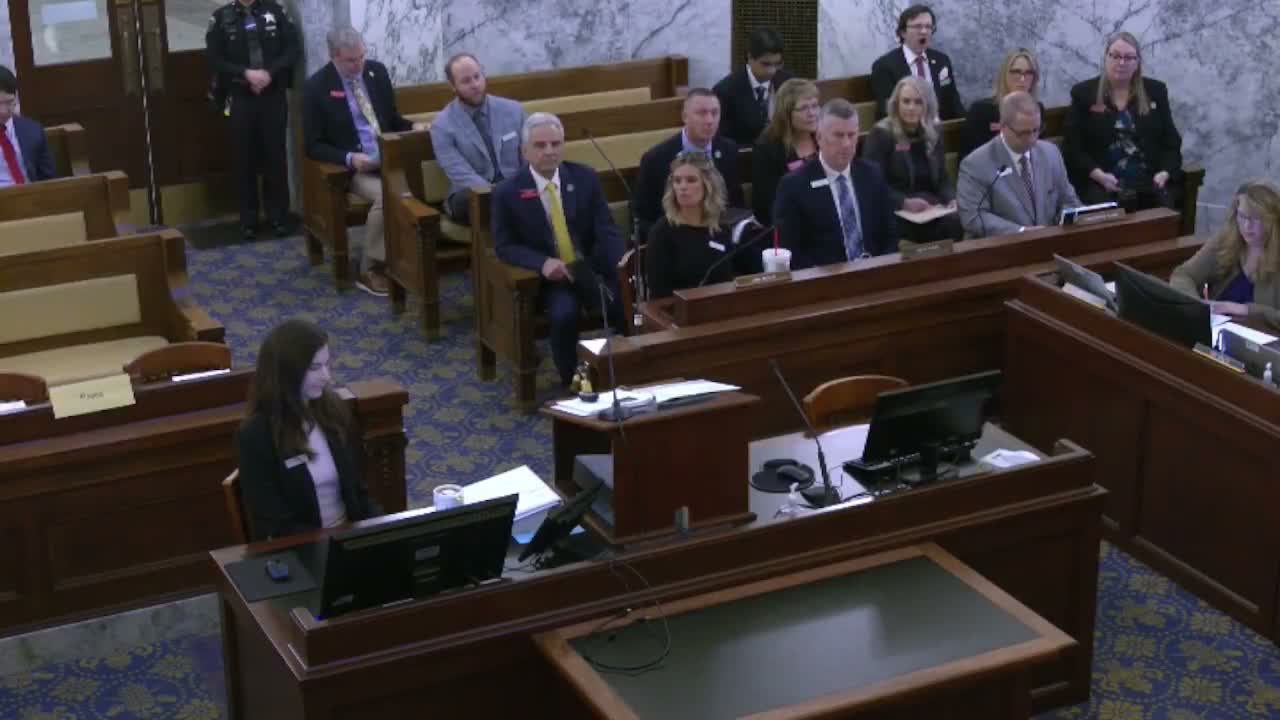
Frances Lippitt, a budget and policy analyst with the legislature’s services office, opened the Joint Finance-Appropriations Committee hearing by summarizing the Department of Administration’s appropriation, funding sources and recent trends.
Lippitt told the committee the department houses four divisions and five budgeted programs and that the appropriation is drawn largely from dedicated funds, with about 10% from the general fund. She said the department’s dedicated-fund ending free balances have ranged from about $527,600,000 to $574,900,000 over the last two years and that, including investments held with the state treasurer, the consolidated balance declined from about $1.39 billion to $1.26 billion from fiscal 2024 to fiscal 2025. "My name is Frances Lippett. I'm a budget and policy analyst with legislative services," she said when introducing herself.
Lippitt described core services—facilities management for the Capitol Mall and Chinden Campus, statewide procurement, group insurance and a centralized postal service—and cited the department’s statutory authority in chapter 57, title 67 of Idaho Code. She said the agency is authorized for 137 full-time positions and has filled roughly 92% of that authorization in recent years. Lippitt told members the department’s base appropriation has grown from about $24.1 million to $31 million over five fiscal years and that the legislature authorized targeted enhancements for FY2025 and FY2026.
On proposed changes for FY2027, Lippitt said the department requested moving about $365,000 in utility costs historically charged to the general fund to dedicated funds financed by agency rent payments; the request would also add three dedicated-fund positions and seek about $390,100 to support Medicaid procurement and contract management staffing. She outlined a combined dedicated-fund request of roughly $1,031,200 and a concurrent $365,000 decrease from the general fund.
Committee members pressed for detail on the apparent swing between a $240,000 utility reduction shown for FY2025 and the FY2027 shift. Lippitt said the FY2025 reduction reflected a maintenance adjustment that exceeded the actual rate increase from Idaho Power, while the FY2027 request aligns the budget to what agencies are actually being charged. She added the FY2027 shift primarily concerns utilities for constitutional officers’ offices that are not charged rent.
Director Steve Bailey, who introduced departmental staff and answered many follow-up questions, described additional efficiency steps. He said the department closed its in-house printing operation and moved that work to Correctional Industries, has tightened review of vacant positions before refilling, and is repurposing roles (including creating a department trainer) while pursuing digital workflows and automation where feasible.
The committee concluded the presentations and scheduled follow-up work; the chair adjourned the hearing until 8 a.m. on February 18.