Get Full Government Meeting Transcripts, Videos, & Alerts Forever!
Get email alerts on the Public Accommodations topic
No spam. Unsubscribe anytime.
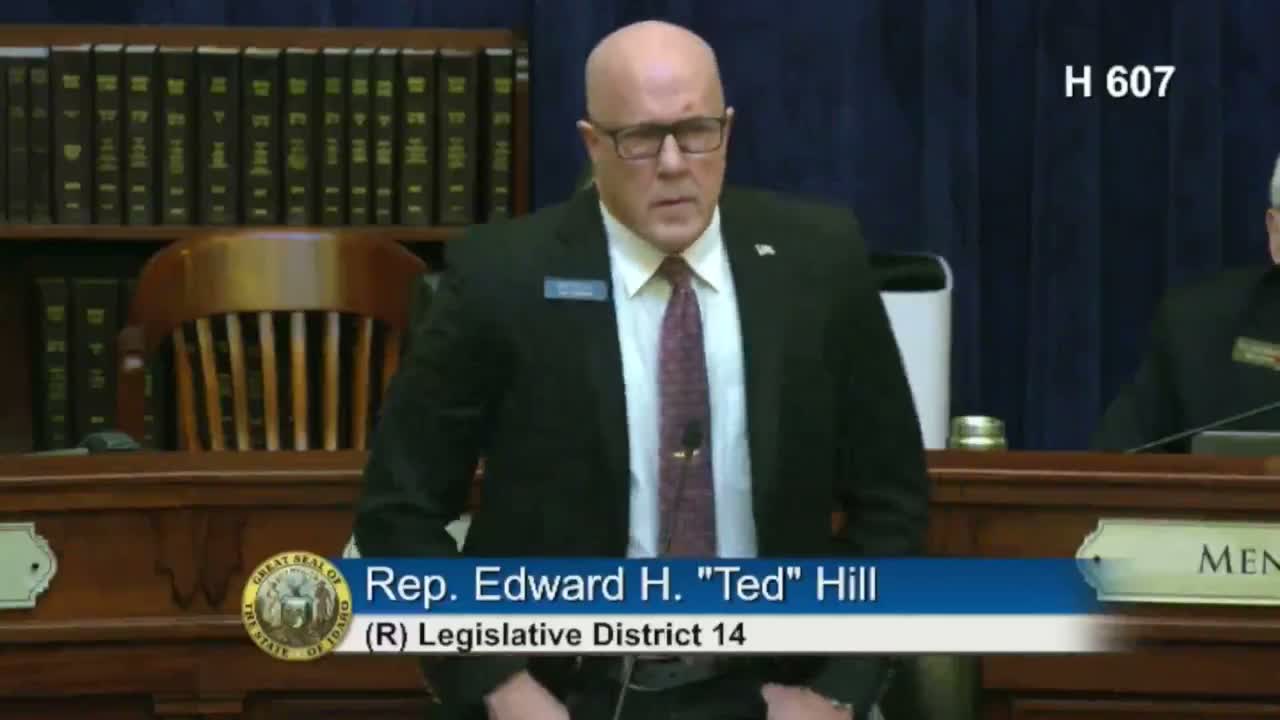
Idaho House passes bill restricting restroom, locker‑room access by biological sex after extended debate
Summary
After more than two hours of floor debate, the Idaho House passed House Bill 6‑07, which requires separation of restrooms and changing facilities in government buildings and many public accommodations by 'biological' sex and creates a civil remedy including injunctions and fines; sponsors said it protects privacy while opponents warned of burdens on small businesses and unclear enforcement rules.
The Idaho House on Feb. 16, 2026 passed House Bill 6‑07, a measure that requires separation of restrooms and changing facilities in government buildings and many public accommodations by biological sex, after extended floor debate.
The bill's sponsor argued the measure is intended to protect the privacy and safety of people in vulnerable spaces. The sponsor said the bill would require facilities to provide separate spaces by biological sex, create a civil‑law remedy that can include an injunction and a $10,000 fine in certain cases, and make the standard of proof for holding a business or agency responsible intentionally high. "This bill will make it so you they have to have separate facilities by biological ***," the sponsor said during opening remarks, adding the statute includes exemptions and accommodations and is not intended to force onerous changes for most small businesses.
Supporters framed the bill as a narrow consumer‑safety and privacy standard that uses the existing legal concept of "reasonable care." Several supporters pointed to prior Idaho action on related issues as precedent and said exemptions for single‑occupancy restrooms and emergency circumstances limit the bill's practical impact.
Opponents countered that the bill leaves key terms undefined and could impose costs and liability on small businesses. One lawmaker warned that for many small establishments — which the lawmaker said make up a majority of Idaho businesses — the undefined standard of "reasonable steps" could lead to expensive retrofits, signage and insurance consequences. "What does it mean to give permission? Neither of which are defined in this bill," an opponent said, arguing courts will be asked to decide implementation questions the text leaves open.
Other critics raised operational and enforcement concerns: monitoring entrances, privacy tradeoffs if businesses were expected to document encounters, and practical questions about how plaintiffs would prove harm. A member urged a "red light" vote on the grounds the measure leaves courts and law enforcement with unresolved implementation questions and could create dueling liabilities.
Sponsors responded by saying that most small businesses will be exempt where single‑occupancy facilities are the norm and that the bill does not create new building‑code requirements. They also reiterated that the civil standard of proof is high and that criminal statutes would continue to cover abusive or criminal conduct inside facilities.
The transcript records the Speaker announcing that "House Bill 6‑07 is passed." The floor debate and record in the transcript include multiple exchanges about exemptions, the standard of liability, and whether the statute will result in litigation; the excerpt does not include a printed roll‑call tally for the final passage in the provided text.
The House did not amend the bill on the floor in the portion of the transcript provided; the next procedural step recorded in the excerpt is the bill's passage and transfer per House rules. The House then proceeded to other calendar and scheduling business before adjourning.