Get Full Government Meeting Transcripts, Videos, & Alerts Forever!
Get email alerts on the Land Use Rezoning topic
No spam. Unsubscribe anytime.
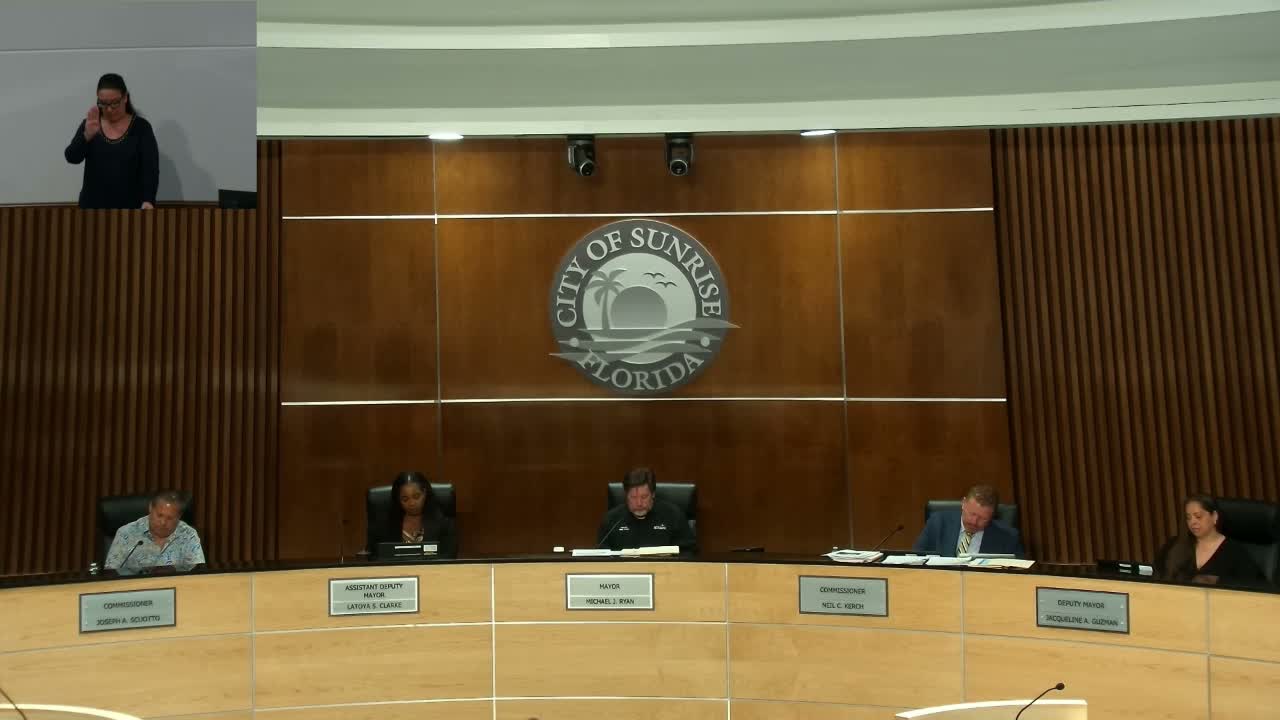
Sunrise commission denies rezoning and master plan for proposed hotel amid traffic and safety concerns
Summary
The Sunrise City Commission voted March 3 to deny a rezoning and master plan that would have allowed a branded hotel and related development at SW 160th Avenue and Indian Trace after residents raised traffic, safety and compatibility concerns; the city’s traffic consultant had concurred with the applicant’s supplemental study but commissioners found the record insufficient to meet the quasi‑judicial standard.
The Sunrise City Commission on Tuesday voted to deny a rezoning request and related master plan that would have allowed a branded, multi‑story hotel at the Northeast corner of Southwest 160th Avenue and Indian Trace.
The commission’s vote followed hours of testimony from the applicant, city staff, traffic and security consultants, and many affected residents. The developer presented a supplemental traffic study and a security plan and offered a restrictive covenant waiving certain development rights under the Florida Live Local Act; the city’s traffic consultant, Joaquin Vargas of TrafTech Engineering, testified he “concur(s) with the findings” and said the intersections evaluated were operating at an acceptable level of service even under conservative assumptions. The applicant also submitted tenant outreach materials and letters of support and played recorded statements from an adjacent preschool and small business tenants.
Residents and affected parties sharply contested the study’s assumptions and timing, arguing counts were taken on a nonrepresentative day and that local roads already experience long queues, illegal left turns and hazardous sightlines during peak periods. Brad Shelly, a nearby resident, asked whether traffic counts were taken on Presidents’ Day and raised concerns about day‑to‑day variation. Traffic consultant Natalia Locari said the counts used for the supplemental report were collected on Tuesday, Feb. 17, and that cameras were set up the day before.
Public‑safety testimony produced differing emphases. A security consultant for the applicant argued there was no criminological evidence that a hotel alone attracts specific criminal trends, while Chief Dan Ransom of the Sunrise Police Department said his department estimates “about 30 to 40” reportable police calls per year at an existing hotel location and that each additional hotel could add recurring calls for service. Chief Ransom also noted many logged entries in records were proactive entries (business checks, traffic stops) rather than criminal incident reports.
Small businesses in the plaza spoke in favor of the hotel, saying it would bring customers and jobs. Samantha Martin, director of the Tree of Life Christian Academy preschool adjacent to the site, said developers had proposed safety and access improvements and stated the school “fully support(s) the development of the Hyatt Hotel” in a submitted video.
After closing arguments and lengthy discussion about whether the record contained “competent, substantial evidence” to satisfy the city’s quasi‑judicial standard, the commission voted first to deny the Local Planning Agency (LPA) rezoning recommendation, and then denied the PDD master plan and a related Development of Regional Impact (DRI) amendment. Commissioners who voted to deny said the traffic, stacking and safety concerns raised by residents and affected parties had not been sufficiently overcome even with the applicant’s additional studies and proposed improvements.
The applicant offered several concessions and conditions during the hearing — including enhanced landscaping, a construction management plan, shopping‑center façade and lighting improvements, cross‑access agreements, commitments to record restrictive covenants, and an offer to install license‑plate‑reader capability tied to the police system — and said it would work with city staff to refine binding language if the commission chose to continue the matter. The commission made clear that any future proposals beyond the hotel parcel (phase 2 redevelopment) would require separate, full hearings.
The denial does not foreclose the developer from returning with revised materials or different conditions; a second quasi‑judicial hearing would give parties another opportunity to present evidence. For now, the commission closed this chapter by voting to deny the rezoning, master plan and DRI amendment on the grounds the applications, as presented, did not meet the city code’s review criteria.
The commission adjourned after the votes; the items may return if the applicant files revised materials and the city schedules them for further review.