Get Full Government Meeting Transcripts, Videos, & Alerts Forever!
Get email alerts on the HB557 Preemption topic
No spam. Unsubscribe anytime.
Representative urges preemption of local SOGI ordinances; House passes HB 557
Summary
The House passed House Bill 557 on Feb. 5, 2026, a bill the sponsor said would prevent cities and counties from adopting nondiscrimination ordinances that go beyond state law on sexual orientation and gender identity (SOGI). Supporters cited litigation and religious-freedom concerns; opponents said it undermines local control and could harm recruitment for Idaho businesses.
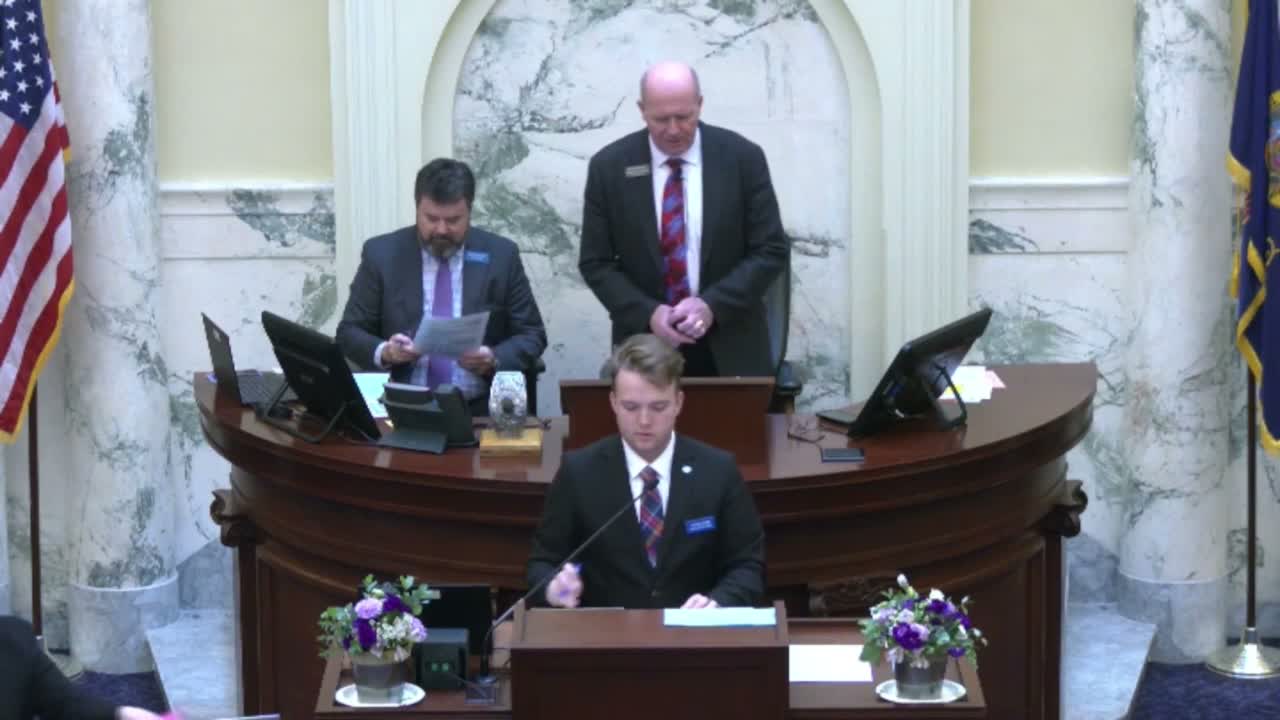
The Idaho House passed House Bill 557 on Feb. 5, 2026, by a recorded roll call, 53–16, advancing legislation that the bill’s sponsor said would prevent local governments from enacting nondiscrimination ordinances that extend beyond state law on sexual orientation and gender identity.
The bill’s sponsor, identified in the transcript as the Representative speaking for the measure, told colleagues: “This prevents local government entities from enacting ordinances that impose anti discrimination requirements beyond those in our state law,” arguing that some municipal SOGI ordinances have caused confusion and litigation for small businesses and employers. The sponsor said Ada County rescinded its local ordinance after trouble and stated that “currently, out of 201 cities, we have 12 cities that have these SOGI ordinances.”
Opponents framed their objections around local control and the limited evidence presented to justify a statewide preemption. “Local control is a pillar of our state,” one Representative said, urging members to preserve cities’ ability to respond to local concerns. Another member noted committee testimony included only one Idaho legal case cited in support but argued that case (referred to in testimony as the hitching post) was not directly tied to a municipal nondiscrimination ordinance.
Supporters countered that uniform state law avoids a patchwork of local rules, that federal protections (the Civil Rights Act of 1964 was cited in floor debate as a baseline for nondiscrimination in certain areas) and state law provide overall protections, and that the bill is intended to protect private businesses and individuals’ religious liberty. The sponsor and other proponents repeatedly used anecdotal examples—business owners and a reported incident at a private pool—to illustrate perceived harms under local ordinances.
The debate featured repeated exchanges over whether the record showed actual litigation tied to the municipal ordinances in Idaho and over whether statewide preemption would help or hurt economic recruitment. One Representative, speaking for the business community perspective, said removing municipal protections would send a “hostile message” that could make it harder for employers to recruit talent.
After debate, the presiding officer put the question. The clerk read several individual votes aloud and announced the final tally as 53 ayes, 16 nays and one absent/excused; the clerk declared House Bill 557 passed the House and ordered it transmitted to the Senate.
The House also conducted routine business: approving the journal, receiving committee reports and bill introductions (including HB593–HB599 and others), and announcing committee meeting schedules before adjourning to reconvene at 10 a.m. on Feb. 6, 2026.
What’s next: HB 557 will be transmitted to the Senate for its consideration; no senate action was recorded in this transcript.
Quotes used in this article are taken verbatim from the House floor transcript and are attributed to the speaking labels used in that record.