Get Full Government Meeting Transcripts, Videos, & Alerts Forever!
Get email alerts on the Veterans Services topic
No spam. Unsubscribe anytime.
Veterans services says temporary nursing pool is cutting contract costs as Boise home construction advances
Summary
The Idaho Division of Veterans Services told the Joint Finance-Appropriations Committee it is reducing reliance on expensive contracted nurses by creating a state temporary nursing pool and that federal waivers have allowed work to begin on a new Boise veterans home; officials said staffing remains a challenge.
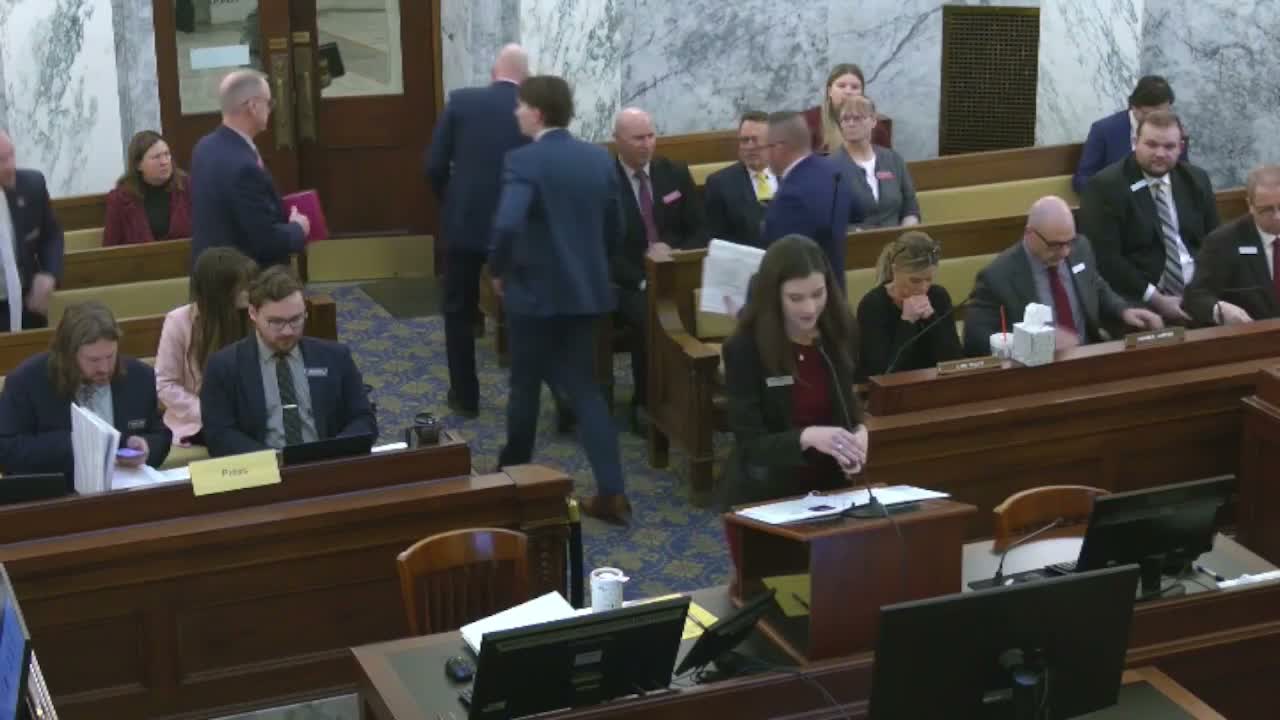
The Idaho Division of Veterans Services told the Joint Finance-Appropriations Committee that it is making progress hiring and reducing its reliance on contracted nursing staff while advancing construction work on a new Boise veterans home.
Mark Chample, the division’s chief administrator, said the department created a temporary state nursing pool to cover shifts previously filled by contracted nurses. "This year, we're on track to save approximately almost half $1,000,000 between using or paying for contracted staff and using that state temporary nursing pool," Chample said, adding that the program is intended to be a cost‑effective alternative while the division continues to recruit permanent staff.
Chample reviewed facility and staffing counts for the division’s veterans homes and described federal construction grant timing that delayed receipt of funds for the Boise home until the division secured a waiver related to the Build America Buy America Act. "We also won our battle with the Federal VA to get the Build America Buy America Act waiver that we needed so that we could start construction on our new Boise home, which has officially started," Chample told the committee.
On homelessness, Chample gave a rough estimate rather than a specific count: he said about 2% of the state's veterans are homeless but did not provide an exact number. Legislators asked about a projected $13 million decline in miscellaneous revenue for FY2027; Chample said the figure reflects that revenue generation can lag appropriations if homes cannot accept additional residents because of staffing shortages.
Chample also described the division’s veteran outreach work, noting expansion of the Joining Forces Idaho network and partnerships meant to connect veterans to services without using taxpayer dollars.
What happens next: the committee will continue budget deliberations and may request more detailed revenue projections and updated staffing and cost estimates from the division.