Get Full Government Meeting Transcripts, Videos, & Alerts Forever!
Get email alerts on the Military Division Budget topic
No spam. Unsubscribe anytime.
Idaho Military Division requests modest general‑fund adjustments as EMS moves under its authority
Summary
The Idaho Military Division told the Joint Finance-Appropriations Committee it has absorbed a 3% rescission so far but reduced state education assistance for enlistees, and it seeks limited general‑fund and dedicated adjustments while integrating emergency medical services transferred from the Department of Health and Welfare.
The Idaho Military Division told the Joint Finance-Appropriations Committee that it will seek modest adjustments to its FY2027 budget while finalizing the recent transfer of emergency medical services into the division.
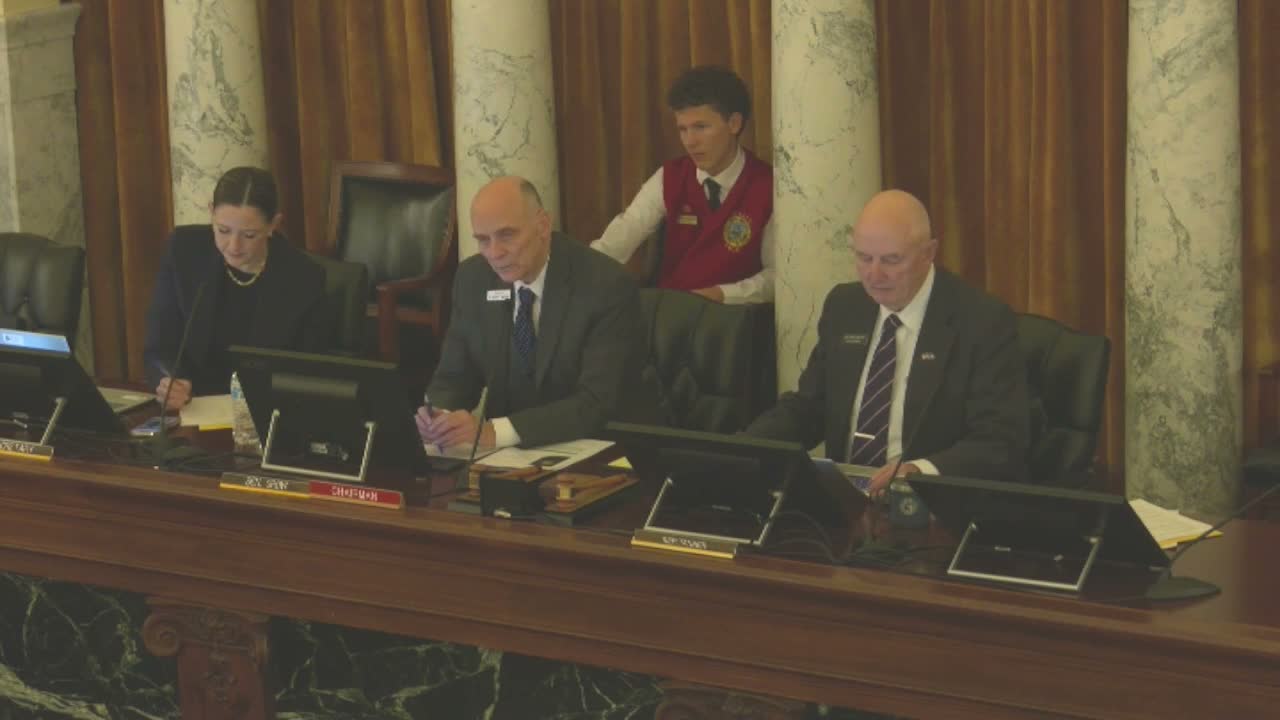
Francis Lippitt, a budget and policy analyst with the Legislative Services Office, reviewed the division’s structure and budget history, noting it is authorized 460.64 full‑time positions and that recent organizational changes moved the Bureau of Emergency Medical Services from the Department of Health and Welfare under the division pursuant to last year’s legislation. Lippitt said the division’s FY2027 requests include a general‑fund request for hazardous‑materials response and a pay‑parity adjustment intended to keep state personnel aligned with federal pay scales.
Major General Tim Donilon, the Adjutant General and director of the Idaho Military Division, told the committee the EMS transition has proceeded without loss of capability and that roughly 40 DHW staff were relocated to the division and bedded down at Gowen Field. Donilon said administrative and facility moves are still being finalized and that the division is still assessing the full administrative cost of that transfer.
Senators asked how a 3% statewide rescission would affect the division’s programs. Donilon said the division has absorbed the current 3% reduction but that it reduced state education assistance for new enlistees to do so. "I am concerned if we were to reduce it further, that we would break faith with our soldiers and airmen who have enlisted," Donilon said, noting the education assistance is a statutory recruiting and retention tool.
Lippitt explained apparent fluctuations in the division’s CEC (change in employee compensation) and position counts as the result of prior‑year reversion rules and how CEC is allocated only to established, filled positions; that accounting, she said, makes some budget lines appear to go "in and out" year to year.
The division also flagged federal construction timing and encumbrance patterns as drivers of variation between appropriation and expenditures: federal contracts for construction projects are often encumbered across fiscal years, which affects year‑to‑year spending percentages.
What happens next: committee members will continue budget deliberations in subsequent meetings; the military division said it will provide updated cost estimates for the EMS transfer and related administrative expenses as those figures firm up.