Lifetime Citizen Portal Access — AI Briefings, Alerts & Unlimited Follows
Panel debates SNAP match and Medicaid eligibility changes; Idaho Behavioral Health Plan fund shifts advance
Loading...
Summary
The joint committee debated a package of SNAP and Medicaid eligibility funding shifts tied to HR1 and HB345; the SNAP/federal-match adjustment package failed in the House committee while supplemental shifts tied to the Idaho Behavioral Health Plan and psychiatric hospitalization passed.
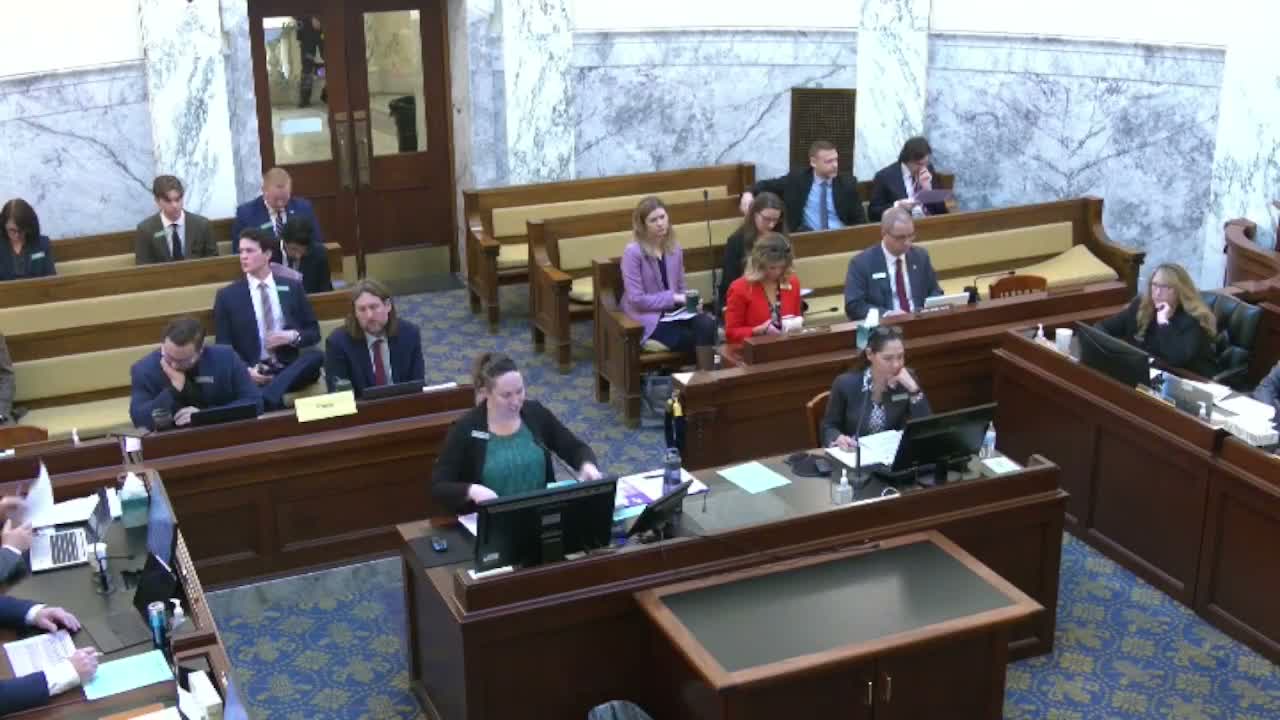
Legislative analysts and committee members spent a lengthy portion of the session on Department of Health and Welfare budget items, including SNAP administrative-match changes under HR1, Medicaid eligibility-system updates, and fund-source adjustments tied to the Idaho Behavioral Health Plan.
Alex Williamson, a budget and policy analyst with the Legislative Services Office, told the committee HR1 (referred to in the hearing as the "big beautiful bill") changed the federal/state administrative split for SNAP from roughly 50/50 to 25% federal/75% state for some administrative costs. Williamson said the agency submitted enhancement requests to account for that change and for new work requirements and system updates required under HB345 and HR1. "This change is the impact of HR1... HR1 requires semiannual redeterminations for the expansion population going forward," Williamson said, explaining why a one-time request for system changes was needed.
Senator Cook moved a package that would add $4,321,200 from the General Fund (with an offsetting federal reduction) for the SNAP federal-rate adjustment and would add $1,868,400 for Medicaid expansion work requirements plus $1,960,800 for Medicaid eligibility system changes. Committee debate centered on federal dependency and the state's ability to absorb increased state shares. Representative Harris asked why the governor's recommended Medicaid eligibility figure rose to $1.96 million from the agency's original $1 million; Williamson replied that the federal Notice of Award had been updated to cover the full amount through CMS, changing the award split and the state's calculations.
The Senate committee recorded 9 ayes and 1 nay, but the House committee split 5–5 on the motion, causing it to fail in committee.
On behavioral-health funding, Williamson explained that because Magellan now bills Medicaid under the Idaho Behavioral Health Plan and reimburses state hospitals, the receipts now appear as dedicated receipts rather than federal funds. The committee approved a supplemental shifting $6,054,000 from federal to dedicated funds for psychiatric hospitalization and adopted FY2027 behavioral-health fund shifts and replacement-item adjustments (including swapping a planned skid-steer purchase for a rental) with recorded votes in both panels.
The committee also approved a permanent alignment that moves a recurring $650,000 appropriation from the Liquor Control Fund to the department's cooperative welfare dedicated fund, to match statutory direction in Idaho Code 23-404.
Where committee members raised concerns about staffing and accountability for studies or contracts, the record shows those cautions were noted but the motions to carry language and funding shifts proceeded in committee or were tabled according to recorded House and Senate vote tallies.
The committee adjourned to continue remaining budget work in working groups the following day.