Get Full Government Meeting Transcripts, Videos, & Alerts Forever!
Get email alerts on the Budget ArticleV topic
No spam. Unsubscribe anytime.
Idaho House passes resolution calling on Congress for balanced-budget amendment after heated debate over Article V
Summary
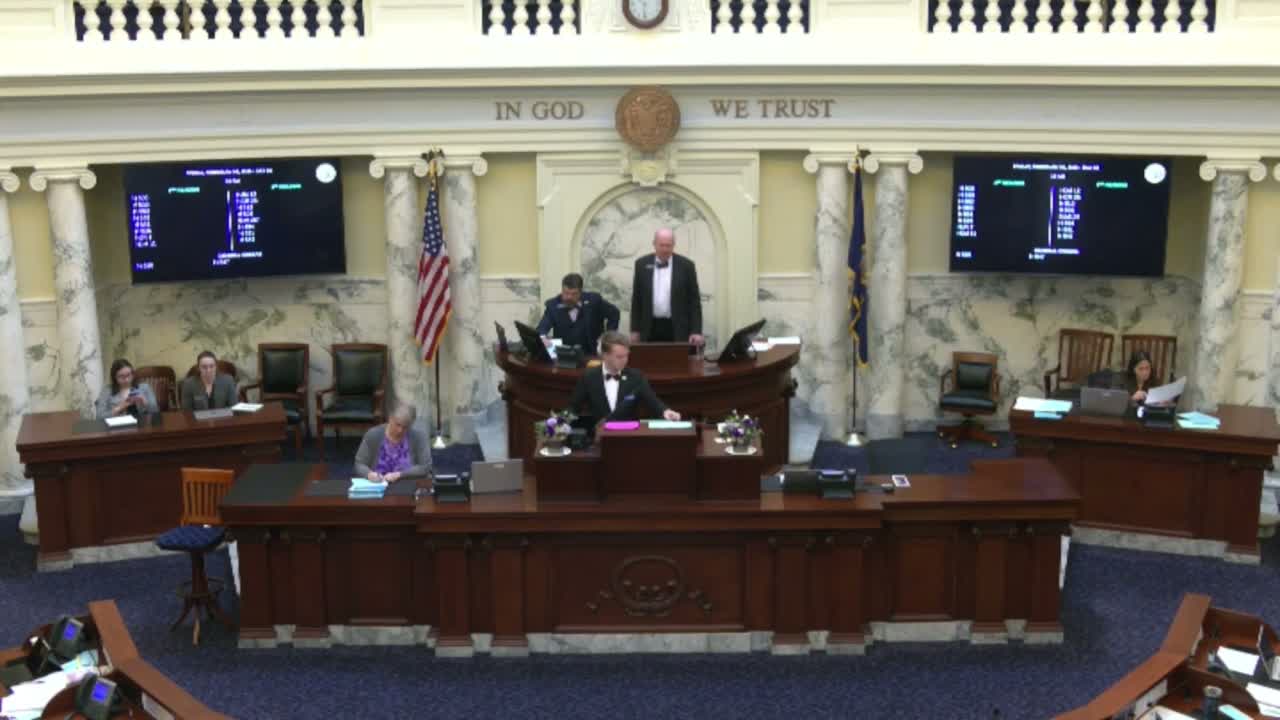
The Idaho House passed House Concurrent Resolution 25 on Feb. 6, 2026, a call under Article V for Congress to propose a balanced-budget amendment, after extended floor debate over the risk of a constitutional convention; the final recorded vote was 36–34 and the measure will be transmitted to the Senate.
The Idaho House passed House Concurrent Resolution 25 on Feb. 6, voting 36–34 to call on Congress under Article V of the U.S. Constitution to propose a balanced-budget amendment.
Supporters urged the resolution as a tool to force congressional action on what they described as an unsustainable national debt. The resolution’s sponsor described HCR 25 as “a very limited and targeted call specifically to impose a balanced budget amendment,” and said the measure was intended to pressure Congress rather than to trigger a convention immediately. A sponsor also noted the draft includes a seven-year sunset intended to limit its duration.
Opponents countered that an Article V convention cannot reliably be limited. One legislator argued on the floor that “there is no such thing as a limited constitutional convention,” warning that a convention could open the entire Constitution to revision and that the Legislature had not adopted sideboards or rules—such as delegate qualifications, disclosure, or conflict-of-interest protections—that would bind any future convention delegates.
Floor debate ranged from constitutional history and legal precedent to fiscal analysis. Proponents repeatedly framed the national-debt figures as central to urgency; opponents urged caution, citing the lack of explicit guardrails in the resolution and the risk that special interests could influence delegates if a convention were ever called.
The clerk conducted a recorded roll call after debate. The tally announced on the floor was 36 ayes and 34 nays; the concurrent resolution will be transmitted to the State Senate for consideration. The final action does not itself change federal law; if Congress were to propose an amendment, the measure’s sponsor acknowledged it would still require ratification by the states under the Constitution.
Other floor business on Feb. 6 included committee reports and the introduction of multiple bills across subjects including public-records changes, collective bargaining, and offender-registration provisions. The House adjourned and will reconvene at 11 a.m. on Monday, Feb. 9, 2026.