Get Full Government Meeting Transcripts, Videos, & Alerts Forever!
Get email alerts on the Agriculture Budget topic
No spam. Unsubscribe anytime.
House Ag chair urges investment in invasive-species prevention and water infrastructure
Summary
House Agricultural Affairs Chairman Representative Gerald Raymond told JFAC that dedicated funds and an ongoing $30 million line are critical to fight invasive species (quagga mussels, Mormon crickets, Karnal bunt) and support water infrastructure; he also updated the committee on a University of Idaho CAFE project.
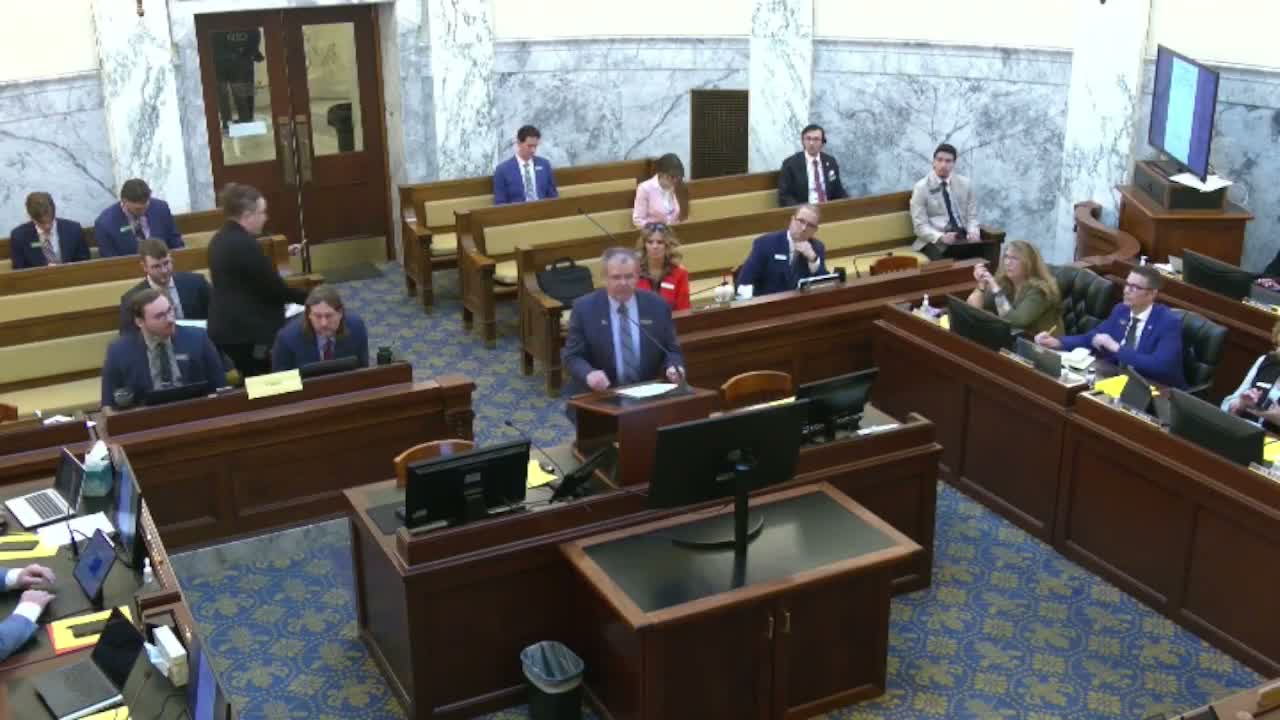
Representative Gerald Raymond, chair of the House Agricultural Affairs Committee, told the Joint Finance-Appropriations Committee that agriculture faces uneven commodity pressures and that prevention of invasive species is a fiscal priority for his committee.
Raymond detailed how dedicated funds—largely boat-sticker revenue—are being used to pay for quagga mussel responses and that a Board of Examiners-approved expense should not burden the general fund. He said three primary deficiency-warrant uses are for Mormon-cricket control, Japanese beetle response and Karnal bunt (a fungal disease of cereal crops), and that the state prefers prevention at check stations because treatment costs rise exponentially after infestation.
"If we lose the ability for check stations in the state, that will exponentially increase the cost of treatment," Raymond told the committee, urging support for maintaining and possibly expanding inspection stations at state borders.
Members asked for details about inspection and treatment protocols; Raymond explained boats are inspected for cleanliness and drained/dry status and described steam-cleaning and disinfectant procedures used when infestations are suspected. Raymond also briefed members on the University of Idaho CAFE project, saying the structure is largely complete and the program aims to have 400 milking cows by the end of the summer, expanding subsequently.
Raymond emphasized the importance of a $30,000,000 ongoing appropriation for water infrastructure, saying without that funding "the future of water, especially in our part of the state, is dire." He thanked local law enforcement and ISDA staff for their work supporting check stations and inspections.
No formal votes were held. The committee received the update and may pursue further questions with ISDA and ag stakeholders as budget work continues.