Get Full Government Meeting Transcripts, Videos, & Alerts Forever!
Get email alerts on the Health Welfare Budget topic
No spam. Unsubscribe anytime.
Health and Welfare chairs tell JFAC to scrutinize res hab funding, oppose immediate shift of 988 into managed care
Summary
Senate and House Health and Welfare chairs told the Joint Finance-Appropriations Committee to scrutinize health-and-welfare grants and audits, flagged a proposal to pull back $21 million from residential habilitation funding, and said they are not prepared to move the 988 suicide-crisis line into a managed-care behavioral-health contract now.
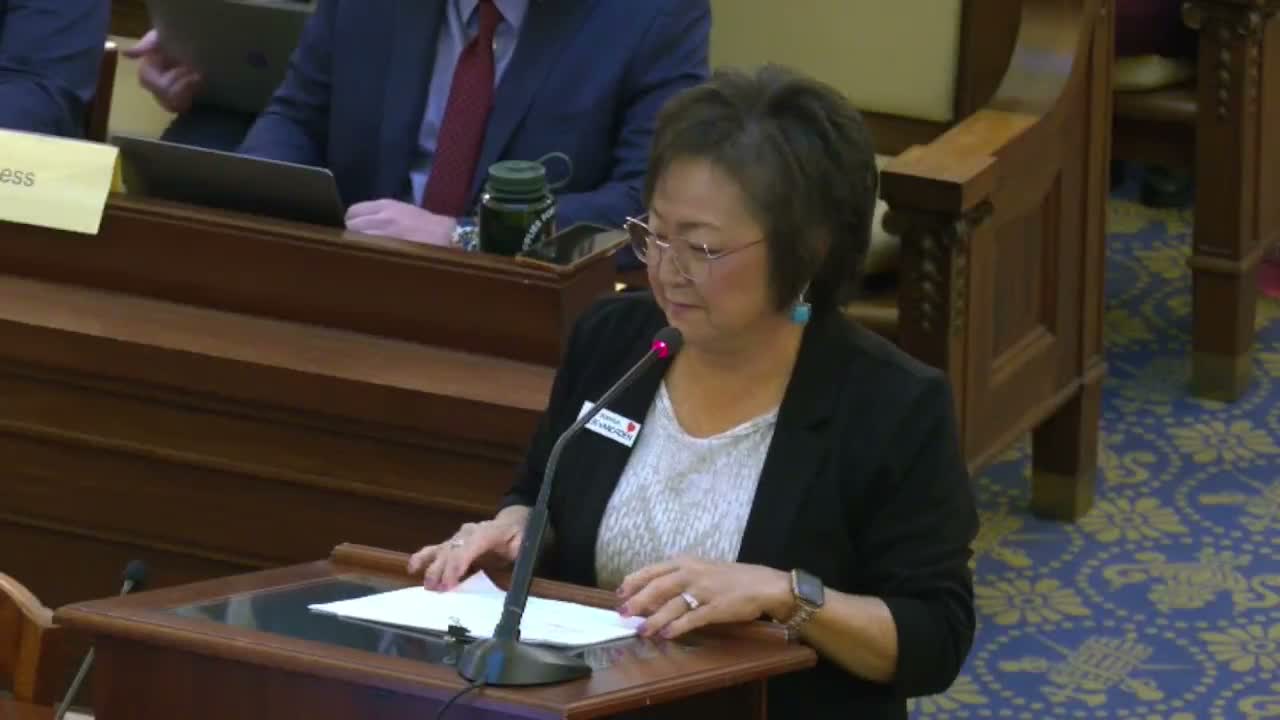
Senate Health and Welfare Chairman Senator Julie Van Orden and House Health and Welfare Chairman Representative John Van der Rotta briefed the Joint Finance-Appropriations Committee on budget pressures and policy proposals, urging closer oversight of health-and-welfare spending and caution on vendor consolidation.
Van Orden said members had differing views but flagged two priorities: closer scrutiny of public-health contracts and caution about folding the 988 suicide-crisis hotline into a behavioral-health managed-care contract. "I'm really not in favor of that," she said, arguing that moving 988 into a managed-care behavioral-health contract would place the service with a single vendor at a time when managed care is still taking shape.
The chairs said the governor’s budget includes across-the-board reductions and noted some committee members supported going beyond the governor’s 3% recommendation to a 4% reduction in certain areas. Van Orden said she preferred that legislators examine base budgets and work directly with agencies to identify targeted savings rather than rely solely on blanket cuts.
Representative Van der Rotta described a House bill that would pull back $21,000,000 in residential habilitation (res hab) funding that he said was initially allocated with COVID relief and later backfilled with general funds. "The reason that money was put in, it was actually COVID money that was put in to begin with," he told the committee, and added the draft bill includes audit and oversight provisions to ensure the money is spent on appropriate services.
Members pressed for detail on how the funding reductions would affect provider rates and services. Van der Rotta said the committee seeks an evaluation tool and audits to make sure payments target high-need clients, noting prior litigation had removed a proprietary evaluation tool and left the state without a clear method to assign service tiers. He said the current proposal would create clearer tiers and oversight so that "we're paying for those who have the real need and not overpaying for the lower ones."
Lawmakers also discussed a proposal to add work requirements and an enrollment cap to Medicaid. Van der Rotta said his draft would let Medicaid expire on Dec. 31 and reinstate it Jan. 1 with work requirements and a capped enrollment; he said a cap could create a waiting list that would in turn open some individuals to purchase coverage on the exchange. Questions about an asset test and the precise length of qualifying employment (one month versus 90 days) remain pending; Van der Rotta said final parameters will depend on federal guidance and further drafting.
No formal votes or committee actions were taken during the briefing. The chairs said they will return with bills and supporting documents, and stressed that JFAC’s role includes examining fiscal impacts while germane committees will handle the policy dimensions.
The committee will continue daily budget work in upcoming sessions.