Lifetime Citizen Portal Access — AI Briefings, Alerts & Unlimited Follows
House subcommittee advances operating-budget substitute, shifts higher-education funding to FTE model
Loading...
Summary
The House appropriations subcommittee approved a substitute FY27 operating budget that replaces parts of the current higher-education allocation with an FTE-based funding model that would reallocate existing dollars by student full‑time equivalent; members praised the reform but warned of steep, rapid cuts for some institutions and asked for follow-up analysis.
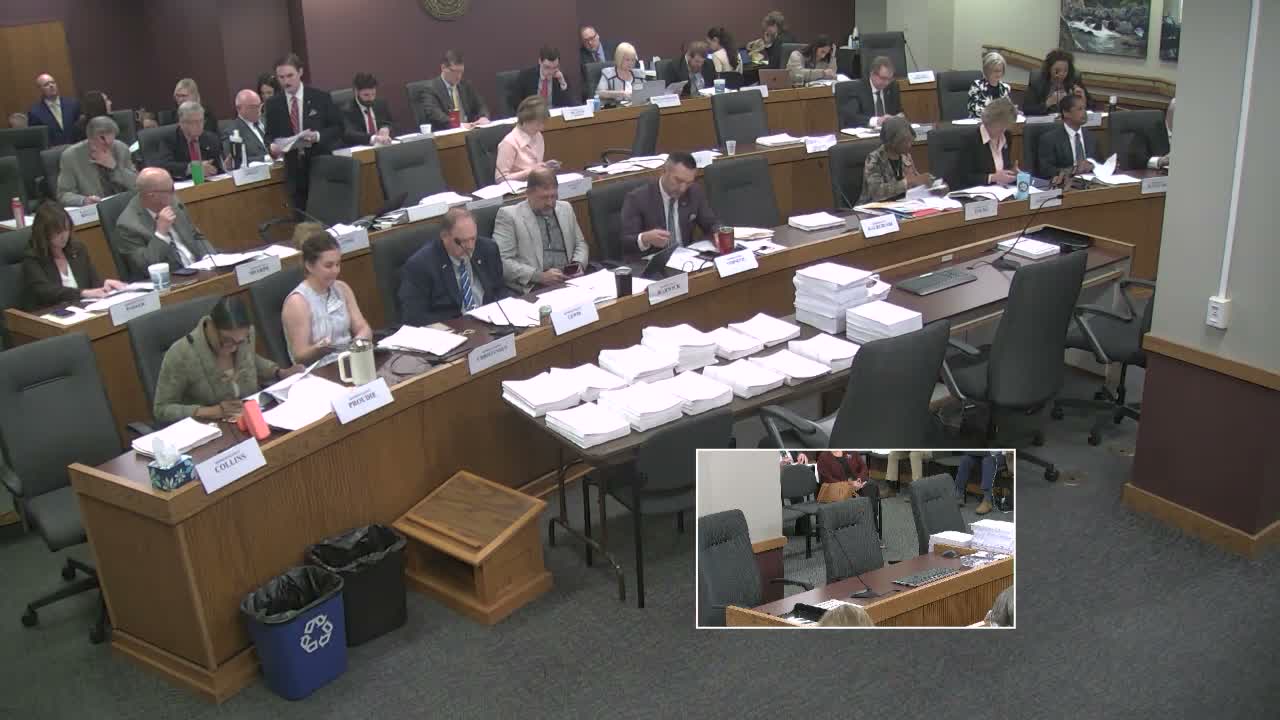
The House appropriations subcommittee on Wednesday advanced a substitute operating budget that would move much of higher-education funding to a per‑student full‑time‑equivalent (FTE) model and make a number of one-time and line‑item changes.
Chair Deaton told members the committee substitute totals about $15.75 billion in general revenue — below the governor’s operating recommendation — and said the document shows “about $300,000,000 in the bottom line” under the committee’s assumptions. He also confirmed a one‑time transfer of $64,000,000 from the blind pension fund into the education foundation formula, a constitutional‑permitted sweep the document treats as a swap rather than an ongoing revenue source.
Why it matters: The substitute’s most consequential policy change would fund community colleges and four‑year institutions on an FTE basis — 12 credit hours for two‑year schools and 15 for four‑year undergraduate students — so that “the money follows the student,” the chair said. Supporters described the move as a long‑overdue simplification of an “antiquated” system that often allocates state money inconsistently across similar enrollments.
Vice Chair Davidson, who co‑authored the FTE proposal, told the committee the change was deliberate and not haphazard: "this wasn't haphazardly thrown together," he said, adding that the model uses existing enrollment data and aims to make funding more transparent and portable.
Pushback and concerns: Several members said the plan creates winners and losers and moves too quickly into a new system. Representative Lewis warned the formula could reward raw enrollment without accounting for student outcomes: "You could be offering thousands of FTEs of courses, and they're not completing anything," he said, urging attention to completion metrics. Representatives from rural and regional districts said some institutions could face cuts severe enough to threaten operations and local services.
Graduate credits and program‑cost differences were a particular sticking point: members repeatedly pressed whether graduate enrollment would be counted as 9, 12 or 15 credits for FTE purposes and whether high‑cost, workforce‑critical programs such as nursing and engineering would receive any adders. The vice chair said the committee would seek department follow‑up. Chair Deaton and Davidson said they expect departments to provide impact statements and that some differentials (tuition, program fees) would continue to apply at the institutional level.
Implementation: Members asked about stakeholder outreach and phasing. The vice chair said discussions began before session and that campuses were briefed last week; community college presidents, he said, had voted unanimously to oppose the recommendation at a meeting that morning. Several members asked for a slower, phased implementation to avoid unintended closures and accreditation impacts.
Other notable budget moves: The chair signaled an intent to transfer interest accrued on certain I‑70 and I‑44 project funds to general revenue (about $110 million identified in committee remarks) and reiterated the proposal to contribute a one‑time $41 million employer payment to pension funding now certified at a 32% contribution rate.
Next steps: Committee members asked departments for clarifying impact statements on graduate credit treatment, program‑level cost differentials and institution‑level effects. The substitute will be revised as staff and agencies provide additional information and the committee continues markup.
Ending: The committee adjourned after a lengthy debate and asked staff to compile impact analyses; members warned the FTE shift will be a continuing subject of debate at forthcoming hearings.