Get Full Government Meeting Transcripts, Videos, & Alerts Forever!
Get email alerts on the Occupational Therapy Board topic
No spam. Unsubscribe anytime.
Occupational Therapy Board Seeks Fee Flexibility as It Revises Training Requirements
Summary
Board leaders described improved enforcement performance and licensing output but warned of slim reserves and requested statutory fee authority; stakeholders supported reducing on‑the‑job hours for advanced hand therapy to increase access.
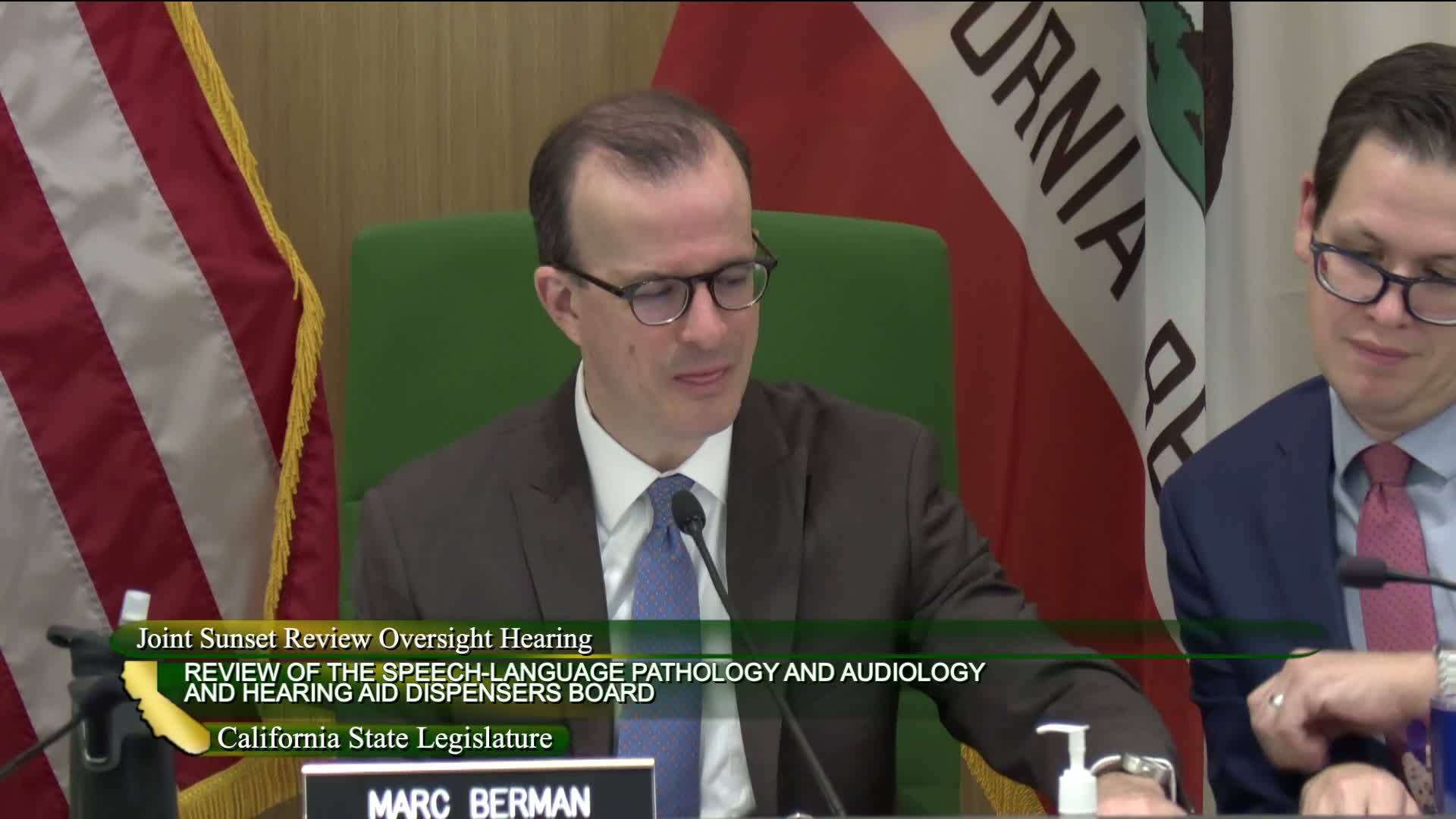
Vice President Dr. Christine Wietlisbach and Executive Officer Austin Porter summarized the Board of Occupational Therapy's work since its last sunset review, noting expanded licensing issuance (over 7,000 licenses since the last review), an enforcement division that has increased complaint processing and a new strategic plan.
Porter explained the board’s fund condition: projected months in reserve had been reforecasted, with an expectation to finish the current fiscal year with about 5.1 months in reserve but a forecast of as little as 0.8 months by fiscal year 2028–29 without changes. The board has increased renewal fees to the statutory cap and requested additional statutory fee authority to avoid being capped on all fees for the next four years.
Public comment from occupational therapy advocates (OTAC) supported the sunset extension and applauded a proposed reduction in advanced practice hand therapy on‑the‑job training from about 480 hours to 80 hours, which proponents said will update curriculum and improve access.
Why it matters: Small licensing boards with limited licensee populations can face fiscal pressure; fee caps limit the board’s ability to respond to rising costs for enforcement, DOJ processes and personnel.
Next steps: The committee accepted the presentation and requested follow‑up detail on fee modeling and administrative costs; no action was taken at the hearing.