Lifetime Citizen Portal Access — AI Briefings, Alerts & Unlimited Follows
Council extends PeaceDC emergency, agrees to data study after heated debate on pretrial detention
Loading...
Summary
After hours of debate, the D.C. Council approved the PeaceDC omnibus emergency measures and a one‑year extension and study period for the rebuttable presumption for pretrial detention, rejecting an effort to strike the presumption outright and adopting a sunset/study amendment to gather more data.
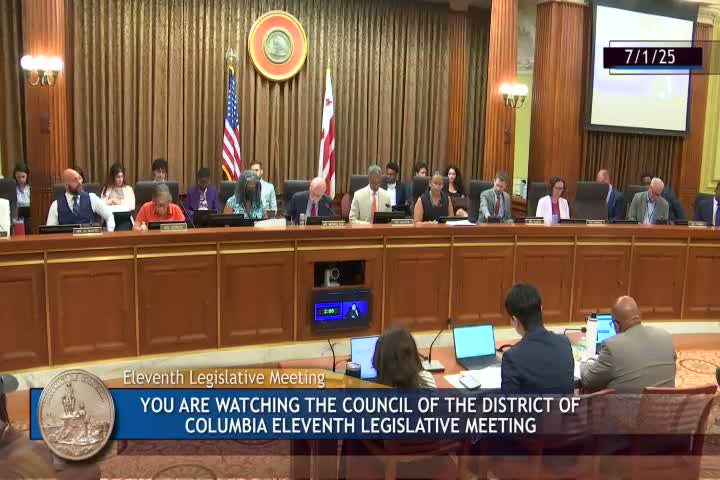
The Council of the District of Columbia on July 1 approved an emergency version of the PeaceDC omnibus package — which includes changes to Metropolitan Police Department college‑credit requirements, expanded survivor benefits for Fire and EMS families, and provisions related to record‑sealing — but only after a contentious debate over a permanent expansion of the rebuttable presumption for pretrial detention.
Councilmember Brooke Pinto, the bill's lead sponsor, said PeaceDC "is a comprehensive plan to continue the progress we've made to drive down crime and promote sustainable peace in the district," and outlined provisions intended to bolster public safety while supporting victims and first responders. Pinto described the proposed presumption as a modest, case‑law‑informed tool that does not force judges to detain anyone but instead aligns statutory language with judicial interpretation.
Councilmember Robert White urged caution. He argued the data do not show that expanding the presumption lowers reoffending and warned of disparate impacts on Black and Brown residents, saying the council "does not have evidence that pretrial detention has lowered re‑offense in DC." White moved an amendment to strike the presumption, but the amendment failed in recorded proceedings and voice votes earlier in the session.
Faced with sharply divided views on liberty and public safety, the council adopted an amendment from Councilmembers David Grosso (co‑sponsor listed in committee discussion) and Councilmember Vincent B. McDuffie (co‑sponsor) to extend the presumption temporarily and require additional study. The McDuffie/Fruman amendment extended the sunset date and directed the Criminal Justice Coordinating Commission (CJCC) to produce a more detailed report by September 30, 2026, to give the council additional evidence on the provision's effects.
The recorded roll calls and statements in committee and on the dais show the contest was less about the stated policy goals than about the availability and interpretation of the evidence: proponents stressed judicial practice and the need for tools to protect public safety, while opponents pointed to limited or inconclusive CJCC findings and to risks of unequal application and long‑term harm from increased pretrial detention.
With the sunset/study amendment adopted, the council then approved the PeaceDC omnibus emergency measures and the conforming underlying emergency bill by voice votes. Pinto said the emergency action was needed to avoid a gap in law that could remove statutory tools before permanent measures and study language could be completed.
The council’s action sends an emergency version of PeaceDC into implementation while requiring further data collection and a report to inform whether the presumption should remain in place permanently.