Get Full Government Meeting Transcripts, Videos, & Alerts Forever!
Get email alerts on the Board Procedures And Ethics topic
No spam. Unsubscribe anytime.
Town attorney reviews planning board duties, public‑records and conflict rules
Summary
Attorney Lauren Womble briefed the Nags Head Planning Board on statutory duties, differences between legislative and quasi‑judicial reviews, limits on recommended conditions for special‑use permits, conflict‑of‑interest rules and public‑records cautions.
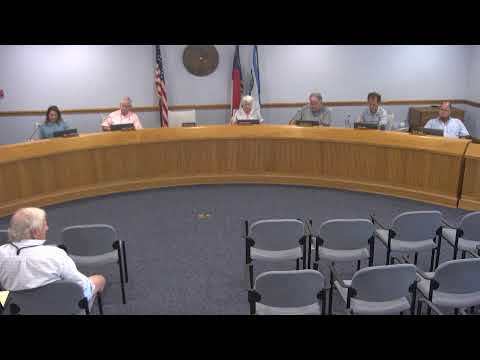
Attorney Lauren Womble, introduced to the board at the start of the Aug. 19 meeting, gave an extended overview of the planning board’s duties, statutory timeline requirements and ethical obligations.
Womble cited North Carolina General Statute 160D‑301 and the town UDO and said the planning board’s work is advisory: the board reviews comprehensive plans, text and map amendments, major site plans and special‑use applications and prepares plan‑consistency statements to accompany recommendations to the Board of Commissioners. “The planning board is an advisory board,” Womble said, noting that commissioners often rely on the board’s review even though the recommendation is not binding.
She described the difference between legislative actions (where board discretion and public input have more weight) and quasi‑judicial procedures (where ex parte information is restricted and the decision‑maker must treat the record as evidence). She cautioned that recommended conditions for special‑use permits must relate to standards in the ordinance and cannot be arbitrary.
On conflicts of interest she advised members to consult staff and the town attorney when unsure and to disclose and recuse when a direct, substantial financial interest exists. Womble noted the gray area of “associational” relationships and advised board members to use a practical test — and to document any interactions. She also warned that email exchanges subject to “reply all” can trigger an open‑meetings violation and that town and even personal emails may be subject to public‑records requests.
Board members asked about ex‑parte contacts, voting options and whether the appearance of a conflict should influence participation; Womble said members should seek guidance from staff and the attorney and that statutory appeal windows can permit later legal challenges if conflicts are not addressed in time.