Get Full Government Meeting Transcripts, Videos, & Alerts Forever!
Get email alerts on the Child Custody topic
No spam. Unsubscribe anytime.
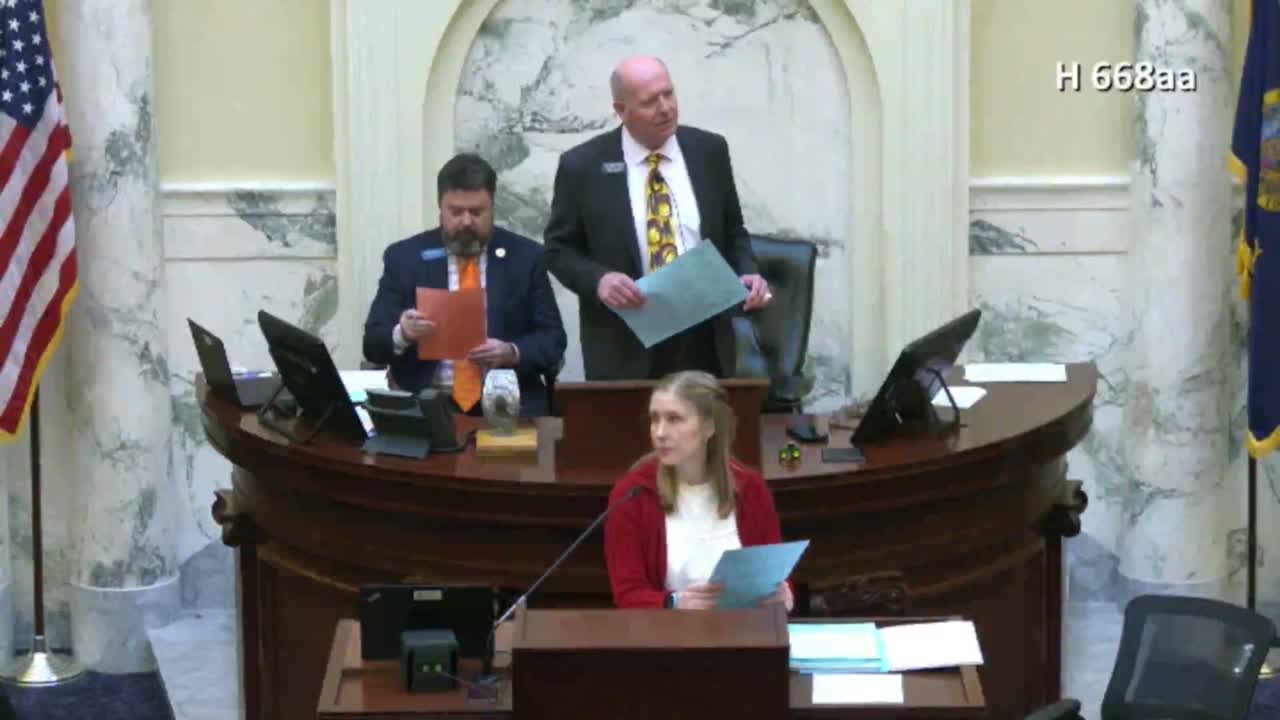
Idaho House tightens custody-interference law, adds citations and graduated penalties
Summary
The Idaho House on March 10 amended and passed HB6-68 to clarify child custody interference, add affirmative defenses, require law-enforcement reporting and establish graduated penalties (first offense an infraction up to $100).
The Idaho House on March 10 approved an amended bill that clarifies the state's child custody interference statute and creates a framework for enforcement and graduated penalties.
Sponsor summary: The bill—filed as an amendment to Idaho Code section 18-45-06—was presented after an extensive task force and more than 250 public testimonies. Sponsors told the House the existing law mixed kidnapping and custody interference, leaving law enforcement and courts insufficient guidance. The amendment adds affirmative defenses for common ‘‘life happens’’ events, restores felony language for taking a child out of state, and creates graduated consequences: a first offense may be treated as an infraction (fine up to $100), with increased penalties for repeat conduct.
Enforcement and reporting: The bill directs law enforcement to verify the location of a minor in no‑show cases, file written reports to support subsequent civil or criminal court action, and gives officers discretion to assess penalties based on circumstances. Sponsors said the written-report requirement supplies judges and prosecutors with evidence they previously lacked.
Floor reaction: Sponsors said the change provides ‘‘teeth’’ for enforcement and offers reasonable defenses; members asked clarifying questions about when officers should decline to issue penalties and how reports would feed into the courts. The House passed the amended bill by recorded vote.
What happens next: HB6-68 was transmitted for enrollment and will be sent to the Senate; implementation will involve local law enforcement and court systems updating procedures and forms to document alleged interference incidents.