Get Full Government Meeting Transcripts, Videos, & Alerts Forever!
Get email alerts on the Immigration Enforcement topic
No spam. Unsubscribe anytime.
House approves bill to standardize local participation in federal immigration enforcement models
Summary
The Idaho House passed House Bill 6-59 after floor debate, establishing a statewide framework for local law-enforcement participation in federal jail-enforcement, task-force and warrant-service models; supporters pointed to federal reimbursements while opponents warned of unfunded administrative and backfill costs.
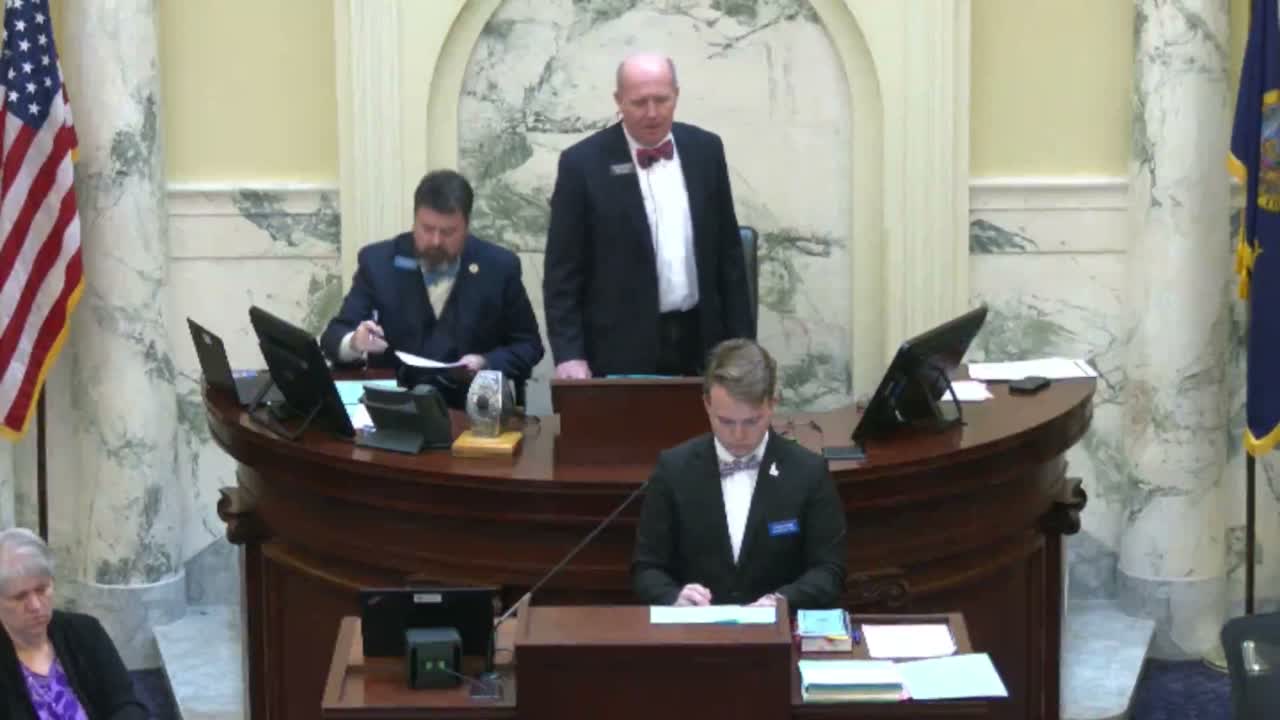
The Idaho House on March 6 passed House Bill 6-59, a measure to create a statewide framework for local law-enforcement participation in federal immigration-related programs, after more than an hour of floor debate.
Representative from District 2, who opened debate in support of the bill, described the measure as a way to create consistency across counties and cited federal reimbursements and other incentives. “There are bonuses,” the representative said, adding that the federal government “will reimburse for their flights, their hotel costs,” and that several sheriff’s offices already participate in similar programs.
Opponents pushed back on the fiscal and operational implications. A member identified as Representative from District 19 said the bill amounted to an unfunded mandate for many counties and highlighted three categories of cost: administrative time to apply, commitments to future successor programs, and the lack of reimbursements for backfill when officers attend training. “If you take two sheriff’s deputies from Ada County and you send them to Georgia, now we’re down two in Idaho and we get no money for that,” the representative said.
Other lawmakers pressed for clearer funding or an explicit opt-out process. One lawmaker who supports the bill urged colleagues to consider the cost side as well, arguing the legislation would save local taxpayers by increasing federal reimbursements for housing certain inmates and by reducing county expenses over time.
The debate included repeated references to information on the U.S. Immigration and Customs Enforcement (ICE) website; one member asked colleagues to consult that source for details about equipment reimbursements and vehicle allowances as described there. Several speakers said agencies could apply to participate and that there is some administrative flexibility for agencies that cannot meet the program requirements.
After floor discussion and a recorded roll call, the clerk reported the result: a majority voted in favor and the House passed House Bill 6-59. The House approved the bill for transmittal to the Senate.
The transcript records proponents saying ICE or federal partners provide reimbursements for certain expenses, while opponents said important costs (notably backfill for officers’ regular duties) are not covered. The House did not specify in the floor debate additional state funding to cover backfill, though several members urged that funding be considered if broad participation was expected.
The bill’s next procedural step is transmittal to the Senate for its consideration.