Get Full Government Meeting Transcripts, Videos, & Alerts Forever!
Get email alerts on the Budget And Fiscal Oversight topic
No spam. Unsubscribe anytime.
Pleasanton Unified gets conditional county approval; board to consider resolution committing to cuts and timeline
Summary
Alameda County issued Pleasanton Unified a conditional approval of its budget; district staff will ask the school board on Sept. 26 to adopt a high‑level resolution committing to a timeline and targets to restore fiscal solvency while more detailed program analyses and community outreach continue through winter.
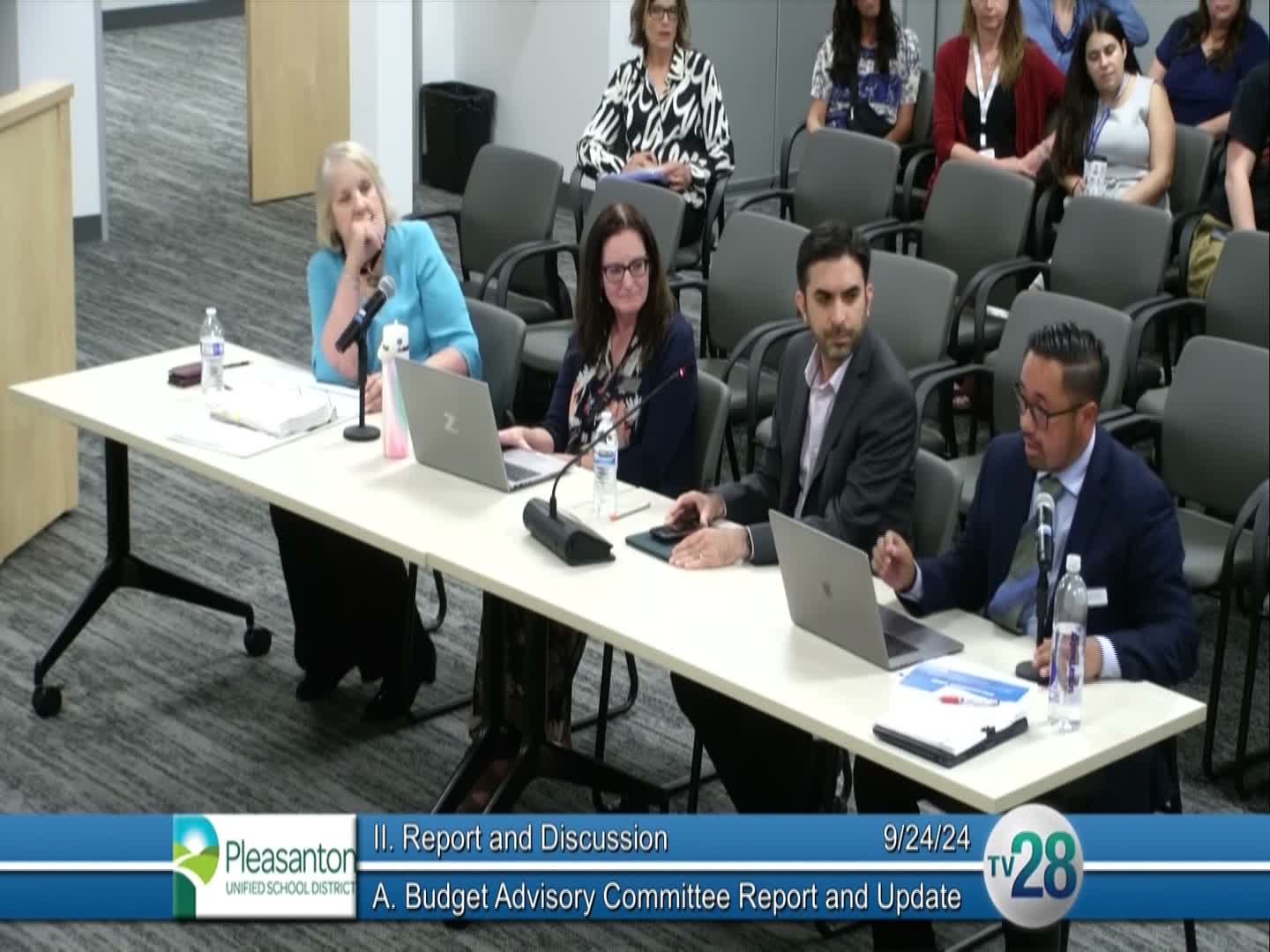
Pleasanton Unified School District received a conditional approval letter from the Alameda County Office of Education that requires the district to respond by Oct. 8 and gives the county a target date of Nov. 8 to determine final budget approval. Alan Gard, associate superintendent of business services with the Alameda County Office of Education, told the board the county’s conditional action follows state rules under AB 1,200 and Education Code provisions that require districts to certify their ability to meet financial obligations for the current and two subsequent years.
The county presentation said the state requires a minimum reserve for economic uncertainty — about 3% of the general fund for a district of Pleasanton’s size — and that a qualified certification means the district can meet obligations for the current year but may not meet them for the next two years. Gard said that if a district can’t meet conditions, the Fiscal Crisis and Management Assistance Team (FCMAT) may be engaged under state law.
Interim Superintendent Maurice Geisel and assistant superintendent Ahmad (Sheikha Salami) outlined a two‑step plan the district will ask the board to endorse on Sept. 26: (1) adopt a high‑level resolution committing the district to targets and a process to achieve fiscal solvency, and (2) continue detailed program‑level analysis and public engagement through January and February so the board can approve any required reductions in spring. Geisel said the district’s work will prioritize keeping cuts “as farthest away from the classroom” as possible while addressing fixed central costs.
District staff said the current target to close the 2025–26 structural gap is in the range of $8.6 million, but they emphasized that the resolution being proposed next week is intentionally high level and will not lock the board into specific program or position eliminations. Staff described the resolution as a pathway to submit an updated first interim that could earn a positive certification if the district meets the targets and follows the timeline.
Board members pressed for more program‑level analysis before finalizing reductions. Trustees asked staff to report the net cost or profitability of optional revenue programs (for example, summer enrichment and the Pleasanton Virtual Academy), to inventory positions funded from one‑time COVID relief, and to provide the deeper cost‑benefit data the board will need for decisions. Staff committed to producing that analysis and to continuing the Budget Advisory Committee (BAC) work and community outreach through a series of site meetings, town halls and targeted “roadshow” sessions.
The district also cited several revenue‑generation and cost‑reduction ideas under consideration, including expanding facility rentals and summer programs, pursuing energy and water conservation projects, and exploring a parcel tax campaign that would take at least two to three years to prepare for a ballot measure. Staff cautioned that bond funds and categorical grants are restricted by law and cannot be used to fill general‑fund deficits, although bond‑funded facility improvements (for example, solar or lighting upgrades) could reduce operating costs indirectly.
Next steps: the board is scheduled to consider the fiscal‑solvency resolution on Sept. 26. Staff will update financials for the first interim and return with detailed program analyses and recommended actions in January and February; by mid‑March staff expect to issue layoff notices if reductions require a reduction in force.
"We want to be able to make our own decisions," Geisel said, adding that the goal is to restore positive certification without county intervention. "The work is hard, but we have the elements to bring the budget back into alignment."