Lifetime Citizen Portal Access — AI Briefings, Alerts & Unlimited Follows
Committees review Idaho Juvenile Corrections budget; director warns staff cuts would deepen shortages
Loading...
Summary
Legislative analysts and Department of Juvenile Corrections Director Ashley Dowell briefed the joint budget committees on staffing shortfalls, vehicle and IT replacement requests, and the role of youth assessment centers; the agency said reclassifying six positions partly addressed a 12-FTE shortfall and warned a 2% reduction plan could reverse those gains.
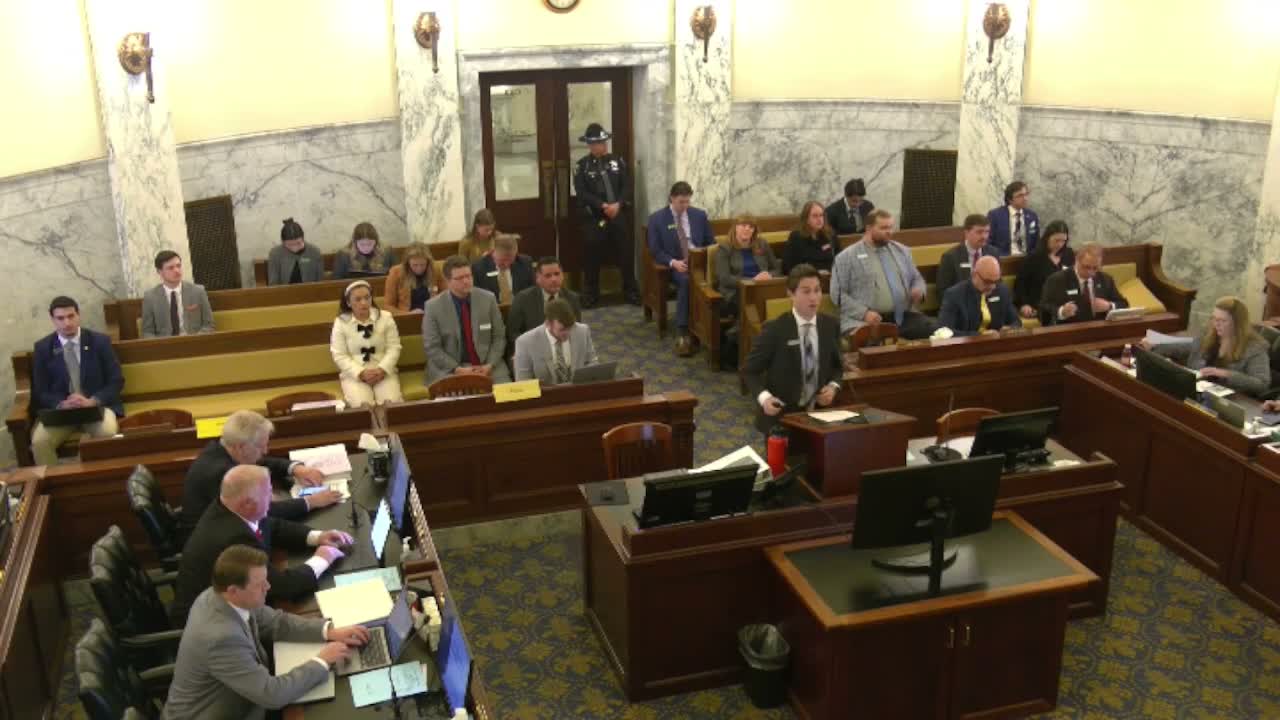
Noah Peterson, a budget policy analyst with the Legislative Services Office, told the joint Senate Finance and House Appropriations committee that the Department of Juvenile Corrections (IDJC) manages three budget programs — administration, community operations/program services and institutions — and is primarily general-funded with several small dedicated funds for juvenile services. "You can also see that their FTE fill percentage is about 92%," Peterson said during his agency budget presentation, and he outlined recent enhancements and one-time requests, including radio upgrades and IT replacements funded from the State Juvenile Correction Center Endowment Income Fund.
Director Ashley Dowell, who identified herself as the director of the Department of Juvenile Corrections, thanked staff and described the agency’s mission as balancing public safety with rehabilitation and reentry. "A large part of what we do is work with youth to develop skills to be productive members of the community," Dowell said, adding that about 95% of youth are served at the county probation level and the department represents roughly 5% of youth in the juvenile justice system.
Committee members pressed specifics. Senator Mitchell asked for a list and mileage of 10 vehicles the agency requested to replace; Dowell said the vehicles are primarily used for juvenile transport and court attendance and that many are at the end of their service life, increasing maintenance costs, and offered to provide the detailed mileage list after the hearing. Representative Price asked whether replacement items overlap with Department of Public Works projects; Noah Peterson clarified that DPW handles larger-scale maintenance projects that meet DPW thresholds, and the agency’s replacement items are separate, smaller projects.
Lawmakers also focused on workforce and service delivery. Representative Manwaring asked who conducted a recent staffing analysis and how many vacancies were converted to direct-care positions. Dowell said the department contracted national corrections firm CGL, which concluded the department was understaffed by 12 positions at the current census. "We identified six of those positions [and] they've been reclassified," she said, noting those reclassifications get the department about halfway to the identified need; she warned that the 2% reduction plan under discussion would effectively revert those reclassifications and leave the department short 12 positions.
Senator Wintrow requested more detail about the youth assessment centers that the department credits with lowering the state’s juvenile census. Dowell clarified that youth assessment centers are not all run by the department — some are county-run or operated by 501(c)(3) organizations — and that they provide a range of services including mental-health and substance-use assessments, referrals to community services, family counseling and short-term respite for youth in crisis.
On sentencing questions, Senator Hart asked whether juveniles in IDJC facilities are serving mandatory minimum sentences. Dowell said most juvenile sentencing is indeterminate and release is based on program goals; she added the agency does house youth committed under district court (tried and convicted as adults) and said she would follow up on whether any juveniles are in the system under mandatory minimums for drug crimes.
The committee heard financial details from Peterson about a $350,000 transfer moving youth assessment center costs into another decision unit and a FY27 request from endowment funds for vehicles, recreation-area improvements, facility furniture and a $1,035,800 request for IT replacements (laptops, desktops and network equipment). Peterson also noted a net reduction of $285,100 in FY26 appropriations tied to diminished miscellaneous revenue.
The chair closed questions after members raised no further issues and thanked Director Dowell for appearing. The committee recorded no formal motions or votes on the record during this hearing; decisions about staffing and holdbacks remain subject to the broader budget process.