Get Full Government Meeting Transcripts, Videos, & Alerts Forever!
Get email alerts on the Tax Commission Budget topic
No spam. Unsubscribe anytime.
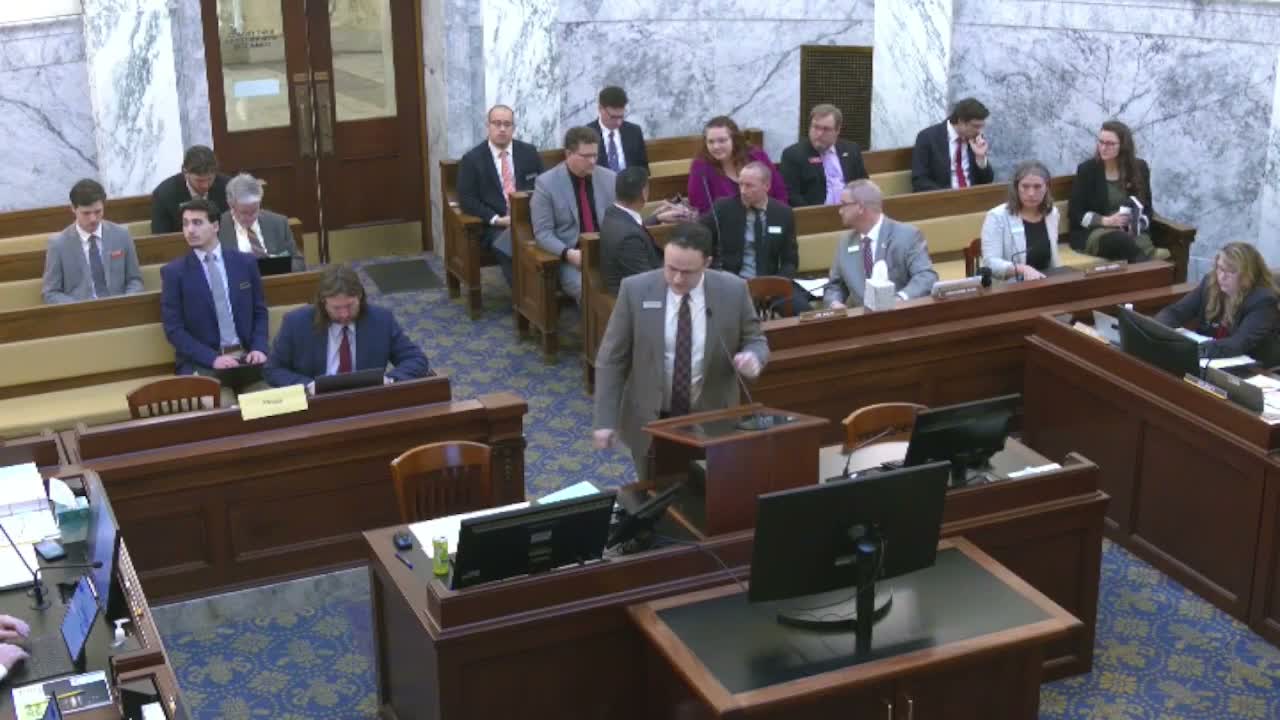
Tax Commission warns of a ‘tipping point’ as members probe staffing, parental credit and conformity work
Summary
Idaho’s Tax Commission told the Joint Finance Committee it is at a workload 'tipping point' as it implements a parental choice tax credit, handles customer service shortfalls, and prepares for extensive tax conformity changes that may require rapid software and instruction updates.
The Joint Finance Committee spent the latter half of its session on the Idaho State Tax Commission’s roughly $55 million budget, where commission leaders warned that staffing and software capacity are strained ahead of a potentially retroactive tax‑conformity package.
Jeff McCrae, chairman of the Idaho State Tax Commission, said the agency collects and distributes billions in revenue and that it is approaching a ‘tipping point’ where further cuts could reduce the commission’s ability to process returns and answer taxpayer inquiries.
“Your return on the investment of, $55,000,000 in both general fund and dedicated funds resulted in more than $7,800,000,000 in revenue received by and distributed to the state,” McCrae said, then added that the commission is “down to only options that will reduce the volume of work that can be done to collect revenue.”
Why it matters: Lawmakers pressed the commission on phone‑center wait times, audit capacity and implementation of the Parental Choice Tax Credit program. McCrae said the commission handled a large, rapid implementation of the school choice credit with seven additional staff and that the agency used electronic‑only applications and audit steps to limit fraud.
On the parental credit, McCrae said the application system was electronic and prioritized applicants who meet income parameters (those at or below 300% of the federal poverty level receive top priority). He also said the statute includes an attestation subject to criminal penalties and that the commission established due‑process and audit protocols.
Committee members also focused on the prospect of a substantial conformity bill (referred to in session as the “one big beautiful bill”) that could be retroactive effective Jan. 1, 2025. McCrae described the operational strain such a bill would create: the commission would need to update instructions, forms and software interfaces and conduct testing and education in an accelerated timeframe.
“We are already receiving tax returns for the 2025 tax year,” McCrae said. “Any of those returns that have been filed to date and until we have a conformity bill… will likely have to be amended or changed.” He warned that compressing the normal nine‑month update cycle into weeks would be a “heavy lift” and could require overtime or vendor action.
Members asked for tax‑gap estimates, a staffing model to improve phone response times and the list of the tax commission’s highest cost drivers; McCrae said personnel is the largest cost and estimated it would take roughly 45 staff to operate phone centers at typical business standards versus a much smaller current staff.
What’s next: The committee requested additional data on the tax gap, staffing needs for customer service, and the mechanics of the parental choice program. McCrae said the commission would provide the commission requested materials and emphasized the importance of resourcing ahead of tax‑season changes.
Ending: The committee adjourned until 8 a.m. the following day without taking votes on the Tax Commission’s budget items during the session.