Get Full Government Meeting Transcripts, Videos, & Alerts Forever!
Get email alerts on the State It Budget topic
No spam. Unsubscribe anytime.
Committee hears ITS pitch for firewall upgrades, consolidation costs and a new AI data repository
Summary
Legislators questioned a roughly $50M Office of Information Technology Services budget request focused on firewall hardware/support, consolidation of 58 DHW IT positions, timing issues in dedicated funds, and a small federal grant to pilot an AI data repository.
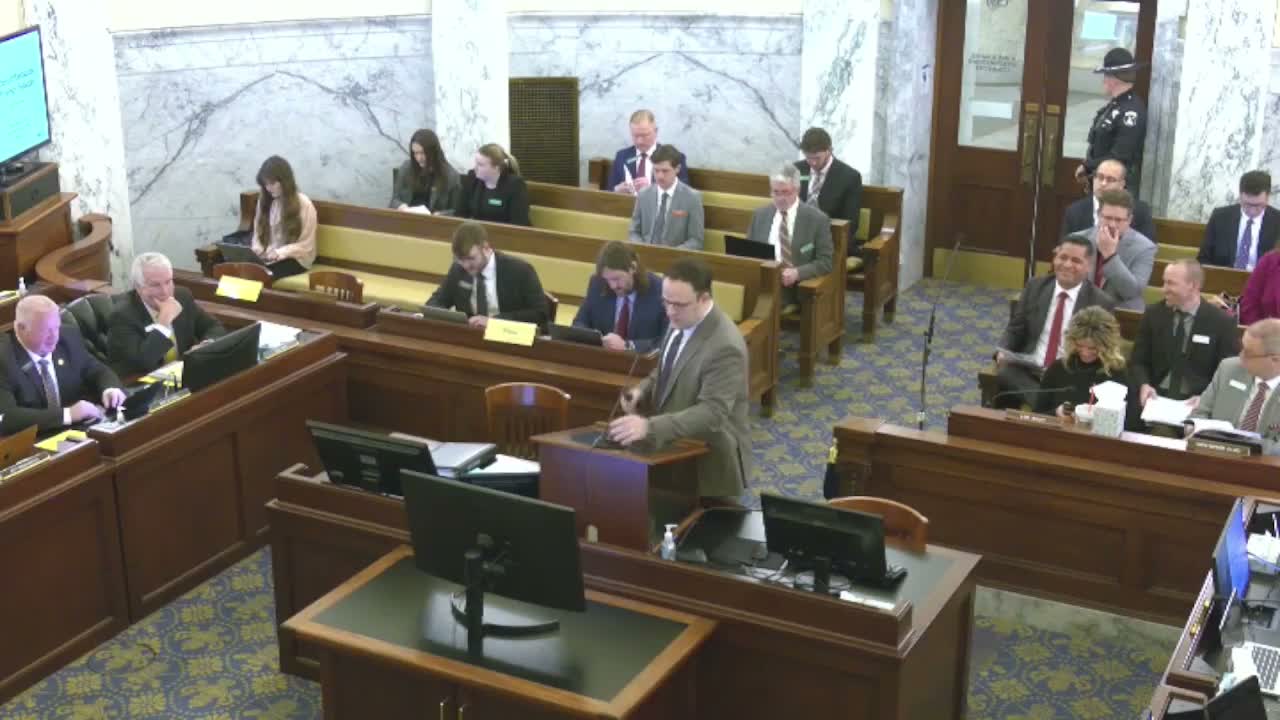
The Joint Finance Committee heard on‑the‑record presentations Monday on the Office of Information Technology Services’ roughly $50–55 million budget, with administrators seeking funding to replace aging firewall hardware and to absorb staff and operations moved from other agencies.
Christopher LaHozant, a budget and policy analyst with the Legislative Services Office, told the committee the agency’s consolidation timeline will bring 58 employees from the Department of Health and Welfare into ITS and that those personnel changes have driven both one‑time and ongoing costs. LaHozant said ITS currently shows 243 authorized full‑time positions and reported six vacancies as of November.
Why it matters: ITS is a central provider of cybersecurity and shared IT services for many state agencies. Lawmakers pressed the agency and analysts about whether dedicated‑fund cash flow supports the requested appropriation and whether short‑term general‑fund remedies will be needed to smooth the timing of pass‑through payments.
LaHozant noted that some ITS spending arrives as continuously appropriated trustee and benefit payments — revenue ITS collects from other agencies when ITS purchases hardware or services on their behalf — and that the blend of dedicated revenue and continuously appropriated cash complicates bookkeeping. He said the legislature might consider a policy bill to separate the two types of cash into distinct funds.
“Right now in Idaho code, the continuously authorized cash is cash that they receive from other agencies that they are purchasing hardware for,” LaHozant said, describing the accounting challenge.
Administrator Alberto Gonzales, who spoke for ITS, stressed the security stakes and urged the committee to fund critical upgrades. Gonzales said the state’s defensive systems block a very large volume of malicious traffic and that firewall protection is central to statewide cybersecurity.
“We’re battling over a hundred million attacks every month,” Gonzales told the committee. He said ITS has expanded its firewall footprint — from about 13 firewalls three years ago to roughly 129 now — and that the agency fields roughly 82,000 service tickets every year.
Cost and timing questions dominated the committee’s exchanges. Gonzales said the agency’s current request includes $1.3 million for hardware replacement and another $1.3 million for enterprise‑level support agreements. He warned that deferring the upgrades could increase the price tag by about $3 million because vendors have stopped supporting some older equipment.
“If we come back to you in a year or two, not only do we have to do what we’re asking you today, but the increased cost is $3,000,000,” Gonzales said.
Lawmakers also asked about a small federal grant and a related multi‑year project. Senator Zaterbell read the budget text saying the project could support advanced analytics, policy evaluation and AI‑driven innovation and asked whether state appropriations would be required in future years. LaHozant replied that the agency sought access to roughly $56,200 in federal grant funds this year for a statewide data repository and that earlier budget material quoted larger multi‑year figures tied to potential federal grant activity.
Committee members queried procurement speed, the statewide cost allocation (sometimes called the swipe cap) and whether equipment transfers would reduce one‑time furniture and equipment requests when staff move. Gonzales said some assets will transfer with employees and that ITS has negotiated discounts and used pre‑competed contracts to shorten procurement timelines.
What’s next: Committee members requested further details on the dedicated fund cash flow, the grant financing and the precise hardware replacement schedule. ITS staff said they would provide additional documentation and performance metrics tied to enhancement requests.
Ending: The committee moved on to the Idaho State Tax Commission’s budget after approximately two hours of presentation and questions; no formal vote was taken on ITS items during the session.