Get Full Government Meeting Transcripts, Videos, & Alerts Forever!
Get email alerts on the General Fund topic
No spam. Unsubscribe anytime.
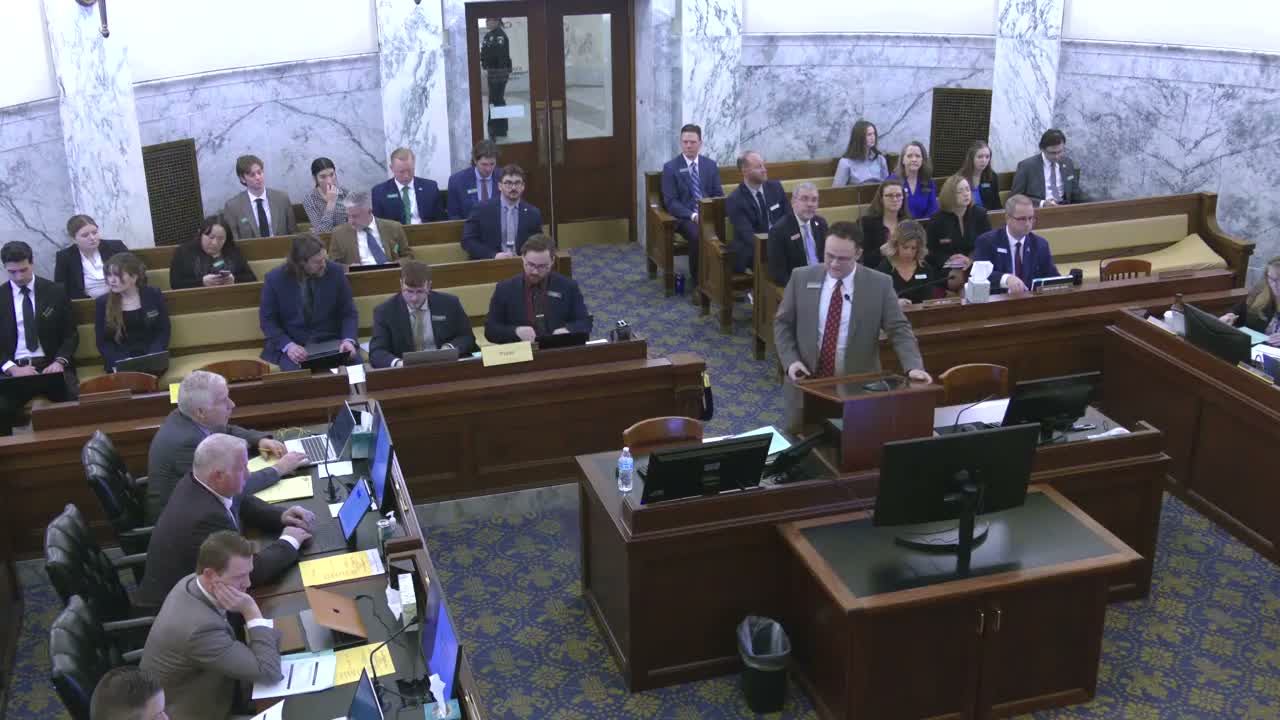
Legislative analyst Christopher Lahoset briefs JFAC on the green sheet and warns of a $78 million shortfall
Summary
Christopher Lahoset of the Legislative Services Office walked the Joint Finance-Appropriations Committee through the green sheet— the legislature's general-fund cash reconciliation—explaining revenue drivers, transfers and structural-balance concepts and warning that the forecasted ending balance would be negative $78,000,000 if lawmakers took no action.
Christopher Lahoset, a budget and policy analyst with the Legislative Services Office, told the Joint Finance-Appropriations Committee that the green sheet is the legislature's working cash-reconciliation for the state general fund and uses starting cash, revenue, transfers and appropriations to calculate an ending balance. "This is a General Fund cash reconciliation document that helps inform the legislature on the relationship or the function between forecasted tax revenues, cash transfers, policy bill fiscal impacts, and appropriations," he said.
Lahoset walked members through the basic formula: add starting cash, add forecasted revenues, include transfers and subtract expenditures to arrive at an estimated ending cash balance. Using the current numbers on the green sheet, he said "the ending balance here at the bottom right is 78,000,000" and warned that "if the legislature doesn't take any action and they were to leave tomorrow, the forecasted ending balance would be negative 78,000,000." The example was offered to show how policy bills, transfers or changes to revenue forecasts appear on the sheet.
He reviewed the major revenue buckets that feed the general fund (individual and corporate income taxes, sales tax and miscellaneous collections), noting that not all tax collections flow to the general fund because statute directs some revenue to dedicated funds. Lahoset also described the three-year budgeting cycle and how the Division of Financial Management updates forecasts in August and again in January.
On recent collection performance, Lahoset said the revenue monitor showed individual income tax collections cumulatively up by about $18.7 million compared with the prior year but about $3.4 million below the DFM forecast; he pointed to a cumulative variance figure the office is tracking. He also explained how the green sheet separates the governor's recommended column from the legislature's working column until lawmakers take action.
Committee members pressed Lahoset on areas that can obscure the picture, including continuously appropriated expenditures and reconciliation of cash balances. Lahoset said continuously appropriated items typically sit outside the annual appropriation flow and that details are available in the budget book. On bank reconciliation, he described the state's newer finance system (LUMA) and said that while the first year of onboarding had "some struggles," "there's been a lot of improvements" in reconciling fund balances with the treasurer's office.
Why it matters: the green sheet is the committee's daily working tool to see whether revenues, transfers and enacted policy changes produce a structurally balanced budget in the short term. Lahoset closed by pointing members to the legislature's website for the green sheet and the general fund budget monitor so members and the public can follow revenue performance as the session proceeds.
The committee had no votes on the green sheet itself; Lahoset stood for questions and the presentation concluded with members requesting follow-up materials (for example, the total of continuously appropriated funds and detailed exemption lists) be provided in committee materials.