Get Full Government Meeting Transcripts, Videos, & Alerts Forever!
Get email alerts on the Law Enforcement Accountability topic
No spam. Unsubscribe anytime.
St. Paul advances measures to bar law‑enforcement staging, require identification and limit masked operations
Summary
The council adopted an ordinance banning law enforcement staging on city property and introduced two related ordinances: one to require officers to display identification and another to prohibit face coverings that conceal identity except for narrow exceptions; staff framed legal rationale and public hearings drew many speakers urging transparency and accountability.
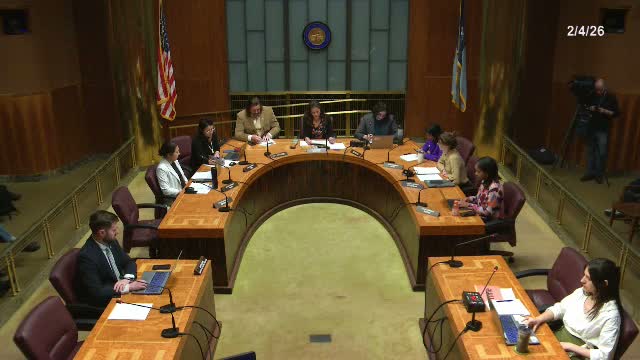
The St. Paul City Council on Feb. 4 adopted an ordinance that prohibits law enforcement staging operations on city‑owned property and moved forward two related immigration‑enforcement ordinances designed to increase transparency and accountability.
Council adopted Ordinance 26-5, which restricts federal and other law enforcement agencies from using city‑owned spaces as staging areas. During debate members said the change aims to preserve public trust and ensure city facilities remain welcoming to residents.
Council also introduced two legislative ordinances for further consideration. Ordinance 26-7, presented by Tim Greenfield, chief policy officer, would add Chapter 268B to the legislative code to prohibit law enforcement officers from conducting operations while wearing face coverings that conceal identity, with specified exceptions such as active undercover operations, tactical operations requiring protective gear, and clearly defined health and safety gear. Greenfield summarized legal rationales including state statutes historically limiting masked public disguises and public‑safety arguments about accountability and officer identification.
Separately, Ordinance 26-6 would require officers performing law enforcement duties to visibly display identification on the outermost layer of their uniforms. The measure drew a public hearing; residents raised concerns about broadly worded exceptions, the mobile field force, and the need to ensure exceptions do not swallow the rule. The council closed the hearing and laid the item over for final adoption on Feb. 11.
Councilors emphasized the ordinances are part of a phased legislative approach that also includes other drafts addressing masking, identification, and use of city property; legal durability and cross‑jurisdictional enforcement were cited as key questions to be resolved at later hearings.