Get Full Government Meeting Transcripts, Videos, & Alerts Forever!
Get email alerts on the Consumer Protection topic
No spam. Unsubscribe anytime.
Mayor warns of crypto‑ATM scams, urges regional coordination and legal review
Summary
Mayor Michael J. Ryan raised concerns about crypto kiosks operating like ATMs after national reporting and local complaints, citing an incident where an elderly resident lost tens of thousands. He asked staff, the police chief and the city attorney to coordinate countywide research and legal analysis on enforcement and registration options.
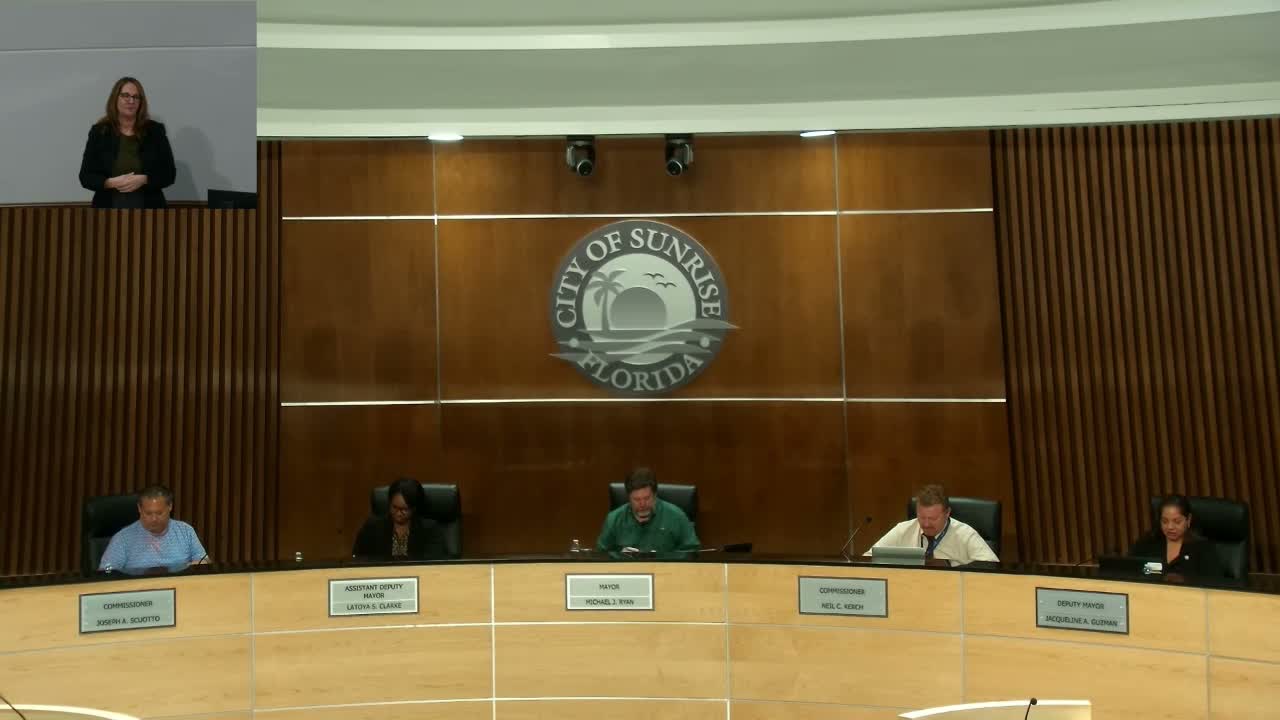
Mayor Michael J. Ryan used his closing remarks at the Dec. 9 Sunrise City Commission meeting to flag a surge in consumer‑scam complaints tied to crypto kiosks—ATM‑style machines that convert cash to cryptocurrency.
Ryan described recent national reporting showing victims depositing large sums into kiosks while scammers coached them by phone. He relayed a local incident in which an elderly man deposited about $58,000 before officers intervened; the mayor said the funds were moved through cryptocurrency and that law enforcement faces ‘‘extraordinarily difficult and expensive’’ technical hurdles to trace and recover those assets.
Ryan said some cities and counties had proposed signage and registration requirements; Florida legislation earlier in the year that would have required machine registration and signage stalled without a hearing. He urged Sunrise staff, the police department and the city attorney to work with county peers and municipal legal counsel to explore coordinated approaches and to analyze whether state or federal preemption would bar local regulation.
Police leaders described multiple local complaints and called for a coordinated response; City Attorney Thomas Moss said he was working with the city manager to identify options and promised to provide legal guidance.
No new local regulation was adopted at the meeting; the mayor framed the discussion as an introductory briefing and asked staff to return with options that could include countywide coordination, criminal‑investigative tools and legislative advocacy if state law preempts local controls.