Lifetime Citizen Portal Access — AI Briefings, Alerts & Unlimited Follows
Saint Paul council urges governor to issue eviction moratorium as federal operations disrupt neighborhoods
Loading...
Summary
The Saint Paul City Council unanimously adopted a resolution asking the governor to impose a statewide eviction moratorium, expanding protections to small‑business tenants and citing widespread community disruption tied to recent federal immigration enforcement activities.
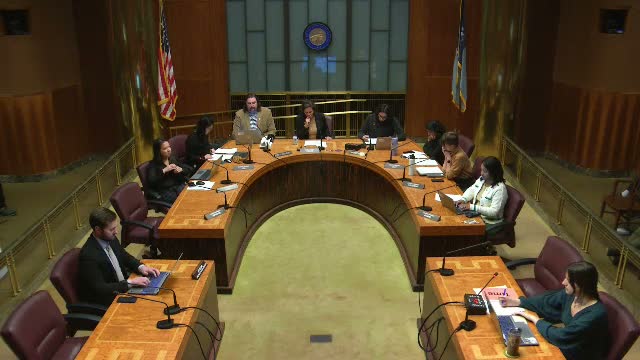
The Saint Paul City Council on Monday unanimously passed a resolution calling on the governor to issue an eviction moratorium to keep families and small‑business tenants in their homes amid intensified federal immigration enforcement.
Council Vice President Kim, lead sponsor of the measure, framed the vote as an emergency response to what she described as an ongoing wave of enforcement that is preventing residents from safely going to work, school or childcare. “So we are calling on the governor to issue an eviction moratorium, and it is a common sense, unprecedented action that the state has taken before,” Kim said.
Council Member Nelsie Yang, a co‑sponsor, said the resolution was expanded in its second version to include small businesses that lease their premises and are at risk of eviction. “This hurts to be here again,” Yang said, noting that residents in ZIP code 55106 have experienced some of the city’s highest eviction rates.
Council Member Molly Coleman added the measure reflects broader economic and humanitarian harms she’s hearing from constituents and stressed that municipal steps are limited without state action. “It’s going to take every level of government — city, county, state, the federal government — to stop the harm that is currently being wrought on our communities,” Coleman said.
The resolution passed on a voice vote, 6–0. Sponsors said the moratorium is intended as an immediate, temporary step to prevent displacement while longer‑term supports and legal measures are pursued.
Next steps: the council asked staff and community partners to continue coordinating with state officials and local legal aid organizations to identify implementation needs and to amplify requests for state action.