Get Full Government Meeting Transcripts, Videos, & Alerts Forever!
Get email alerts on the Data Centers topic
No spam. Unsubscribe anytime.
Residents urge moratorium on data centers, warning of pollution, noise and infrastructure costs
Summary
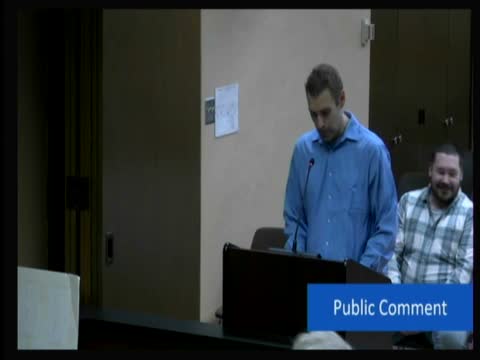
Multiple residents told the Kenosha Common Council on Feb. 18 that proposed data centers could harm local air and water quality, drive up utility costs, and bring noise and infrastructure burdens; speakers urged a moratorium and stronger local policy safeguards.
Nicholas Prorock, a Kenosha resident, told the Common Council that data centers risk repeating the environmental harms of past industrial polluters and urged the council to ‘pass a moratorium’ until safety can be guaranteed. He warned of air and groundwater contamination and compared the long-term impacts to historic smelter pollution.
Kevin Rano, who said he lives less than a mile from a Microsoft data center under construction in Mount Pleasant, described operational and construction impacts he said he observed: he told the council there will be “a total of 172 fans 20 feet in diameter” and “39 huge diesel generators” that will be test-run regularly, and he urged alderpersons to prioritize residents over developers. Rano also noted pending state legislation that would pause data-center construction and allow public referendums.
Other speakers made similar arguments. Kayla Harbour listed seven harms she associated with data centers—high water consumption, steep energy demand and costs, noise pollution, environmental concerns from fossil-fuel use, limited local economic benefit, negative land use and aesthetics, and stress on infrastructure—and urged the council to be proactive. Sage Holloway said she did not trust corporations’ assurances about ‘‘closed-loop’’ systems and cited examples of communities where residents saw limited benefits and substantial costs.
Josh Maglasang, speaking during the public-comment period, urged the council to be prepared for large-scale federal enforcement actions and called on city officials to work with Kenosha Police Department and neighborhood groups to develop protective policies for hospitals, schools and other public places.
None of the public commenters’ remarks prompted an immediate council vote on data-center policy; the comments were made during the public-comment period and serve as an input to the council’s future deliberations.