Get Full Government Meeting Transcripts, Videos, & Alerts Forever!
Get email alerts on the Wage Theft Criminal topic
No spam. Unsubscribe anytime.
House passes bill creating criminal penalties for contractors who use unlicensed labor brokers
Summary
Lawmakers approved HB 40,89 creating misdemeanors and escalating felonies for contractors/subcontractors who knowingly use unlicensed labor brokers; supporters called it a deterrent, opponents said it risks criminalizing parties without ensuring restitution for workers.
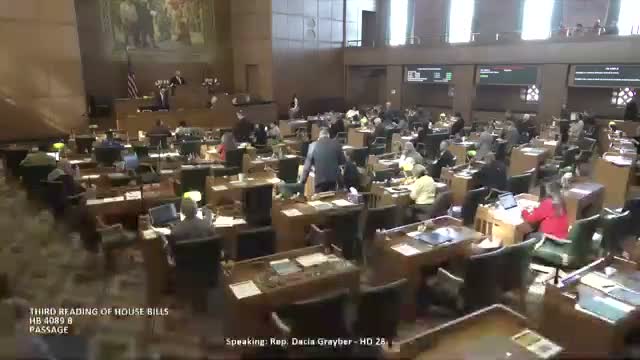
The House approved a measure that adds criminal penalties for contractors and subcontractors who knowingly use unlicensed labor brokers, amid a sharp floor debate over whether criminal sanctions will help workers or merely penalize business owners.
Representative Graeber, floor sponsor for HB 40,89, said wage theft on construction sites has surged and that the bill creates narrow penalties targeted at contractors who knowingly circumvent licensing. “Wage theft is a serious and widespread problem on construction sites in Oregon,” Graeber said, citing a—floor remark that the agency saw a 208% increase in complaints from 2020 to 2024.
Opponents urged caution. Representative Scharf called HB 40,89 “a solution looking for a problem,” noting the Legislature earlier passed HB 40,21 directing agencies to study unlicensed labor brokers and report back. Scharf questioned whether criminal penalties would help workers recover stolen wages and argued the measure should have undergone further vetting in judiciary committees.
Other members split along lines reflecting different priorities: some argued criminal penalties would deter bad actors and protect honest businesses; others warned about unintended economic impacts and urged reliance on agency studies and civil remedies. Representative Evans said the bill targets knowing violations and signaled he supported it because he lacked confidence in agencies to produce the study the last bill required.
Despite the dispute, floor sponsors and several colleagues argued the bill had been narrowed and that many initial opponents moved to neutral. The clerk opened the voting system; the bill, having received a constitutional majority, was declared passed.
Implementation: The bill establishes a graded set of criminal penalties (first offense misdemeanor; subsequent offenses felony) for contractors/subcontractors who knowingly use an unlicensed labor broker. The floor discussion noted opportunities for correction and differentiated applicability (not applying to owners or employers outside the construction sector).