Get Full Government Meeting Transcripts, Videos, & Alerts Forever!
Get email alerts on the Public Safety topic
No spam. Unsubscribe anytime.
House passes misdemeanor for knowingly installing or selling counterfeit airbags amid safety debate
Summary
After an extended floor debate, the House approved House Bill 688 to create a misdemeanor for knowingly installing or selling counterfeit airbags; supporters cited potential deaths tied to counterfeit parts while opponents warned the language could criminalize low-income sellers and raised enforcement questions.
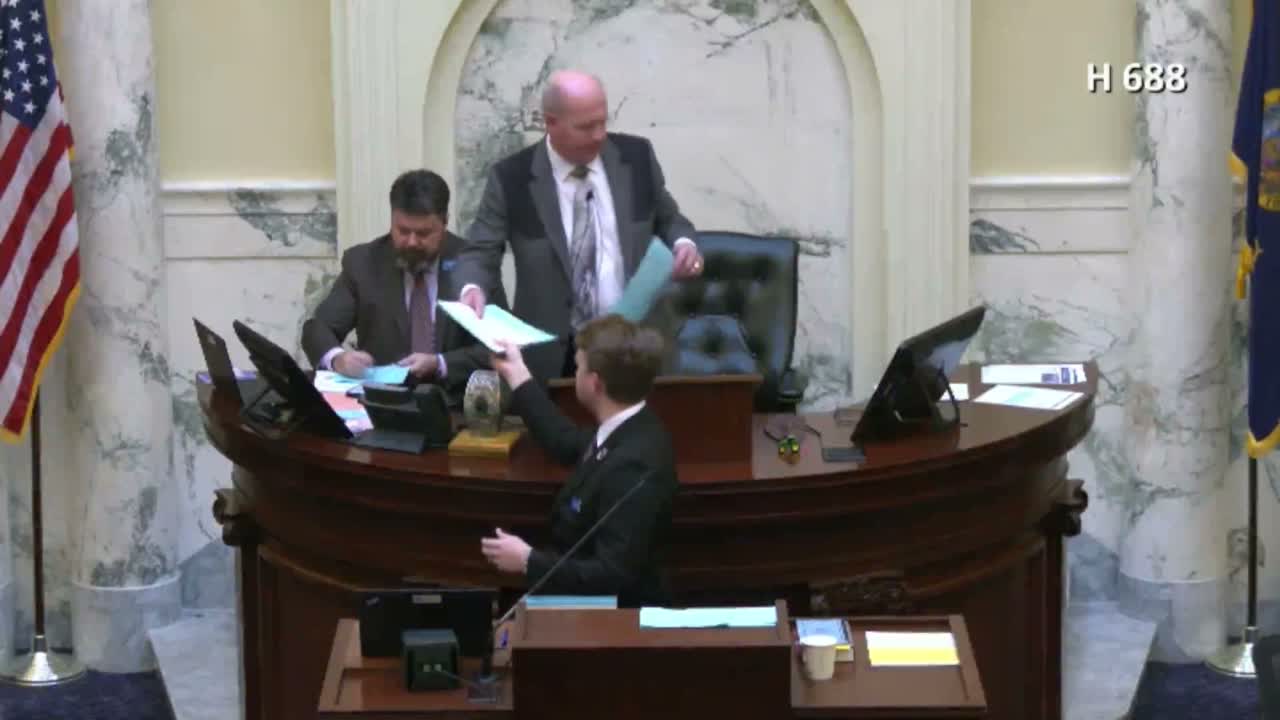
House Bill 688 passed the Idaho House after lengthy floor debate over consumer safety and the risk of criminalizing ordinary used-car sales.
Sponsor testimony emphasized public-safety concerns about counterfeit airbags imported into the U.S. and described the bill as a "light touch" misdemeanor to allow criminal investigation when actors knowingly install or sell nonfunctioning or counterfeit airbags. "They're importing counterfeit airbags into our country... these things do not work," the sponsor said on the floor, arguing the measure enables law enforcement to investigate and prosecute knowing fraud that endangers vehicle occupants.
Opponents questioned whether the bill's language could unintentionally criminalize sellers of used cars (for example, low-income individuals unaware of a nonfunctional airbag) and asked how enforcement would distinguish negligent or unaware sellers from knowing misconduct. One member asked whether the sale of a car with a nonfunctional airbag would be criminalized and cited potential costs of replacing airbag systems. A member also declared a conflict of interest under floor rules because a close relative works in the relevant field; that declaration was noted in the journal.
Floor debate referenced examples and cross-state experiences; sponsors said other states have adopted similar statutes and that the measure is narrowly focused on knowing misconduct. The House agreed to the motion and the clerk recorded the bill as passed; the bill will be transmitted to the Senate.
Next steps: the measure will be sent for Senate consideration.