Lifetime Citizen Portal Access — AI Briefings, Alerts & Unlimited Follows
Senate committee adopts A‑17 changes, advances omnibus housing bill to floor
Loading...
Summary
The committee adopted the A‑17 amendment to House Bill 40 37 A—an omnibus housing bill with technical fixes to a moderate-income revolving loan fund, expanded self-certification for building plans, and streamlined reviews for projects meeting clear-and-objective standards—and forwarded the bill to the floor with a do-pass recommendation after public testimony both supporting and opposing aspects of section 17.
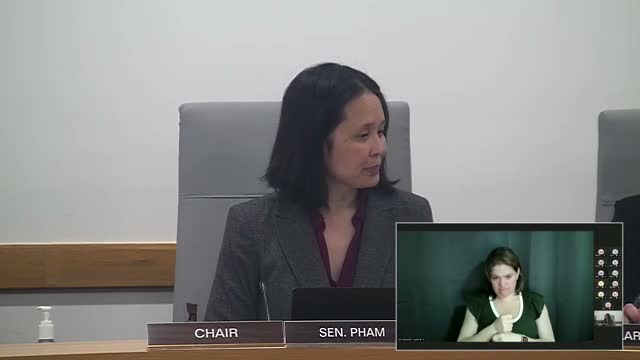
Chair Pham opened a public hearing on House Bill 40 37 A and asked staff to summarize the measure.
Representative Vicki Breeze Iverson (House District 59), the bill sponsor, described HB 4037 A as bipartisan technical legislation designed to fix mechanics of earlier housing laws: it clarifies loan repayment and grant/loan flexibility in the moderate income revolving loan fund, expands eligibility for community development financial institutions, allows up to $1,000,000 project financing for moderate-income primary residences that remain affordable for at least five years, removes a population threshold limiting enforcement capacity, and modernizes permitting by allowing certain advanced building materials when certified by a qualified professional.
Aurora Jiddle, a housing policy analyst with the governor’s office, walked the committee through sections including corrections to enforcement order authority so the Housing Accountability and Production Office (HAPO) can pursue enforcement across cities of all sizes, expansion of building plan self-certification beyond conventional light-frame construction, and limits on public hearings and appeal pathways for projects that meet clear-and-objective standards.
Public testimony reflected mixed views. Cory Harlan (Central Oregon Land Watch) urged support for a narrowly tailored A‑17 provision aimed at preserving commercial land in large planned mixed-use developments. Alexandra Ring (League of Oregon Cities) said the A version contained implementable fixes but warned about conflicts for hybrid clear-and-objective permitting approaches and potential Goal 1 concerns. Tim Rosner (Mayor of Sherwood) opposed section 17, arguing it would reduce public notice and bar hearings required by his city’s charter amendment. Tabitha Boschetti (Oregon Chapter, American Planning Association) asked the committee to refer the bill to Senate Rules to allow time to consider a forthcoming amendment to remove section 14. Eric Chancellor (city of Bend) supported A‑17 urban-reserve language that allows cities to discount lands with topographical or built constraints during prioritization.
During the work session, Senator Nash explained a separate rural-focused amendment he had posted that would permit limited rezoning in low-density counties under specified conditions (e.g., acreage caps, proximity to UGB, minimum dwelling density, and reporting requirements). Vice Chair Anderson moved to adopt the A‑17 amendment; Representative Iverson discussed concurrence risks and timing before the committee adopted the amendment with no objection and voted to send HB 4037 A, as amended, to the floor with a do-pass recommendation.
Chair Pham noted remaining concerns and said a work group could address outstanding technical and accountability questions after session.