Get Full Government Meeting Transcripts, Videos, & Alerts Forever!
Get email alerts on the Employment E Verify topic
No spam. Unsubscribe anytime.
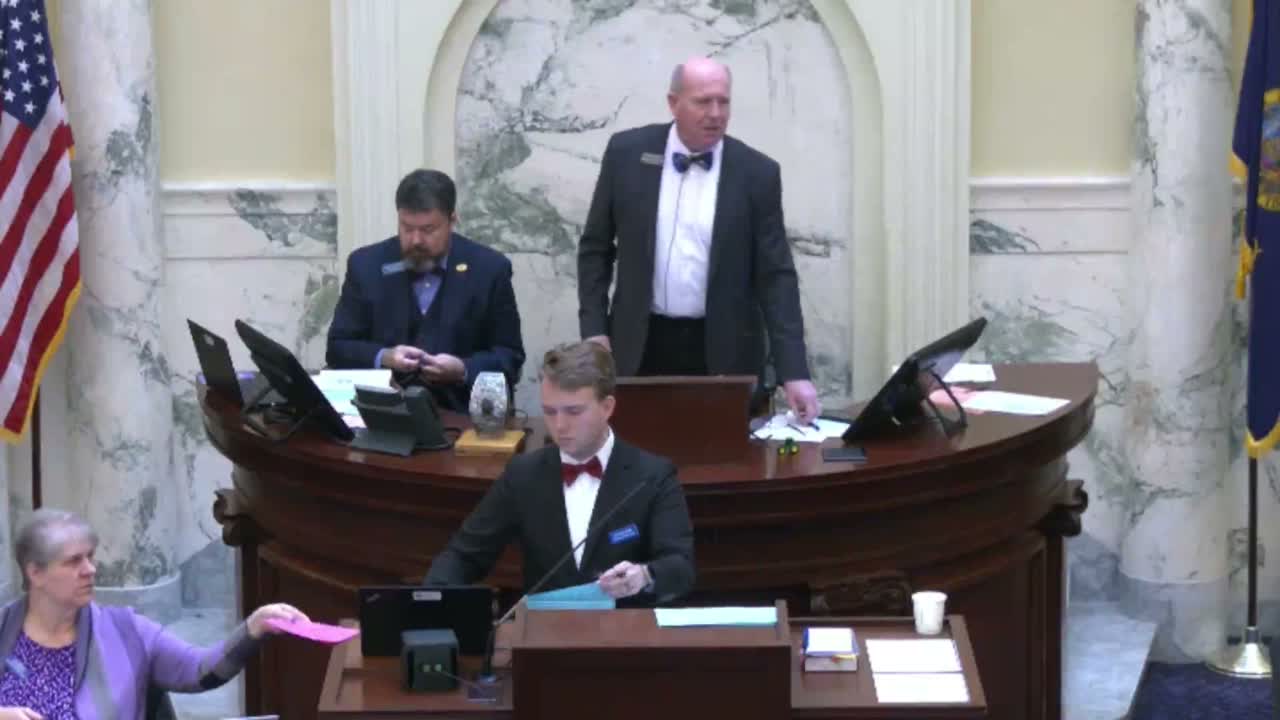
Idaho House passes bill requiring employer use of E-Verify after extended debate
Summary
On Feb. 26, the Idaho House debated House Bill 704, a measure to require employers to use the federal E-Verify system for new hires, with supporters saying it protects workers and opponents warning of economic harms; the House clerk announced the bill passed after floor amendments and extended debate.
The Idaho House spent much of its Feb. 26 floor session debating House Bill 704, a measure that would require employers to use the federal E-Verify system to check the authorization status of new hires.
Sponsor Representative, District 3 urged passage, saying the policy "protects Idaho's economy and its workers by verifying legal status" and described the program as minimally burdensome for employers, adding that E-Verify "is free and user friendly." Supporters argued the bill would reduce exploitation of undocumented workers, align state practice with federal verification tools and uphold the rule of law.
Opponents warned of economic disruption, particularly in agriculture and related industries. A member representing a major agricultural district argued the fiscal note's "no impact" finding conflicted with concerns that up to tens of thousands of jobs could be affected, and said the state could lose investment and face labor shortages if employers are required to use E-Verify for new hires. Other speakers said the measure could lay off existing workers when it takes effect and questioned whether available state mechanisms adequately account for industries' labor needs.
Several members raised constitutional and enforcement questions. One lawmaker pointed to federal supremacy principles and said provisions creating misdemeanor penalties could conflict with federal law; other members disputed that reading and said the bill's enforcement design is consistent with federal statutes that allow certain state actions.
Floor debate included multiple amendments and points of order; members repeatedly framed the question as balancing enforcement of immigration-related employment rules against potential harm to the state's workforce and economy. The sponsor reiterated the bill applies to new hires and emphasized an immunity provision for employers that follow the E-Verify system.
After extended discussion and recorded votes, the clerk announced that the bill had been passed by the House. The transcript records the bill under debate throughout as "House Bill 704" but later records the clerk's announcement as "House Bill 700 is passed House," a discrepancy in the record that the House clerks may need to reconcile. The clerk also recorded individual member votes during the third-reading roll call.
Next steps: the transcript shows the title was approved and the bill to be transmitted according to the House's usual processing; the legislative calendar indicates some remaining bills were held to a later date.