Get Full Government Meeting Transcripts, Videos, & Alerts Forever!
Get email alerts on the Data Center topic
No spam. Unsubscribe anytime.
Residents urge Kenosha council to press for transparency and oppose tariff shifts tied to proposed data center
Summary
During public comment at the Feb. 2 Kenosha Common Council meeting, residents urged the council to oppose a proposed data center and to demand transparency from city staff and utilities, raising concerns about redacted company filings, nondisclosure agreements and potential taxpayer subsidies.
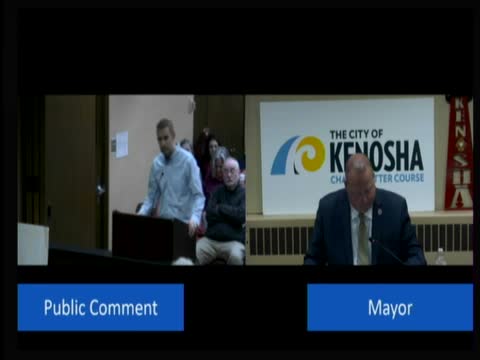
Residents and community advocates used the public-comment period at the Kenosha Common Council’s Feb. 2 meeting to press city leaders for more transparency and to oppose a proposed data center project and related utility tariff changes.
Nicholas Porock, who identified himself as a candidate for District 9, told the council the WE Energies tariff under consideration would shift most infrastructure costs onto residents. "The discount for the data centers that We Energy is proposing ... will put 75% of the costs to build the infrastructure to the data centers and then 25% of the costs will go to residents," Porock said, and urged council members to "stand up for your residents" and review filings in the Public Service Commission docket.
Other speakers raised similar concerns. Christopher Lyons said constituents "understand the environmental consequences of this project" and urged the council to "give your constituents a seat at the table." Kara Gerlock told the council she had been unable to find detailed, public documentation about the project and said city staff had signed an NDA with Microsoft, which she said limited public access to key development details and tax-increment (TIF) information. "Had communication been transparent and easily accessible earlier, I think you would have started hearing more from people like me earlier than November," Gerlock said.
Speakers warned that if development agreements and TIF details are finalized before public review, community influence will be limited. Several commenters cited national examples of local controversies over large data centers and said they fear long-term disruptions and higher energy costs for residents.
Council members did not take formal action on the matter during the meeting. The comments were recorded during the public-comment portion of the agenda and were followed by routine licensing and committee business. No motion or vote on the proposed data center or utility tariff appears on the Feb. 2 docket as presented during the meeting.
Next steps on any development agreement or utility tariff would be determined in subsequent staff reports or future agenda items, public commenters said they would continue to monitor dockets and to press for greater disclosure.