Get Full Government Meeting Transcripts, Videos, & Alerts Forever!
Get email alerts on the Agency Merger Crep topic
No spam. Unsubscribe anytime.
Proposal to merge Idaho Soil and Water Conservation Commission with Water Resources moves forward; CREP shortfall flagged
Summary
Acting administrator and the Water Resources Board told the budget committee they commissioned a stakeholder review recommending a merger with sideboards, and they requested a small supplemental for CREP while noting a large enrollment gap and potential water savings if the CREP cap is filled.
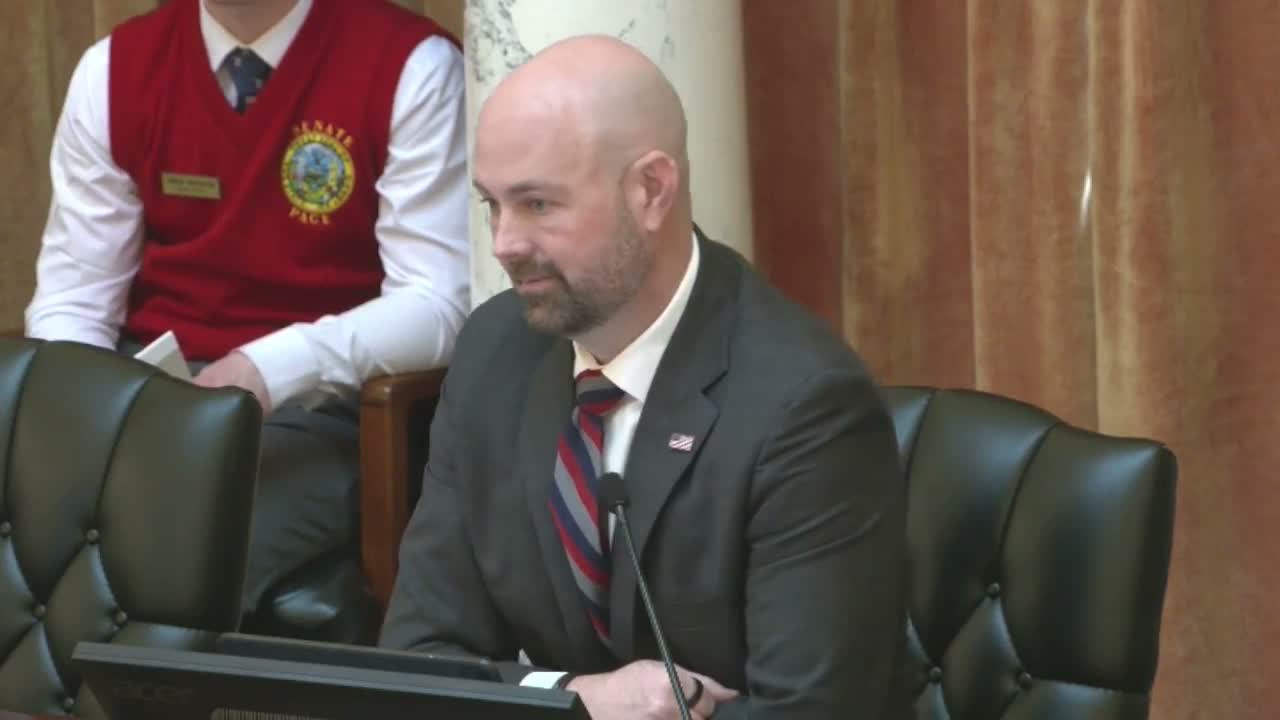
Acting administrator Matt Weaver and Idaho Water Resource Board Chairman Jeff Raybould asked the Joint Appropriations Committee on March 26 to approve follow-up steps toward affiliating the Soil and Water Conservation Commission with the Department of Water Resources and to address a small program funding gap in the commission’s Conservation Reserve Enhancement Program (CREP).
Weaver said the department and commission hired the Langdon Group (a subsidiary of JUB Engineering) to conduct stakeholder engagement and evaluate whether the commission should join Water Resources. The contractor’s report, presented to the Idaho Association of Soil Conservation Districts and the Idaho Drought Task Force, recommended affiliation with the Department of Water Resources provided several sideboards: the commission retain its statutory duties and authorities, maintain emphasis on voluntary, nonregulatory locally led conservation, and avoid erosion of technical and financial resources.
Weaver said two legislative vehicles are being used to implement the recommendation: a statutory change (identified in testimony as House Bill 511) to amend the commission’s affiliation in statute, and a concurrent resolution adopting the stakeholder recommendations and directing a one-year planning and code-review period to prepare a combined budget for possible action in 2027.
On program funding, the analysts and officials explained the Soil and Water Conservation Commission is seeking a $12,900 supplemental appropriation from its miscellaneous revenue/dedicated fund to meet increased CREP payouts tied to higher land values. Raybould said the Water Resources Board transferred $100,000 from its Water Management Fund to the commission to help bridge the gap and that CREP has an ongoing appropriation on the commission’s base (about $264,000) to match federal funds. The board and acting administrator noted that Idaho’s CREP cap is 50,000 acres but only about 11,000 acres are currently enrolled.
Raybould told the committee that if CREP enrollment were maximized it could annually conserve roughly 80,000–120,000 acre-feet of groundwater (a ballpark estimate intended to show potential contribution toward regional reduction targets). Officials asked the committee to preserve dedicated funding and to allow a careful, year-long code and budget review if the merger proceeds.
The committee asked for program-level data, and Weaver and the analyst agreed to provide enrollment counts, average cost-per-acre figures and any available estimates of water savings from last year’s conversion projects. No formal action was taken at the hearing; the committee adjourned and officials said they would return with supplemental materials.