Lifetime Citizen Portal Access — AI Briefings, Alerts & Unlimited Follows
Lawmakers press Idaho water officials on funding, capacity to stabilize Eastern Snake Plain Aquifer
Loading...
Summary
Legislators questioned the Department of Water Resources and the Idaho Water Resource Board about progress toward a 350,000 acre-foot recharge goal for the Eastern Snake Plain Aquifer, use of prior $30 million allocations, and how budget holdbacks could force cuts to monitoring and maintenance.
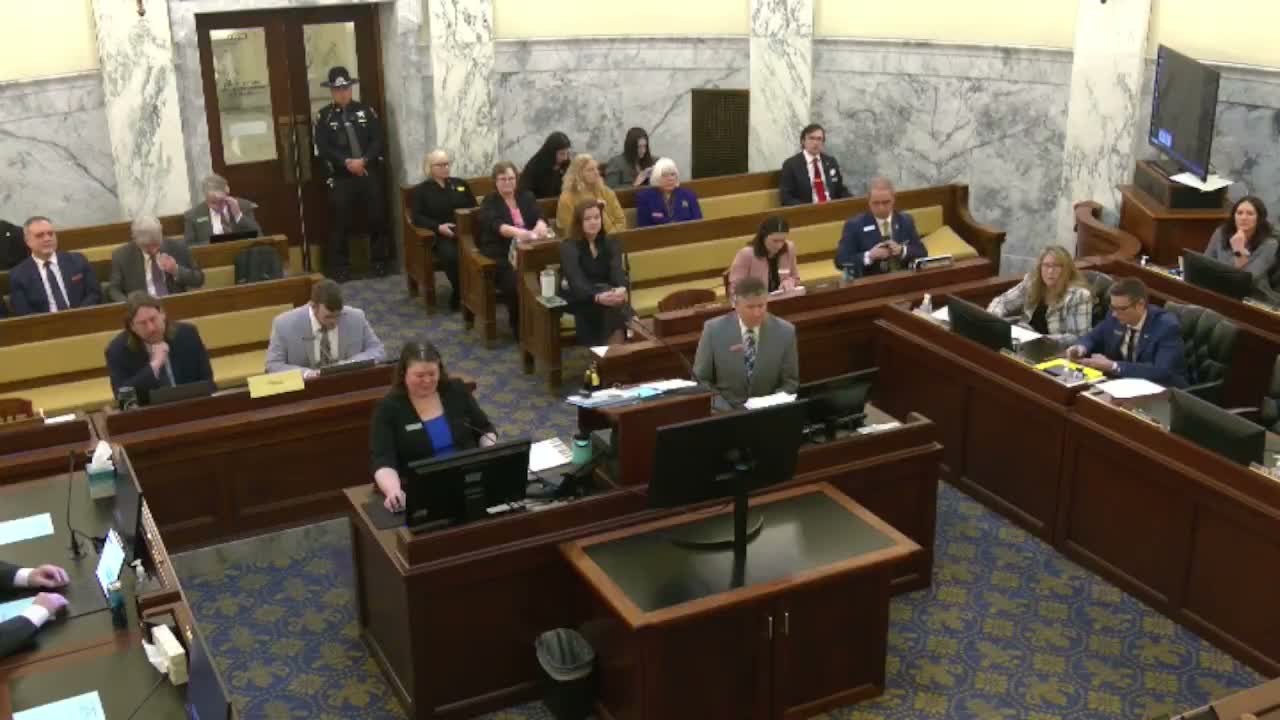
Lawmakers in the Joint Senate Finance and House Appropriations Committee pressed the Idaho Department of Water Resources on March 26 about whether the agency has the funding and capacity to stabilize the Eastern Snake Plain Aquifer (ESPA).
In testimony and a question-and-answer session, Director Matthew Weaver and Idaho Water Resource Board Chairman Jeff Raybould described a multi-decade strategy that pairs reductions in groundwater pumping with active recharge and infrastructure projects. Weaver said a settlement requires groundwater users on the ESPA to reduce pumping by about 208,000 acre-feet, and the board is seeking to raise the state’s average recharge goal on the ESPA from roughly 250,000 to 350,000 acre-feet through pending legislation.
The director said the department and board are investing in recharge, conversion projects that shift irrigated land from groundwater to surface water and telemetry and monitoring grants to improve diversion reporting. Raybould told the committee the previous $30 million appropriation was largely directed to recharge and conversion projects in Water Board Districts 3 and 4 (the ESPA area) and that much of those funds are already obligated or spent.
“Much of these funds have been committed to large infrastructure projects or water sustainability programs that are multiyear in length,” Miss Jessup, the committee analyst, told members during the presentation.
Members asked how quickly the state could scale recharge in a good water year. Raybould said the system could accept well over 500,000 acre-feet in a strong water year and that the board is working to increase capacity — particularly in the Upper Valley where recharge supports downstream reaches. He added the board maintains a reserve fund (he estimated a $17 million–$20 million operating reserve) to carry out recharge in favorable water years.
Committee members also pressed officials about the pace of implementation and the economics of the work. Representative Manwaring asked for dollar estimates to reach the 350,000 acre-foot target; Weaver said ongoing conveyance and operational costs for recharge typically run on the order of $5 million per year (exclusive of major infrastructure construction), and larger years of recharge would cost more. Raybould estimated the board has allocated about $91 million to ESPA water-management projects to date and suggested future needs could require comparable sums over coming years.
Budget holdbacks drew pointed questions. Senator Wintrow asked how the department is managing an additional 2% ongoing reduction; Weaver said staff training, travel, maintenance and vehicle replacement have been curtailed and that, if reductions persist, the department expects to forgo funding for about 19–20 of roughly 93 stream gauges it currently funds or co-funds. He said gauges needed for public-safety functions and large-reservoir operations would be prioritized.
Representative Harris asked about groundwater contamination, citing a 2019 study on nitrate and phosphate. Weaver said the Department of Water Resources operates parts of the statewide groundwater-quality monitoring network as an early-warning system but that responsibility for response and remediation rests with the Department of Environmental Quality.
Lawmakers asked whether the legislature should protect multiyear appropriations to help leverage federal and private funding. Raybould said long-term state commitments make it easier to coordinate cost sharing with private and federal partners and to secure easements and other entitlements required for construction.
The committee did not take a formal vote. Officials said they will provide additional details on project outcomes and obligations, and Raybould and Weaver said they would follow up with data on the impacts of last year’s conversion projects and the obligations and spending associated with prior appropriations.