Lifetime Citizen Portal Access — AI Briefings, Alerts & Unlimited Follows
Lawmakers outline 'Stay Here, Grow Here' plan to boost Idaho physician pipeline
Loading...
Summary
A JFAC working group proposed expanding Idaho's medical‑education pipeline, recommending new undergraduate seats, GME expansion, a dedicated coordination director and targeted incentives to keep physicians in the state.
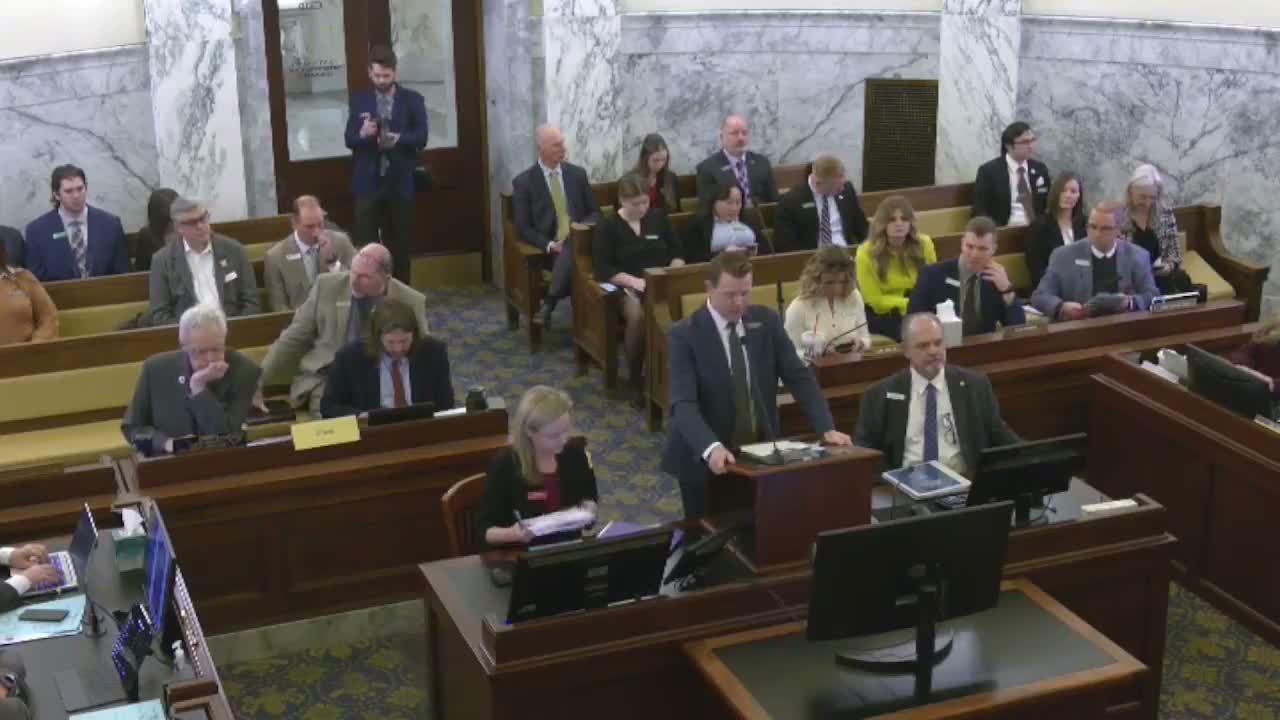
Representative Manwaring told the Joint Finance‑Appropriations Committee that a working group convened under House Bill 368 produced a multi‑year strategy — called the "Stay Here, Grow Here" plan — aimed at increasing Idaho's physician workforce and keeping more medical‑education dollars in‑state. "We created a plan that I really truly believe... it's gonna be something that's a document that's living and breathing," Manwaring said.
The committee heard that Idaho ranks 50th in physicians per capita and faces an accelerating shortfall: the working group estimated the state needs about 1,400 more physicians now and about 1,800 by 2030 if current trends continue. Manwaring said the state would need to graduate roughly 175 physicians per year to meet projected demand, producing a net gain of about 93 physicians who would remain in Idaho.
To address that gap, the working group recommended maintaining the state's existing capacity (50 state‑supported UME seats — about 40 in WWAMI and 10 at the Spencer Fox Eccles School of Medicine), adding 10 additional undergraduate medical education (UME) seats this year and for the following two years, and expanding graduate medical education (GME) using a budget request for added fellowship and residency positions.
Manwaring also urged creation of a Health Education Director — a single, high‑level coordination role to manage undergraduate and graduate clinical placements, maintain public data on placements and preceptors, and negotiate with education partners and clinical sites. He described the coordination startup cost as roughly $350,000 and said a GME funding request in the governor's budget totals about $900,000. On purchasing seats, Manwaring described options including buying seats at the Idaho College of Osteopathic Medicine (ICOM) or splitting seats with the University of Utah; he said purchasing 10 seats at ICOM would cost about $350,000, while a 5/5 split with the University of Utah would be closer to $485,000.
Jennifer White, Executive Director of the State Board of Education, told the committee the working group was unanimous in backing a dedicated coordinator and said the board would prefer that position reside within the State Board to ensure oversight and program prioritization.
Committee members pressed on clinical site capacity and rural retention. Representative Harris warned that expanding seats without securing clinical sites would be ineffective; Manwaring acknowledged that risk and said the coordination role would help secure and manage preceptor capacity. Members also discussed incentives for rural recruitment such as loan repayment and other supports, and asked whether nurse practitioners and physician assistants were part of the plan; Manwaring said the plan focuses on undergraduate medical education under HB 368 but that broader workforce discussions remain relevant and worthy of future work.
Manwaring urged members to review the written plan and noted that FY27–FY29 milestones are included for legislative accountability. The committee did not take formal action during the presentation; co‑chairs said the plan and its funding requests will be part of ongoing budget deliberations.