Get Full Government Meeting Transcripts, Videos, & Alerts Forever!
Get email alerts on the Judiciary topic
No spam. Unsubscribe anytime.
Chief Justice Evans tells Idaho lawmakers courts face rising caseloads and uncertain peer-support funding
Summary
Chief Justice Evans told the Idaho House the judiciary is coping with rising caseloads and service needs, said the branch will use existing funds to sustain peer-support services through 06/30/2026 after a state funding cut, and urged continued attention to courthouse security and modernization efforts.
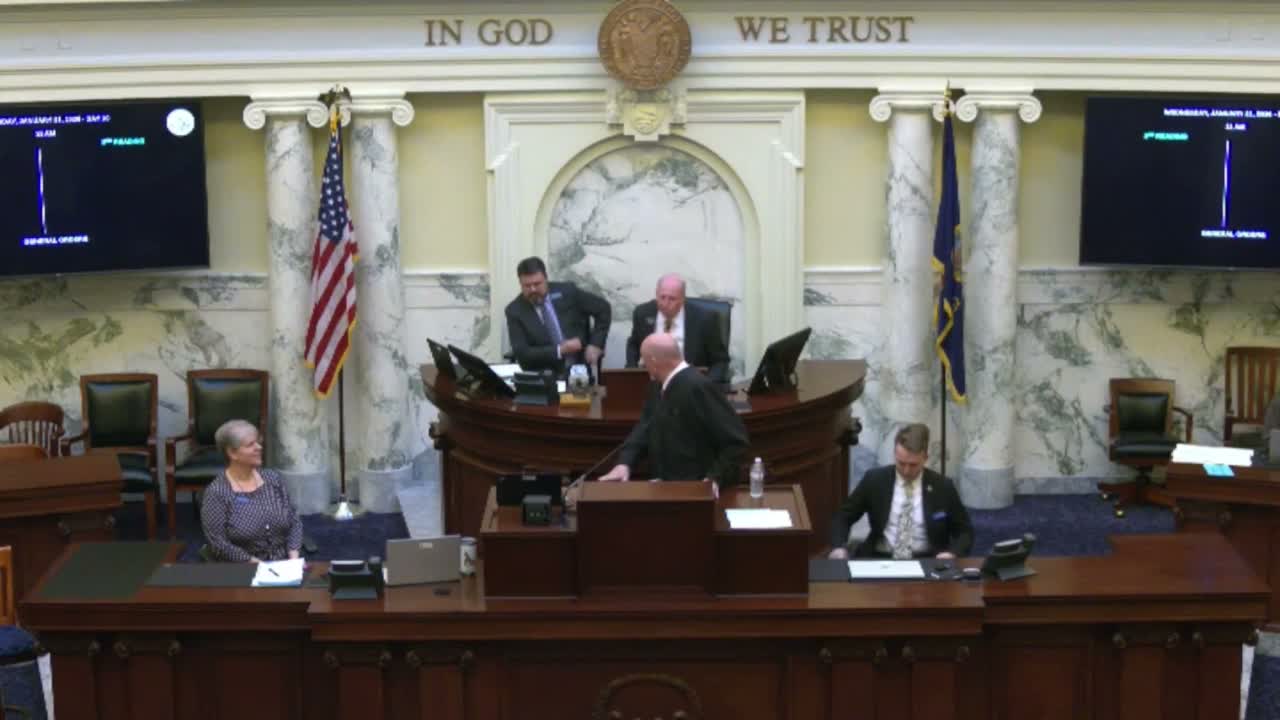
Chief Justice Evans told the Idaho House of Representatives on Jan. 21 that Idaho’s courts are managing a growing and more complex caseload while working to preserve access and public safety.
“We meet this year at a time of fiscal constraint,” Evans said, adding that he was “not here today to ask for more from the general fund or for structural expansion,” and that his purpose was to describe the work and leadership required to sustain an independent judiciary. He reported that in fiscal year 2025 prosecutors presented nearly 58,500 criminal cases to Idaho judges and that high-value civil matters have increased by about 60% over the past two years.
Evans highlighted programs intended to improve access and reduce pressure on trial dockets, including treatment courts that connect people with substance-use and mental-health services and a guide-and-file program that helps self-represented litigants prepare court documents. He noted remote hearings and court assistance officers as additional access measures.
The chief justice said the judicial branch has identified resources within its existing budget to sustain peer-support services for treatment-court participants through the current fiscal year ending 06/30/2026 after the Idaho Department of Health and Welfare ended funding for those services. "What happens beyond that point remains uncertain," he said, and added that the branch will meet with judges and professionals in the coming months to assess the impact and whether courts can operate without that funding.
Evans also described investments in courthouse facilities across the state — naming Nez Perce, Bonneville, Kootenai, Custer and Twin Falls counties as examples where upgrades or new courtrooms have improved capacity — and warned that threats to courthouse safety and cybersecurity have increased. He cited the judicial branch’s rollout of a unified software platform and a spike in blocked phishing and malicious attempts targeting court systems in 2025 as evidence that technology and physical security require ongoing attention.
The chief justice closed by urging lawmakers to consider the judiciary’s role in resolving disputes, strengthening public trust and sustaining programs that reduce incarceration and support rehabilitation. He thanked members and recognized fellow justices and judges in attendance.
Evans said the judiciary’s leadership will continue reviewing options to sustain services and will report back as those deliberations proceed.