Get Full Government Meeting Transcripts, Videos, & Alerts Forever!
Get email alerts on the Criminal Code topic
No spam. Unsubscribe anytime.
House committee backs bill making assaults on utility workers aggravated when on duty
Summary
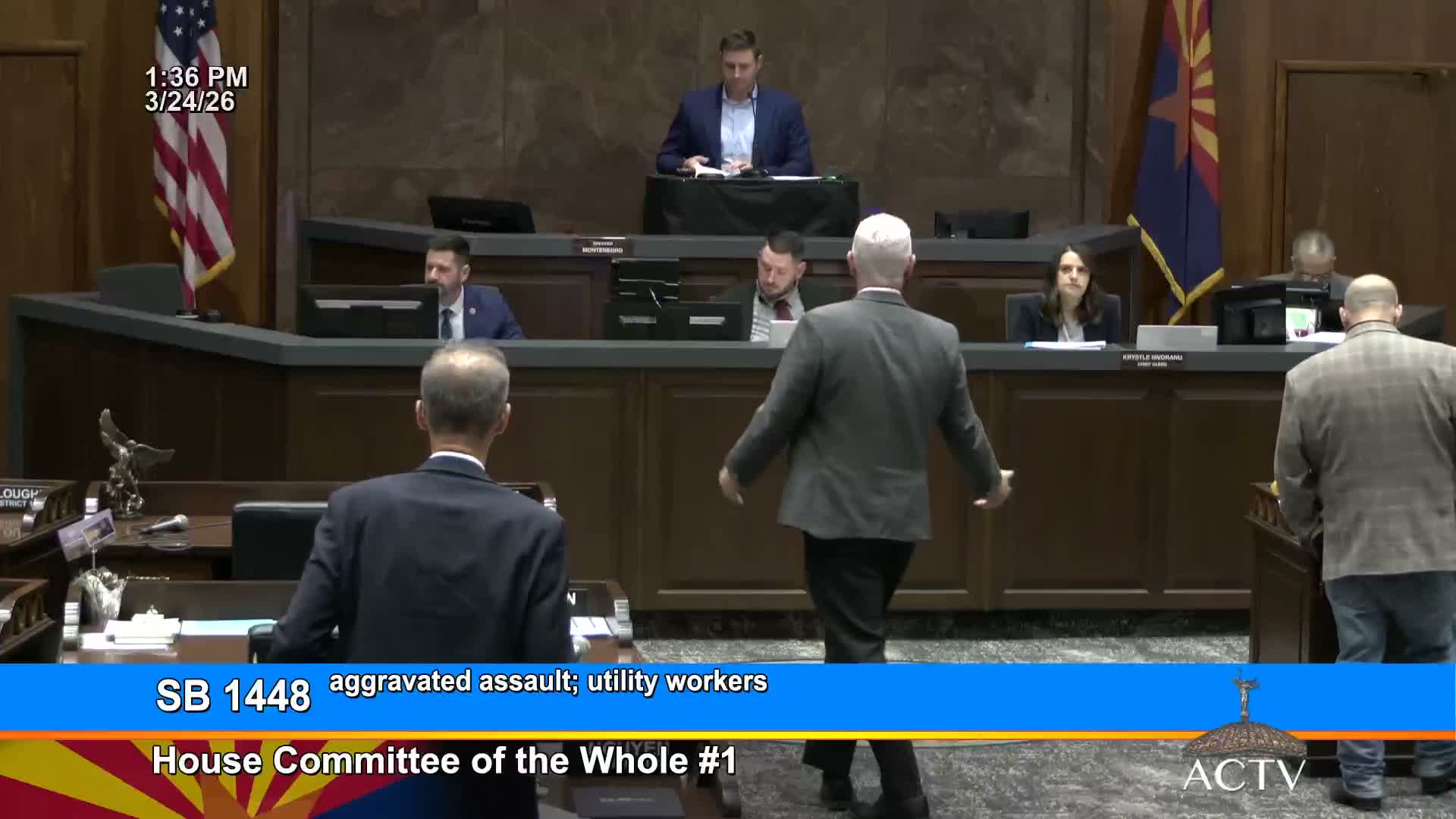
The House Committee of the Whole recommended Senate Bill 14-48 as amended to expand aggravated-assault protections to employees of certain utilities and communications providers when they are engaged in work duties; sponsors said the change protects workers in the field, while opponents questioned scope and unequal classifications.
The Committee of the Whole recommended that Senate Bill 14-48, as amended, be passed to expand aggravated-assault protections to employees of public utilities, licensed telecommunications providers and licensed video service providers when those employees are "engaged in the employee's work duties." Representative Wynne, who moved the committee amendment, said the change clarifies the class of workers covered and urged members to support the measure.
Representative Collin questioned the expansion during floor debate, asking why a utility worker would receive a higher-classified protection than other citizens in social situations. "Is there some reason why the fact that I'm wearing a Scottsdale..." Collin asked in a hypothetical about off-duty interactions, arguing aggravated designations should be limited to particularly heinous circumstances.
Representative Powell, sponsor of the amendment, responded that the protection is tied to an employee being on duty and performing work, not to casual off-duty interactions. "I would assume that if I'm off from work and I'm not actually engaged in my employment at the time, that I would be no different than anybody else in the bar," Powell said, and noted scenarios such as security guards where elevated protection is already accepted.
Supporters said the change aims to protect field technicians and first responders who can face confrontations while performing essential services. Opponents warned that the statutory text should be precise so it does not unintentionally treat routine social encounters as aggravated assaults.
The committee reported SB 14-48 as amended with a do-pass recommendation and the Committee of the Whole rose and reported that recommendation to the full House for referral to engrossing.