Get Full Government Meeting Transcripts, Videos, & Alerts Forever!
Get email alerts on the Wildlife Funding topic
No spam. Unsubscribe anytime.
Senate approves 1.25% lodging tax increase to fund wildlife, invasive‑species and wolf compensation programs
Summary
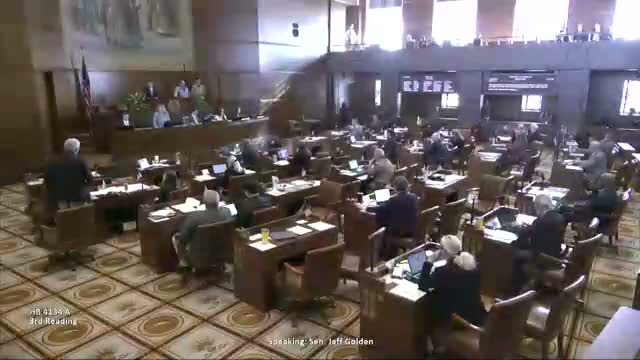
The Senate passed House Bill 41‑34 (A) to raise the statewide transient lodging tax by 1.25 percentage points and dedicate proceeds to wildlife and habitat conservation, invasive‑species mitigation, wolf depredation compensation, anti‑poaching and the Oregon Conservation Corps, after floor debate weighing tourism impacts against chronic funding shortfalls.
The Oregon Senate voted to pass House Bill 41‑34 A on March 4, adopting a 1.25 percentage‑point increase in the statewide transient lodging tax (TLT) to create a dedicated revenue stream for the State Wildlife Action Plan, invasive‑species prevention and response, wolf depredation compensation, anti‑poaching efforts and habitat restoration projects including work by the Oregon Conservation Corps.
Senator Golden, who presented the bill on the floor, framed the proposal as a narrow, visitor‑funded response to long‑standing funding gaps for non‑game and habitat conservation. “We need to actually do what wildlife scientists and dedicated sportsmen and women keep telling us we need to do,” the sponsor said on the floor, arguing that a modest TLT increase paid largely by visitors would be an appropriate and stable source of funding.
Supporters said the TLT is a suitable dedicated source because Oregon has no statewide sales tax and tourism is closely linked to wildlife and scenic landscapes. Proponents also noted that many of the programs targeted by the bill — from invasive‑species prevention to wolf compensation — have lacked a reliable funding stream and that emergency needs (for example, early invasive‑species responses) require standing resources.
Opponents objected on principle to a new tax and questioned the policy choice of using lodging revenue rather than general fund dollars. Several senators warned that cumulative lodging taxes and local fees could hurt recovery in tourism‑dependent businesses and that the TLT burden is borne in part by Oregon residents who also travel in the state.
On final passage the clerk recorded a constitutional majority; the measure was declared passed and will proceed as directed in its terms. The Senate debate listed program allocations and emphasized monitoring and reporting structures for the new revenue.
Implementation will require administrative rule‑making and appropriation language that allocates the new TLT proceeds to specified agencies and programs; the bill also targets a small share for the Oregon Conservation Corps to support wildfire mitigation and restoration work.