Get Full Government Meeting Transcripts, Videos, & Alerts Forever!
Get email alerts on the Legislative Floor Roundup topic
No spam. Unsubscribe anytime.
Oregon Senate delays Measure 114 implementation, narrows data protections and moves to cap high-cost online loans
Summary
On March 4 the Oregon Senate passed a package of bills: HB 41 45 delays parts of voter-approved Measure 114 to Jan. 1, 2028; HB 40 88 expands privacy and anti‑extradition protections for reproductive and gender‑affirming care; and HB 41 16 opts Oregon out of a federal interest‑rate export rule to enforce a 36% APR cap on consumer finance loans.
The Oregon Senate spent much of its March 4 floor session debating and voting on an array of high-profile measures before adjourning for the day. Senators approved a delay to parts of Measure 114, passed a bill intended to shield patients and providers from out‑of‑state enforcement actions, and voted to restore the state’s 36 percent consumer‑loan cap for most lenders.
Senate leaders opened the day with procedural votes and courtesies before moving through a lengthy third‑reading calendar. The floor’s three longest debates—on firearms policy, health‑care privacy and consumer‑finance rules—drove most of the evening’s work.
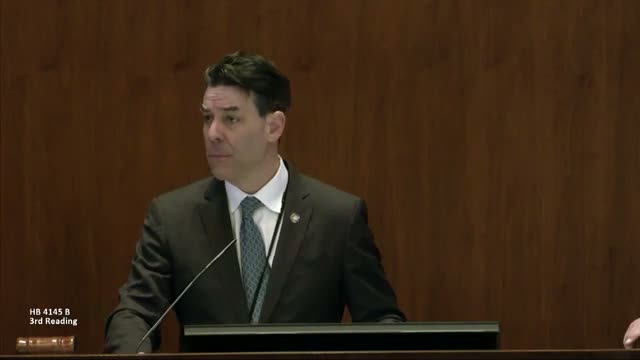
The most immediate change came in House Bill 41 45 B, carried on the floor by Senator Reynolds. "House Bill 41 45 B delays the implementation date of Measure 114 to 01/01/2028," Reynolds said on the floor, urging colleagues the move would give law enforcement additional time to prepare for the law’s permit‑to‑purchase requirements. Supporters framed the delay as a practical step while litigation proceeds; opponents cautioned about changing the voters’ timeline. After floor debate, the chamber voted to pass the amended measure on third reading; the clerk announced the measure "having received a constitutional majority is declared passed." (Vote recorded on the floor.)
The Senate also took up House Bill 40 88 A, a health‑care privacy and provider‑protection measure that drew unusually long and sharply framed debate. Senator Gilser Bloemen, carrying the bill, said it "ensures that public bodies do not cooperate with investigations into legal reproductive or gender‑affirming activities" and protects patients and providers from extradition or disclosure of personally identifiable information. Opponents, including Senator Thatcher and others, warned the bill could limit access to individually identifiable data needed for public‑health research and parental access to records. The Senate considered a motion to substitute a minority report (which would have directed a study instead of the protections in the base bill); that substitution failed and the Senate ultimately passed HB 40 88 A on final reading.
A third major floor fight centered on House Bill 41 16, advanced by Senator Neiron Mislan, which would opt Oregon out of the federal provision that allows some out‑of‑state, state‑chartered lenders to export their home state’s higher interest rates into Oregon. "Since 2020, over 31,000 of these extremely high interest loans have been made to Oregon families," the sponsor told colleagues, calling the measure a restoration of Oregon’s 36% statutory cap on consumer finance loans. Opponents warned that restricting those lenders could shrink available credit for people with limited options and push borrowers toward payday loans or title loans with very high effective annual rates. The Senate debated amendments and procedural referrals before passing HB 41 16 on final reading.
What happened next
- House Bill 41 45 B (Measure 114 delay): Passed third reading after floor debate. Sponsor: Senator Reynolds. Supporters cited law‑enforcement readiness and ongoing litigation; opponents warned of delaying voter policy. The clerk recorded passage by constitutional majority.
- House Bill 40 88 A (health‑care privacy and anti‑extradition protections): Passed after extended debate over the base bill and a failed motion to substitute a minority study report. Sponsor: Senator Gilser Bloemen. Supporters said it protects patients and providers from out‑of‑state legal pressure; critics argued it could limit research and parental access to records.
- House Bill 41 16 (consumer finance loans / DIDMICA opt‑out): Passed after extended debate and motions to refer were considered. Sponsor: Senator Neiron Mislan. Backers said it closes a loophole that allowed triple‑digit APRs to be exported into Oregon; opponents warned it could reduce credit access for vulnerable borrowers.
Quotes from the floor
"We must give Oregon State Police and sheriffs and police departments the time they need to implement this," Senator Reynolds said in urging passage of the Measure 114 delay. "House Bill 41 45 B delays the implementation date of Measure 114 to 01/01/2028."
"This bill protects access to legal and necessary medical care and shields providers and patients from surveillance or extradition for lawful care," Senator Gelser Bloemen said during debate on HB 40 88 A.
"With the rise of online lending and FinTech products, states across the nation are now looking at ways to protect their residents from predatory lending practices," Senator Neiron Mislan said on HB 41 16, citing state data on high‑cost loans.
What the votes mean and next steps
Each bill passed the Senate and will move to the next step in the legislative process (concurrence, enrollment, or transmission to the governor as appropriate). For measures that change implementation timelines or state regulatory authority, follow‑up rulemaking or administrative action by state agencies may be required. Several items remain contested across the political divide and are likely to generate further attention from stakeholders and the public in the coming weeks.
Provenance
This article is based on floor proceedings and roll calls recorded in the Senate transcript on March 4, 2026, including the third‑reading calendar and extended debate on HB 41 45 (SEG 724–1208), HB 40 88 (SEG 1864–2971), and HB 41 16 (SEG 4340–5199).
Ending
After the votes the Senate recessed and reconvened later in the day to continue consideration of remaining measures on the third‑reading supplemental calendar. The body adjourned for the evening with additional bills scheduled for the next day’s session.