Get Full Government Meeting Transcripts, Videos, & Alerts Forever!
Get email alerts on the Summer Learning Hb2007 topic
No spam. Unsubscribe anytime.
Oregon officials report measurable literacy gains after first summer of HB 2,007 grants
Summary
Oregon Department of Education officials told the Ways and Means education subcommittee that the first summer under House Bill 2,007 served 29,739 students across 133 grantees, produced measurable literacy growth for the program’s targeted students and will move to multi‑year awards and earlier grant timelines in 2026.
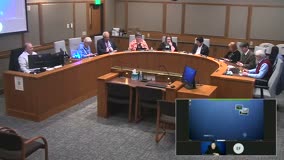
Oregon education officials told the Joint Committee on Ways and Means — Education Subcommittee on Feb. 26 that the first summer of grants under House Bill 2,007 reached nearly 30,000 students statewide and produced measurable literacy gains among students furthest from proficiency.
Dr. Alexa Pearson, assistant superintendent for teaching, learning and assessment at the Oregon Department of Education, said the 2025 program was “a literacy acceleration strategy implemented at scale,” noting that 100% of grantees implemented literacy instruction and programs demonstrated measurable literacy growth.
The department reported 133 grantees in 2025 — up from 66 the year before — operating 356 summer programs that served 29,739 students. Officials said 76.5% of participants were not proficient in English language arts and that grantees prioritized students experiencing poverty, students with disabilities and students experiencing houselessness.
“Across the state, grantees implemented evidence‑based literacy instruction aligned to Oregon standards and measured student growth with structured assessment and progress monitoring,” Raquel Gwyn, director of expanded learning at ODE, told the committee. She described a typical five‑hour program day that includes roughly 90 minutes of explicit literacy acceleration in small groups, 90 minutes of applied literacy enrichment and time for youth development, movement and nutrition.
Agency data presented to the subcommittee showed that grantees set approximately 4,444 academic goals and that 98% of literacy goals were reported as met or partially met; 77% of participating students fully met the goals set for them. ODE also reported an average of 94 instructional hours per grantee (the statute requires a minimum of 80) and a statewide fund utilization rate of 90.6%.
Committee members pressed agency staff on several details, including whether credit‑recovery programs could be supported and whether that use would dilute the statute’s literacy focus. One committee member said nearly one‑third of grant funding appeared to be used for credit recovery in electives and asked whether that skewed the intended focus. ODE replied that this round was a competitive grant and that any use of funds for credit recovery must include a clearly documented literacy emphasis and measurable literacy goals.
On access and special‑education compliance, ODE said state and federal special‑education rules remain in force for summer programs and that many grantees used paraeducators, bilingual materials and other accommodations. The department committed to follow up with more detailed, de‑identified pre/post assessment snapshots and additional budget columns to clarify how grantees braided state summer funds with other local or federal sources.
Members also raised equity concerns about statewide coverage: ODE said some eligible grantees in remote areas (including Harney County and portions of a Region 18 ESD) declined funds in 2025 mainly because of staffing and the accelerated timeline, but that those districts expressed interest in participating with more lead time. The department said its 2026 plans include earlier awards (by April), multi‑year grants and supports for small and rural applicants, including priority points in the competitive RFA and ESD‑level assistance.
On costs, ODE estimated per‑pupil expenses vary widely — roughly $500 on the low end (when partners and braided funds cover many expenses) to about $2,000 in higher‑cost contexts that require more transportation or licensed staff. Officials encouraged grantees to use USDA summer meal programs for food costs and noted substantial in‑kind contributions from community partners.
Ben DeYoung of the Department of Administrative Services’ chief financial office recommended the committee acknowledge receipt of the agency’s report; the Legislative Fiscal Office made the same recommendation. A co‑chair moved the request to the full committee with the LFO recommendation and, with no objections raised, the subcommittee agreed to forward the matter.
The department said the 2025 rollout demonstrated reach, partnerships and measurable returns on investment, and that planned changes for 2026 — earlier awards and multi‑year funding — are intended to improve planning, staffing stability and instructional coherence. Committee members asked ODE to provide the requested supplemental data — including de‑identified before/after assessment summaries and clearer budget braiding details — and to share examples and promotional materials so local boards and elected officials understand program design and results.
The subcommittee closed the work session after members offered final remarks and expressed appreciation for agency staff and analysts.