Get Full Government Meeting Transcripts, Videos, & Alerts Forever!
Get email alerts on the Public Safety topic
No spam. Unsubscribe anytime.
House Rules committee advances public‑safety omnibus that limits police use of license‑plate data
Summary
The committee moved Senate Bill 15-16 A, a public‑safety omnibus that adds pretrial guidance, directs culturally responsive technical assistance for certain grants, and restricts law‑enforcement collection and vendor use of automated license‑plate reader data, to the floor with a due‑pass recommendation after members stressed ongoing monitoring and definitions for encryption.
The House Committee on Rules on the committee’s agenda moved Senate Bill 15-16 A to the floor with a due‑pass recommendation. The measure bundles three main components: it reinforces a magistrate’s authority on pretrial release criteria; directs the Criminal Justice Commission to select a culturally responsive technical‑assistance provider for Justice Reinvestment Equity Program grants; and it limits how law enforcement collects, uses and shares automated license plate reader (ALPR) data, requires specified contract terms with vendors and creates a private right of action for vendor misuse.
“Tisha” (the bill presenter) said the bill “limits how law enforcement collects, uses, and shares automated license plate reader data” and that the -15 amendment adds a definition of end‑to‑end encryption. Representative Graeber, who said he had reservations but supported the bill, told the committee: “I have had a journey to this vote today and I want to put on the record that there are some legitimate concerns… I am a yes today on this but I’m putting a Representative Evans marker down… we need to pay close attention to this.”
Representative Wallen also voiced support while urging continued oversight: “This technology has significant public safety capabilities, but also the ability for abuse… what I appreciate is that the limits of use, the limits of access, the auditing… owning the data, encryption, complying with the criminal justice information system on the federal level” — and added that his city had paused use until a statewide standard existed.
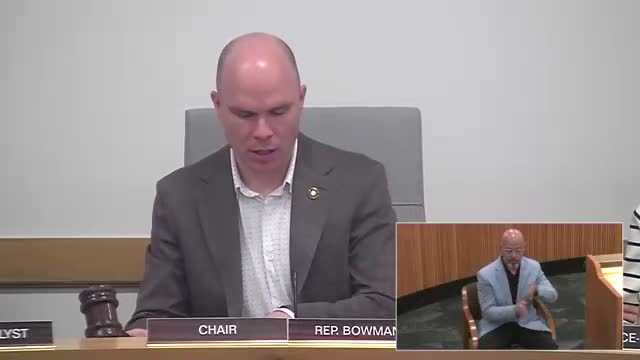
Committee Vice Chair Pham moved the bill to the floor with a due‑pass recommendation; the motion passed on the committee roll call. The chair said she would assign the judiciary chair to carry the bill on the House floor (Representative Krepp). The committee concluded with instructions for continued monitoring of definitions and implementation points identified by members.
The measure’s immediate next steps are floor referral and assignment to a carrier on the House floor; the committee did not specify a final floor schedule in the hearing record.