Get Full Government Meeting Transcripts, Videos, & Alerts Forever!
Get email alerts on the Health Care Medicaid topic
No spam. Unsubscribe anytime.
Bill to Track Employer Patterns in Medicaid Enrollment Advances from Rules Committee
Summary
The Oregon Senate Rules Committee advanced House Bill 4147A, which directs the Oregon Health Authority to report annual, industry-level trends in medical-assistance enrollment while prohibiting employer names and personally identifiable health information.
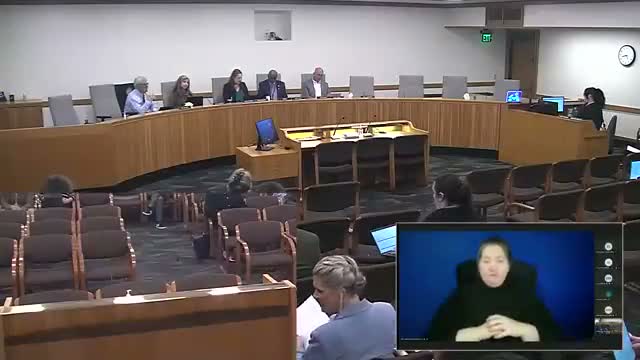
House Bill 4147A, which directs the Oregon Health Authority to report annual trends in medical-assistance enrollment by industry, moved out of the Senate Committee on Rules on Wednesday with a 'do pass' recommendation.
Sen. Sarah Gelser Blueen, the bill's sponsor, told the committee the measure is intended to clarify where public-benefit enrollment concentrates and whether public dollars are subsidizing businesses rather than directly addressing workers' needs. "One of the things that has puzzled me for a very, very long time is that . . . the vast majority of adults who are enrolled in the Oregon Health Plan are working," Gelser Blueen said, urging lawmakers to use data to inform budget and tax choices.
Committee members pressed the sponsor on privacy and purpose. "I'm concerned about the data to be collected and who will have actual hands on that data," said Senator Manning, citing HIPAA and other protections. The sponsor noted the bill requires aggregated data by industry, forbids use of employer names and prohibits personally identifiable or protected health information.
Labor and business groups offered competing perspectives during public testimony. Matt Swanson of the Service Employees International Union said similar reports in neighboring states helped policymakers identify "upstream factors" tied to Medicaid enrollment and warned that as many as 200,000 Oregonians could lose coverage as HR 1 is implemented. "We hope that you will pass this and just get more information to look at the options we have outside of just cutting people off their healthcare," Swanson said.
Representatives of the grocery and broader business communities said the amended bill reduced their earlier concerns. Amanda Dalton of the Northwest Grocery Retail Association said amendments that limit employer identification to NAICS codes and remove dependence metrics had moved the group to a neutral position. Paloma Sparks of Oregon Business and Industry said the bill is an improvement but cautioned it could be used as a precursor to proposals targeting large employers.
In the subsequent work session, Senator Manning moved HB 4147A to the floor with a "do pass" recommendation. The committee approved the motion on a roll call; several members recorded no votes but the motion passed. Committee members and witnesses repeatedly described the bill as a data-collection step, with proponents saying the findings would inform, not prescribe, later policy choices.
The measure sets an operative date of Jan. 1, 2027, requires OHA to report to the Legislature by June 30 each year on medical-assistance trends, and states it takes effect on the 91st day after adjournment sine die. The bill was described in committee as having a minimal fiscal impact and no revenue impact. The Rules Committee designated Senator Gelser Blueen as carrier for the measure to the floor.
What's next: HB 4147A will be scheduled for floor consideration following the Rules Committee report.