Get Full Government Meeting Transcripts, Videos, & Alerts Forever!
Get email alerts on the State Budget Outlook topic
No spam. Unsubscribe anytime.
Budget committee hears statewide shortfall; analysts flag use of one‑time transfers and interest to balance FY2026
Summary
Legislative Services Office analysts told the Joint Finance‑Appropriations Committee that a roughly $100 million revenue shortfall and statutory baseline increases have left limited options to rebalance the FY2026 general fund, and the governor’s proposal leans on transfers and interest earnings rather than structural cuts.
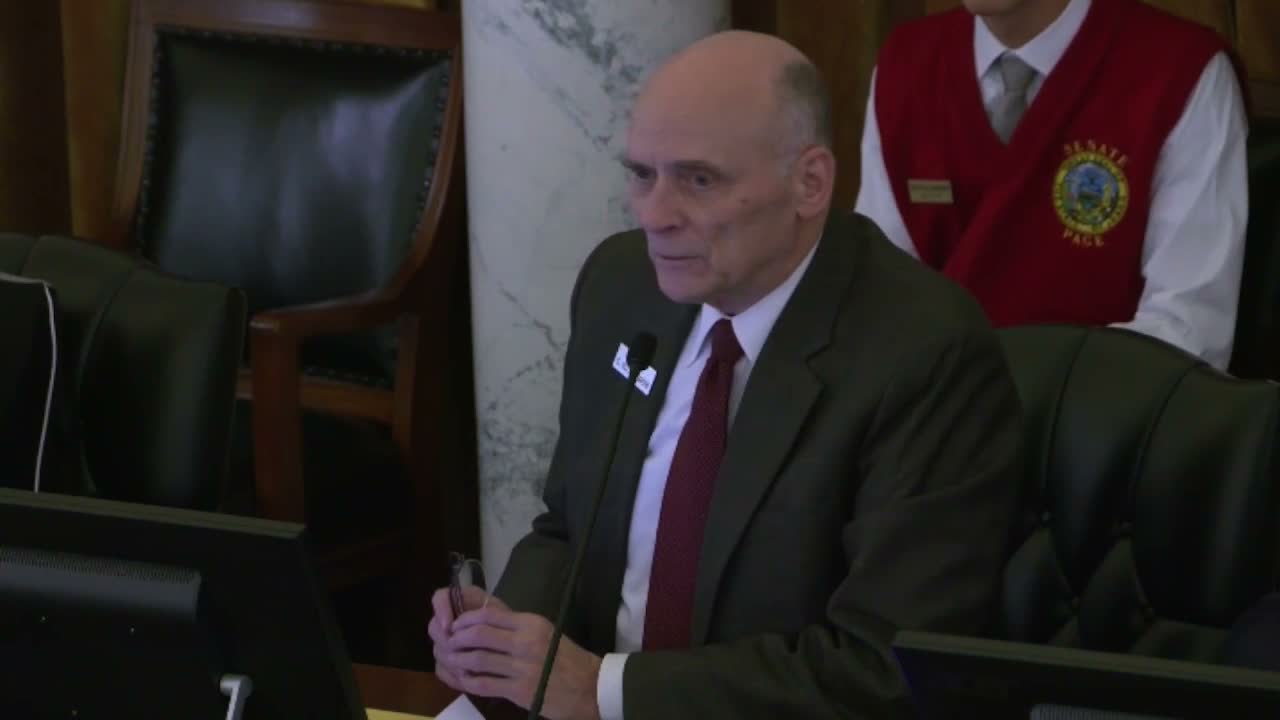
Chairman Groh convened the Joint Finance‑Appropriations Committee and invited Keith Bybee, division manager for Budget and Policy Analysis at the Legislative Services Office, to present a statewide budget overview and options for addressing a projected shortfall in fiscal year 2026.
Bybee framed the problem as a revenue‑to‑baseline mismatch driven both by a recent revenue forecast that came in lower than last year’s estimate and by several statutory additions to the baseline. "This committee has control over the budget," Bybee said, urging members to weigh short‑term smoothing against long‑term structural choices.
Why it matters: the committee left last spring with an original general fund appropriation near $5.624 billion; Bybee showed that current revenue projections for FY2026 are closer to $5.512 billion, and he said the state missed the 2025 revenue forecast by a little more than $100 million, reducing the beginning cash balance. Those numbers create a decision point for members about whether to use one‑time resources or make ongoing reductions.
What analysts proposed: Bybee outlined the governor’s approach, which relies in part on one‑time transfers and redirected interest earnings rather than immediate across‑the‑board program eliminations. He described several components of the governor’s package, including transfers from various dedicated funds and the possible use of interest earnings from funds such as the budget stabilization fund and the Millennium Fund to close short‑term gaps.
Major specifics discussed in the hearing: - Reappropriation and executive carry‑forward obligations totaling about $43.5 million were highlighted as already‑obligated cash that affects the available balance. - The governor’s package includes roughly $106 million in resource shifts and transfers (made up of items such as canceled projects in strategic initiative funds, transfers from career funds, and canceled Permanent Building Fund projects, as outlined by Bybee). - Tax conformity timing is a leverage point: Bybee noted a full conformity approach could produce an ongoing revenue impact in the low‑hundreds of millions, while the governor proposed delaying some conformity effects until FY2027 to avoid filing disruptions.
Committee concerns and process: members pressed staff on specifics (for example, the size of the fire suppression prepay and the mechanics for using interest earnings). Bybee said redirecting interest could be done either by a session law (policy bill) or with intent language for a one‑year change; several senators expressed discomfort with intent language that effectively adjusts existing statutory expectations.
Next steps: the committee will review maintenance budgets and agency enhancement requests in coming hearings, deliberate on whether to rely on one‑time balances or pursue structural change, and may consider policy bills to alter how interest earnings and fund balances are treated.
The committee adjourned with follow‑up requests for written detail on specific fund balances and for options that weigh short‑term smoothing against long‑term structural balance.