
Two Missouri bills would impose age verification and limits on social‑media features for minors; sponsors and youth testify
Get AI-powered insights, summaries, and transcripts
Sign Up Free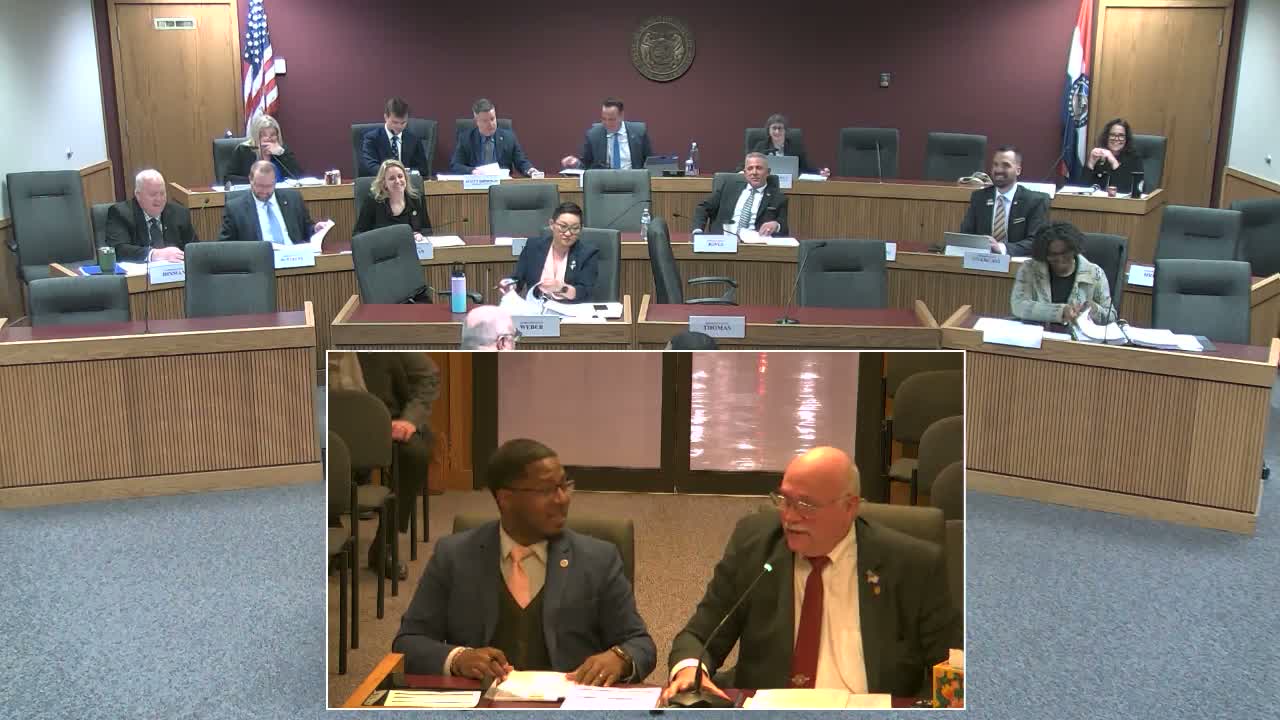
Summary
House Bills 33‑93 and 23‑92 would place stricter age limits, require parental consent or verification, and restrict targeted advertising and addictive design features for minors; sponsors, clinicians and a 12‑year‑old testified in favor while industry urged careful definitions and data‑security safeguards.
Representatives Don Mayhew and Marty Jo Murray told the Emerging Issues Committee they introduced complementary bills to curb features on social platforms they and witnesses said contribute to anxiety, depression and self‑harm among young people.
"Calling these applications social media is an extreme misnomer... they could easily be classified as antisocial," Rep. Don Mayhew said, citing studies and statistics he said show an increase in mental‑health harms among teenagers.
Rep. Marty Jo Murray described HB 23‑92 as the Missouri Social Media Safety for Minors Act, proposing that children under specific ages be prevented from creating accounts without parental consent, limiting targeted advertising and giving parents tools to monitor accounts. "Children are not products, and they should not be treated as such," Murray told the committee.
A 12‑year‑old student, Quinta Hayes Jr., testified in support and described how bullying and image‑based abuse on social platforms followed students home and harmed classmates’ mental health. "It's where a lot of our lives happen... Adults tell us to just put the phone down, but it's not easy when this is how everyone communicate," she said.
Committee members asked about technical verification methods and data security if platforms store government IDs; sponsors said they favor limiting company retention and are exploring probabilistic age‑detection methods and parental oversight. Witnesses and sponsors said they would consider amendments, including limiting the statutory definition to companies that primarily derive revenue from advertising or sale of personal data.
Garrett Webb for the pediatric and psychology groups reiterated clinical concerns and shared historical examples of online‑driven harms to underscore the policy goal. The committee closed testimony and adjourned without a vote.