Lifetime Citizen Portal Access — AI Briefings, Alerts & Unlimited Follows
Council hears first reading of bill to ban students' personal cellphones during school day
Loading...
Summary
At first reading Councilmembers discussed the Disconnect Amendment Act (Bill 20‑673), which would ban possession of personal wireless devices during the school day and direct OSSE to create a model policy for DCPS and charter schools; sponsors stressed student focus and mental‑health benefits.
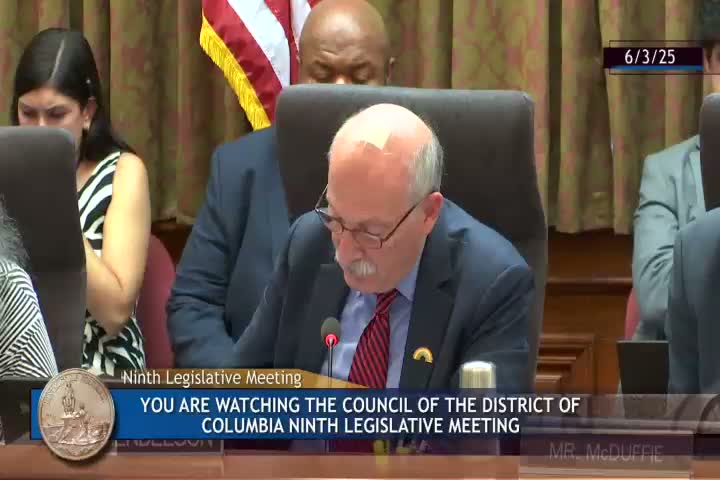
The Council heard first reading and floor debate on Bill 20-673, the Disconnect Amendment Act, which would prohibit possession of personal wireless communication devices during the school day and require the Office of the State Superintendent of Education (OSSE) to develop a model policy for local education agencies to adopt.
Sponsor Councilmember Pinto described the bill as aimed at reducing classroom distractions and protecting students’ mental health: the sponsor said prohibiting personal phones “will reduce distractions for our students and enhance their learning experience,” and noted that OSSE will develop standardized implementation guidance and exemptions for educational technology, devices used for individualized education plans, and emergencies.
Several colleagues supported the overall concept while emphasizing implementation challenges. Councilmember Parker thanked the sponsor and the Chairman and said “we don’t need a policy for the sake of having a policy,” urging adequate time for schools and OSSE to socialize and implement the change. Councilmember Lewis George reported conversations with students from local high schools who, according to him, said the benefits outweighed concerns.
Councilmembers and staff repeatedly highlighted the need for stakeholder engagement — students, families and educators — and expressed caution on the implementation timeline so schools could adopt workable enforcement practices. The bill advanced on first reading with unanimous voice support.
What’s next: Bill 20-673 proceeds to committee and further implementation planning; the transcript records first-reading approval but does not provide a final implementation schedule or OSSE’s timeline beyond a direction to develop a model policy.